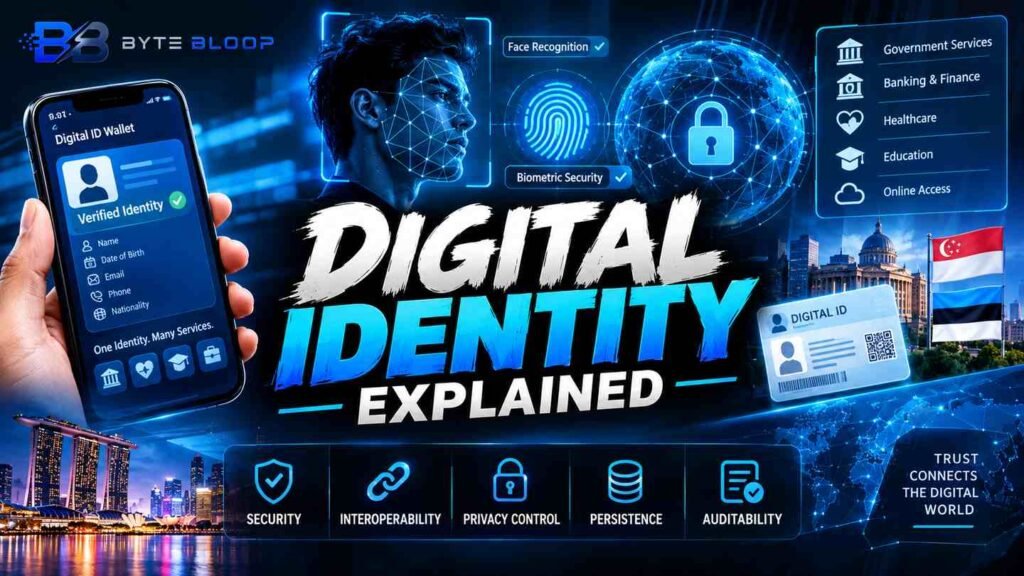
Digital Identity: Explained
Introduction (Digital Identity Explained)
Digital Identity Explained is a topic worth understanding well. Digital identity is more than a username and password; it is a persistent, cryptographically secured credential that represents a verified person across digital services. According to the ITU Digital Identity Roadmap Guide, it forms the foundation of trust in online interactions, enabling seamless access to government, financial, and health systems. In 2026, the adoption of national digital ID programs—such as Singapore’s MyInfo and Estonia’s e‑ID—illustrates how these credentials can streamline public services while safeguarding privacy.
Yet the technology is not without challenges: data breaches, identity theft, and the complexity of managing multiple credentials can erode user confidence. Understanding the core principles, types, and risks of digital identity helps businesses protect themselves and consumers navigate the connected economy. This guide will walk you through the definition, key features, real‑world examples, and best practices for securing digital identities in 2026.
What Is Digital Identity?
Digital identity is a one‑to‑one relationship between a human and their digital presence, comprising multiple accounts and credentials that collectively prove who you are online. It is persistent—unlike a session token that expires after a logout—and is secured by cryptographic methods such as public‑key infrastructure (PKI). Proof.com’s guide notes that once established, a digital identity does not expire with a session, providing a stable foundation for authentication and authorization across services.
Core Features of a Digital Identity
- Persistence – A stable identifier that survives across devices and platforms.
- Cryptographic Security – Digital signatures and certificates protect against tampering.
- Interoperability – Standards like OpenID Connect and SAML enable cross‑domain authentication.
- Privacy Controls – Users can manage consent and data sharing through identity wallets.
- Auditability – Blockchain or distributed ledgers can provide tamper‑evident logs.
Types of Digital Identities
Digital identities can be classified along two axes: public vs. private and self‑issued vs. government‑issued. Public identities, such as social media profiles, are often open and less secure, while private identities—like corporate single sign‑on (SSO) accounts—are tightly controlled. Government‑issued IDs, exemplified by Estonia’s e‑ID, provide strong assurance and are linked to legal personhood. Self‑issued identities, managed through decentralized identifiers (DIDs), allow individuals to control their data without relying on a central authority.
This matters directly for anyone exploring digital identity explained.
Real‑World Examples
Singapore’s MyInfo platform aggregates citizen data into a single digital wallet, enabling instant verification for banking, education, and healthcare services. In the United States, the Department of Homeland Security’s Digital Identity Framework outlines how federal agencies can issue secure, interoperable credentials. For businesses, the Persona platform offers identity verification services that reduce fraud and improve onboarding speed. These examples illustrate how digital identities can cut friction while enhancing security.
Getting digital identity explained right can make a real difference.
Risks and Challenges
While digital identities promise convenience, they also introduce new attack vectors. Identity theft can occur if credentials are stolen or replayed. Over‑centralization—where a single provider holds all personal data—creates high‑value targets for hackers. Regulatory compliance, such as GDPR and the UK’s Digital Identity Sectoral Analysis Report 2026, requires careful handling of personal data, consent, and data residency.
That is a core part of understanding digital identity explained.
Best Practices for Securing Digital Identities
- Adopt Zero‑Trust Architecture – Verify every request regardless of origin.
- Use Multi‑Factor Authentication (MFA) – Combine something you know, have, and are.
- Implement Identity Governance – Regularly review access rights and audit logs.
- Leverage Decentralized Identifiers – Reduce single points of failure.
- Educate Users – Promote phishing awareness and secure credential management.
Future Outlook
According to the Digital Identity Sectoral Analysis Report 2026, the market for digital identity solutions is projected to grow as more countries roll out national ID programs and businesses adopt federated identity standards. Emerging technologies like biometric authentication and AI‑driven risk scoring will further refine identity assurance. However, the pace of adoption will depend on balancing privacy, security, and user convenience.
Many readers look into digital identity explained for exactly this reason.
Key Takeaways
- Digital identity is a persistent, cryptographically secured credential that represents a verified person.
- It enables seamless access to public and private services while requiring strong security controls.
- National ID programs in Singapore and Estonia showcase successful large‑scale deployment.
- Risks include data breaches, identity theft, and regulatory compliance challenges.
- Best practices involve zero‑trust, MFA, governance, and user education.
Frequently Asked Questions
What is digital identity?
Digital identity is a persistent, cryptographically secured credential that represents a verified person across digital services, enabling secure authentication and authorization.
It is worth revisiting digital identity explained as things develop.
What are the key features of digital identity?
Key features include persistence, cryptographic security, interoperability, privacy controls, and auditability through tamper‑evident logs.
Digital Identity Explained remains highly relevant here.
What are the best use cases for digital identity?
Use cases span government services like national ID programs, corporate SSO, fintech onboarding, and secure access to health records, all benefiting from reduced friction and enhanced security.
This is a key consideration when it comes to digital identity explained.
What are the pros and cons of digital identity?
Pros: seamless access, strong security, and data ownership. Cons: potential for data breaches, privacy concerns, and regulatory compliance complexity.
This matters directly for anyone exploring digital identity explained.
Conclusion
Based on the available information and industry analysis, digital identity provides a secure, persistent foundation for trust in online interactions, enabling streamlined access to services while demanding robust security practices and regulatory compliance. As nations and businesses adopt more sophisticated identity frameworks, the balance between convenience and privacy will shape the future of digital trust.
Related Reading
- The Rise of Decentralized Identifiers (DIDs)
Sources & References
- Digital Identity — The Digital Identity Roadmap Guide
- What Is Digital Identity? A Complete Guide
- Digital ID by Country: A 2026 Guide to Live National Systems
- What is Digital Identity? Definition, Types & Risks
- Digital Identity Sectoral Analysis Report 2026
- Digital identity: A complete guide
- Digital identity — Digital identities will provide a gateway for citizens and SMEs into the connected ecosystem of services making up the digital economy
- What Is Digital Identity? Definition, Types & Examples (2026)
Related Articles