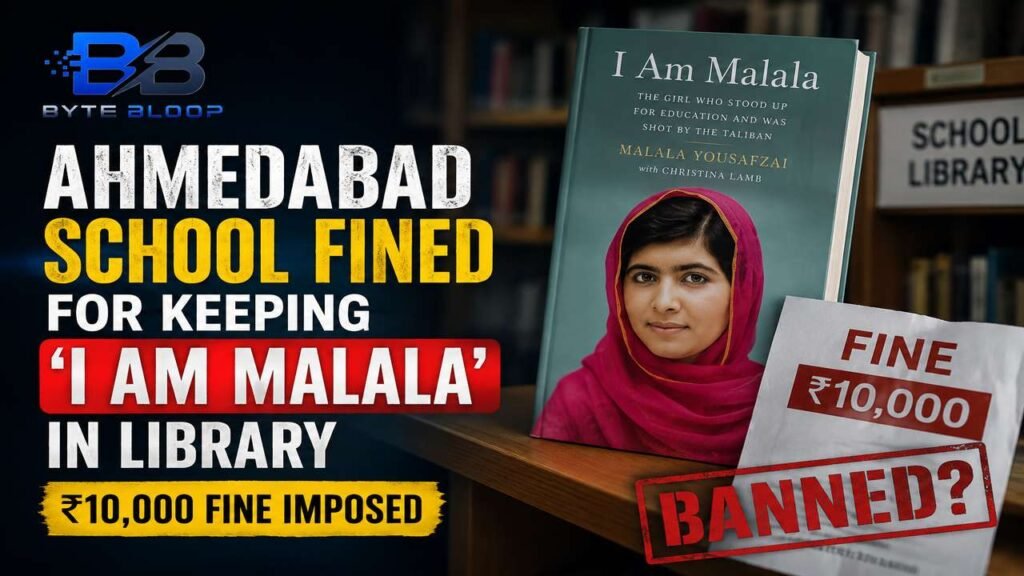
Ahmedabad School Fined for Housing ‘I Am Malala’ in Library
Introduction
In a surprising move that has ignited discussions across educational circles, a private school in Ahmedabad was slapped with a ₹10,000 fine for keeping the internationally acclaimed biography I Am Malala on its library shelves. The fine, imposed by the Gujarat State Education Department, alleges that the book is “inappropriate for minors” and could potentially influence young minds in a manner deemed unsuitable by local authorities.
The decision has drawn criticism from authors, human‑rights activists, and educators who argue that the punitive action amounts to censorship and undermines the core purpose of schools: to foster critical thinking through exposure to diverse perspectives.
Background & Historical Context
I Am Malala, co‑written by Malala Yousafzai and journalist Christina Lamb, chronicles the Pakistani activist’s fight for girls’ education and her survival after a Taliban assassination attempt. Since its 2013 publication, the memoir has become a staple in school curricula worldwide, celebrated for its advocacy of gender equality and the right to education.
India has a complex history with book bans and educational regulations. While the Constitution guarantees freedom of expression, several states have, over the past decade, issued directives to remove titles they consider “objectionable” or “politically sensitive”. Notable examples include the removal of certain historical texts in Uttar Pradesh and the restriction of works on LGBTQ+ themes in Karnataka. The Ahmedabad case adds another layer to this ongoing tension between state oversight and literary freedom.
Key Details & Impact Analysis
The school, identified as Shree Vidya Vihar International School, was inspected in early June after a routine audit flagged the presence of I Am Malala in its senior‑secondary library. Officials from the Gujarat Education Department cited specific passages describing the Taliban’s oppression and Malala’s activism as potentially “disturbing” for students aged 14‑18. The department issued a notice demanding the book’s removal within 48 hours and levied a ₹10,000 fine for non‑compliance.
Educational experts warn that such actions could set a precedent, prompting other institutions to pre‑emptively censor literature to avoid penalties. “When a state body starts dictating reading material, it sends a chilling message to teachers and librarians,” says Dr. Ananya Rao, a professor of education policy at Gujarat University. “Students lose the chance to engage with real‑world issues, and the broader discourse on human rights is stifled.”
Conversely, some local parent groups support the decision, arguing that the book’s graphic descriptions of violence may not be age‑appropriate. They contend that schools should prioritize content that aligns with cultural sensitivities and regional values. This viewpoint underscores the delicate balance policymakers must strike between protecting youth and preserving intellectual freedom.
Frequently Asked Questions (FAQs)
Why was I Am Malala deemed unsuitable for the school’s library?
The Gujarat Education Department cited concerns over the book’s depiction of extremist violence and its potential to inspire political activism among teenagers. Officials argued that the narrative could conflict with local cultural norms and the state’s educational objectives.
Can the school appeal the fine?
Yes. The school has the right to file an appeal within 30 days of the notice, presenting arguments that the book aligns with the national curriculum’s emphasis on gender equality and global citizenship. Legal experts suggest that a successful appeal would likely hinge on demonstrating the educational merit of the text.
What does this incident mean for other schools in India?
While the fine is specific to this institution, it serves as a cautionary example for schools nationwide. Librarians may now review their collections more closely, and some may choose to remove titles that could attract scrutiny, potentially narrowing the scope of literature available to students.
Conclusion
The Ahmedabad school’s penalty over I Am Malala spotlights a broader debate about censorship, educational autonomy, and the role of literature in shaping young minds. As the appeal process unfolds, educators, parents, and policymakers will be watching closely to see whether the fine stands or is overturned. Regardless of the outcome, the case reinforces the importance of defending access to diverse narratives that empower students to think critically about the world around them.
Source: Times Now
