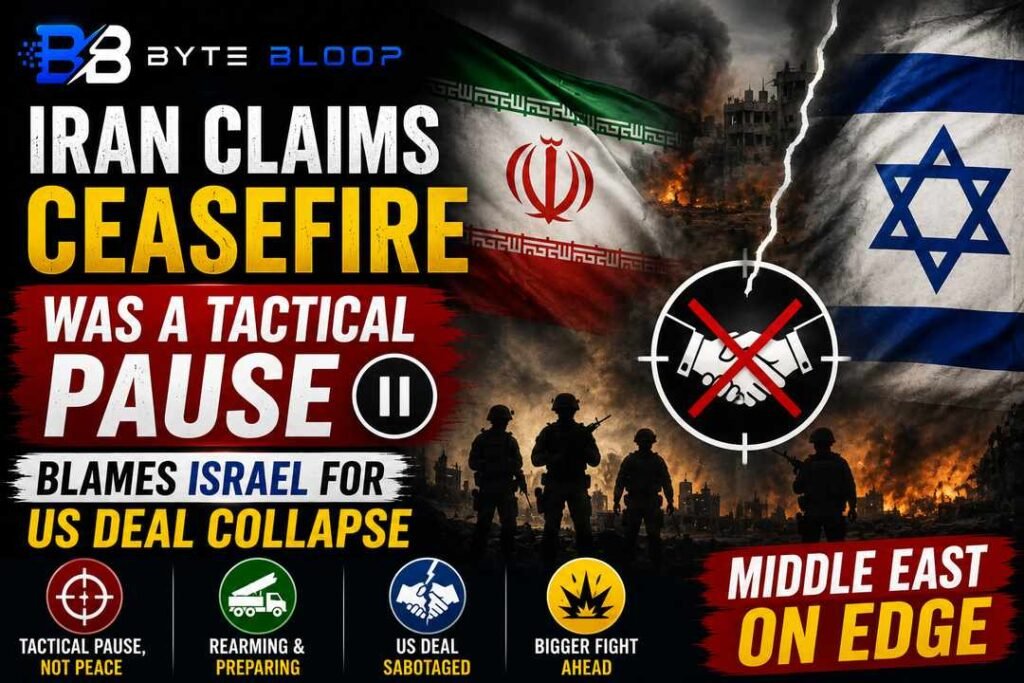
Iran Claims Ceasefire Was a Tactical Pause, Blames Israel for US Deal Collapse
Introduction
In a bold declaration that reverberated across the Middle East, Iran’s foreign ministry announced that the recent ceasefire in the Gaza Strip was not a genuine peace effort but a calculated intermission designed to ready its forces for a “bigger fight.” Tehran also placed the blame squarely on Israel for sabotaging a high‑stakes United States‑mediated deal that aimed to de‑escalate tensions in the region.
The statement, delivered amid a flurry of diplomatic activity, underscores Tehran’s perception of Israel as the primary obstacle to any lasting settlement. It also signals a shift in Iran’s narrative—from a defensive posture to an overtly offensive, preparatory stance—potentially reshaping the strategic calculus of regional actors and international stakeholders.
Background & Historical Context
The ceasefire in question emerged after weeks of intense fighting between Israeli forces and Hamas militants, which resulted in thousands of casualties and widespread destruction. International powers, led by the United States, rushed to broker a temporary halt to hostilities, hoping to open a window for humanitarian aid and diplomatic negotiations.
Iran has long positioned itself as a staunch supporter of Palestinian resistance groups, providing political backing, financial assistance, and, according to various intelligence reports, military supplies. Over the past decade, Tehran’s involvement has been a flashpoint in its fraught relationship with Israel and a source of concern for U.S. policymakers seeking to curb Iranian influence in the Levant.
Key Details & Impact Analysis
According to the official Iranian statement, the ceasefire was deliberately used to regroup, replenish weapon stockpiles, and train proxy forces for a larger confrontation that Tehran envisions in the near future. The ministry claimed that during the lull, Iranian operatives “strengthened logistical networks” and “enhanced the combat readiness” of allied militias across Gaza, Lebanon, and the Syrian border. This admission, if accurate, marks a rare instance of a state openly acknowledging a strategic pause for offensive preparation.
Iran also accused Israel of deliberately derailing the U.S. deal that sought to end the fighting. Tehran argued that Israeli military operations, settlement expansions, and political rhetoric created an environment in which any diplomatic effort was doomed to fail. By attributing the collapse of the agreement to Israeli actions, Iran aims to shift international blame and rally support among Arab and non‑aligned nations that view Israel’s policies as a primary source of instability.
Frequently Asked Questions (FAQs)
What exactly did Iran say about the ceasefire?
Iran’s foreign ministry stated that the ceasefire was a tactical pause, allowing its allied groups to regroup, restock weapons, and prepare for a larger, coordinated fight against Israel and its allies. The statement emphasized that the lull was not a sign of genuine peace intentions.
How does Iran blame Israel for the failed U.S. deal?
Tehran argues that Israel’s continued military actions, settlement activity, and hard‑line political stance created conditions that made the U.S.-mediated agreement untenable. Iran claims Israel deliberately sabotaged the deal to avoid any constraints on its operations in Gaza.
What could be the regional implications of Iran’s claim?
If Iran’s admission is accurate, it may embolden proxy groups in Lebanon (Hezbollah) and Syria to increase hostilities, potentially widening the conflict. It also puts pressure on the United States and its allies to reassess diplomatic strategies, as the narrative shifts from a hopeful ceasefire to a pre‑planned escalation.
Conclusion
Iran’s assertion that the recent ceasefire served as a strategic rehearsal for a larger confrontation, coupled with its accusation that Israel sabotaged a U.S. diplomatic effort, adds a new layer of complexity to an already volatile situation. The claims challenge the prevailing narrative of a temporary lull and suggest that regional actors may be gearing up for intensified hostilities. As the international community watches closely, the coming weeks will test whether diplomatic channels can still salvage peace or if the region is on the brink of a broader, more destructive conflict.
Source: Times Now
