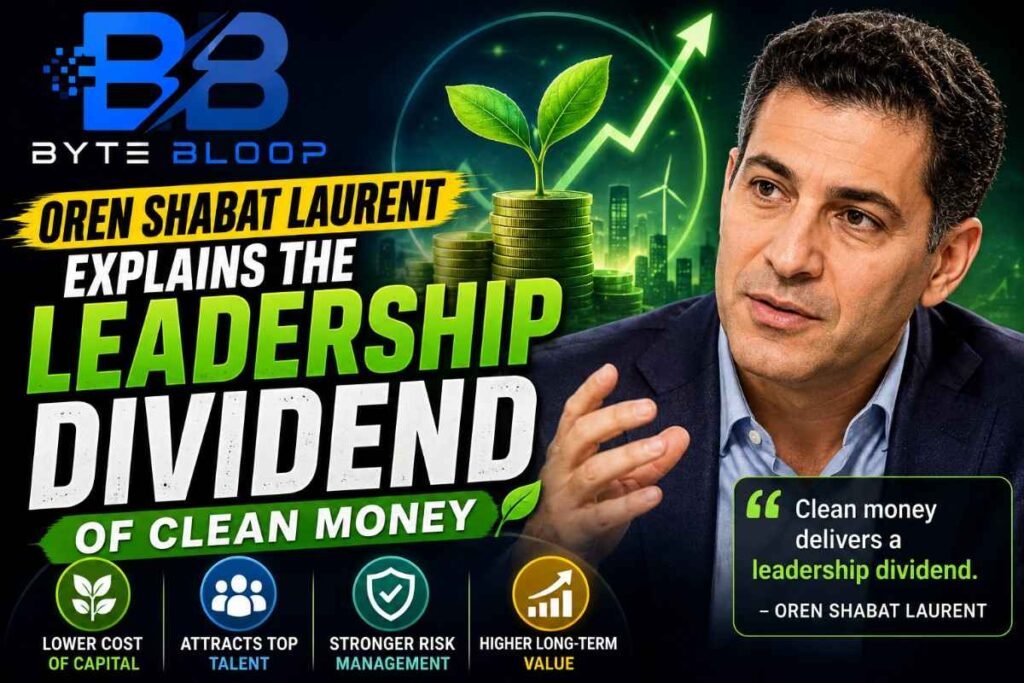
Oren Shabat Laurent Explains the Leadership Dividend of Clean Money
Introduction
In a recent interview with Times Now, renowned investor Oren Shabat Laurent highlighted a growing phenomenon that is reshaping boardrooms worldwide: the “leadership dividend” that stems from clean‑money strategies. As climate‑focused capital flows accelerate, companies that embed sustainability into their core financing models are not only meeting regulatory expectations but also unlocking new sources of competitive advantage.
Laurent, co‑founder of the climate‑focused investment firm Clean Capital Partners, argues that the shift toward green financing is no longer a niche trend. It is a decisive factor that influences everything from talent attraction to risk management, and it is creating a measurable premium for firms that act early.
Background & Historical Context
The concept of a “leadership dividend” dates back to the early 2000s when ESG (environmental, social, governance) metrics first entered mainstream investment analysis. However, the term gained traction only after the 2015 Paris Agreement, when sovereign and private investors began to demand tangible climate outcomes. Since then, the market for green bonds, sustainability‑linked loans, and carbon‑credit financing has exploded, reaching over $2.5 trillion in cumulative issuance by 2024.
Laurent’s career mirrors this evolution. Starting in traditional private equity, he pivoted to clean‑energy investments in 2010, recognizing that capital allocation could be a catalyst for systemic change. His firm’s flagship fund, the Clean Impact Fund, has raised $1.2 billion and deployed it across renewable infrastructure, low‑carbon technologies, and climate‑resilient real estate. This historical pivot provides a real‑world laboratory for testing the leadership dividend hypothesis.
Key Details & Impact Analysis
During the interview, Laurent outlined three concrete ways clean money translates into leadership benefits. First, access to cheaper capital: banks and institutional investors are offering lower interest rates on sustainability‑linked loans, rewarding firms that meet predefined carbon‑reduction targets. This financial incentive improves balance‑sheet health and frees up cash for strategic initiatives.
Second, talent magnetism: a 2023 Deloitte survey found that 68 % of millennials and Gen Z professionals prefer employers with strong climate commitments. Companies that publicly disclose clean‑money strategies attract higher‑quality candidates, reduce turnover, and foster a culture of innovation. Finally, risk mitigation: clean‑money frameworks embed rigorous climate‑risk assessments, helping boards anticipate regulatory shifts, physical climate threats, and reputational hazards before they materialize.
Laurent also warned that the dividend is not automatic. Firms must integrate sustainability into governance structures, set transparent metrics, and report progress consistently. Failure to do so can lead to “green‑washing” accusations, which erode investor confidence and negate any financial advantage. He cited a recent case where a major retailer’s green‑bond issuance was scrutinized for vague use‑of‑proceeds language, resulting in a 7 % share price dip.
Frequently Asked Questions (FAQs)
What exactly is a “leadership dividend” in the context of clean money?
The leadership dividend refers to the tangible and intangible gains a company receives when it aligns its financing with climate goals. Tangible gains include lower borrowing costs and higher valuation multiples, while intangible gains encompass stronger brand reputation, better talent acquisition, and enhanced resilience to climate‑related risks.
How can a mid‑size company start leveraging clean‑money benefits?
Mid‑size firms can begin by conducting a climate‑risk assessment, setting measurable emission‑reduction targets, and exploring sustainability‑linked loan options. Partnering with ESG‑focused banks or joining industry coalitions can also provide guidance and credibility.
Are there any regulatory risks associated with clean‑money financing?
Yes. Regulators in the EU, US, and several Asian markets are tightening disclosure requirements for green bonds and sustainability‑linked instruments. Companies must ensure that the proceeds are used as promised and that reporting follows recognized standards such as the EU Taxonomy or the Climate Bonds Initiative.
Conclusion
Oren Shabat Laurent’s insights underscore that clean money is evolving from a moral imperative into a strategic lever that delivers a clear leadership dividend. Companies that proactively embed climate considerations into their financing structures stand to reap lower costs, superior talent, and stronger risk buffers—advantages that will increasingly differentiate market leaders from laggards in the low‑carbon economy.
Source: Times Now