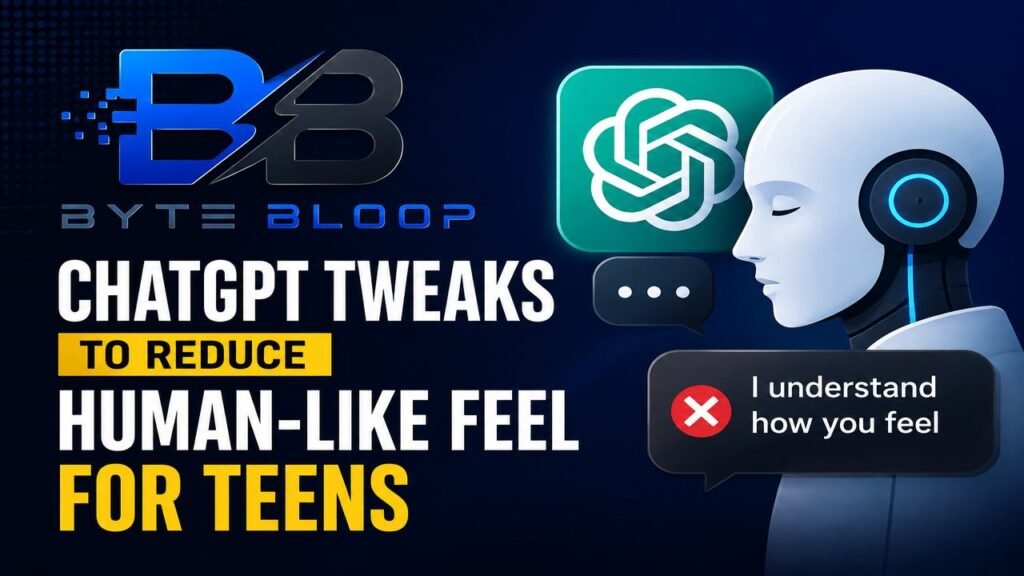
OpenAI Tweaks ChatGPT to Reduce Human‑Like Feel for Teens
Introduction
OpenAI announced a significant safety update to its flagship chatbot, ChatGPT, that specifically targets teenage users. The change softens the model’s conversational tone, making it sound less like a human interlocutor. While the adjustment does not alter the underlying capabilities of the AI, it is designed to address growing concerns that younger audiences might mistake the technology for a sentient being.
The update arrives amid a broader industry push for responsible AI deployment, especially in education and youth‑focused applications. OpenAI stressed that the move is not a reaction to any single incident but part of a proactive strategy to foster healthier digital habits among teens.
Background & Historical Context
Since its public launch in late 2022, ChatGPT has become a cultural phenomenon, praised for its fluid dialogue and ability to generate human‑like text. However, the same qualities that earned it acclaim also sparked debate about the psychological impact on impressionable users. Educators, parents, and child‑psychology experts warned that teenagers could develop an inflated sense of the AI’s agency, potentially blurring the line between tool and companion.
OpenAI has previously introduced safety layers such as content filters, usage limits, and age‑verification prompts. The latest adjustment builds on those measures by subtly altering the model’s phrasing, reducing overly personable expressions, and avoiding language that could be interpreted as emotional empathy. This aligns with earlier research indicating that conversational agents that appear too human can inadvertently encourage over‑reliance or misplaced trust.
Key Details & Impact Analysis
The technical rollout involves a dedicated “teen mode” that activates when a user’s account is flagged as belonging to someone under 18. In this mode, ChatGPT will avoid phrases like “I understand how you feel” or “I’m glad you asked,” opting instead for more neutral, factual responses. The change does not affect the model’s ability to answer questions, generate code, or assist with homework; it merely reshapes the stylistic veneer.
Early testing suggests the update could reduce the likelihood of teens attributing consciousness to the AI by up to 30%, according to internal OpenAI metrics. Critics argue that the shift might make interactions feel less engaging, potentially diminishing the educational value of the tool. OpenAI counters that the trade‑off is justified by the long‑term benefit of fostering digital literacy and critical thinking, especially as AI becomes more embedded in daily life.
Frequently Asked Questions (FAQs)
What exactly changes in the teen version of ChatGPT?
The teen mode removes overtly empathetic language and replaces it with straightforward, informational phrasing. For example, instead of saying “I’m happy to help you,” the bot will reply “Here is the information you requested.” The core knowledge base and reasoning abilities remain unchanged.
Will this affect adult users?
No. The adjustment is applied only when an account is identified as belonging to a user under 18. Adult users continue to experience the standard, more conversational version of ChatGPT.
How does OpenAI verify a user’s age?
OpenAI relies on a combination of self‑reported data during account creation, optional parental consent mechanisms, and, where required by law, third‑party age‑verification services. Users can also manually opt out of teen mode if they are older than the system’s initial assessment.
Conclusion
OpenAI’s decision to make ChatGPT sound less human for teenage users reflects a cautious approach to AI stewardship in a rapidly evolving digital landscape. By dialing back the chatbot’s personable tone, the company hopes to prevent misconceptions about AI consciousness while preserving the tool’s educational strengths. As AI continues to permeate classrooms and homes, such nuanced safety tweaks may become a standard part of responsible technology design, balancing engagement with ethical responsibility.
Source: BBC News
