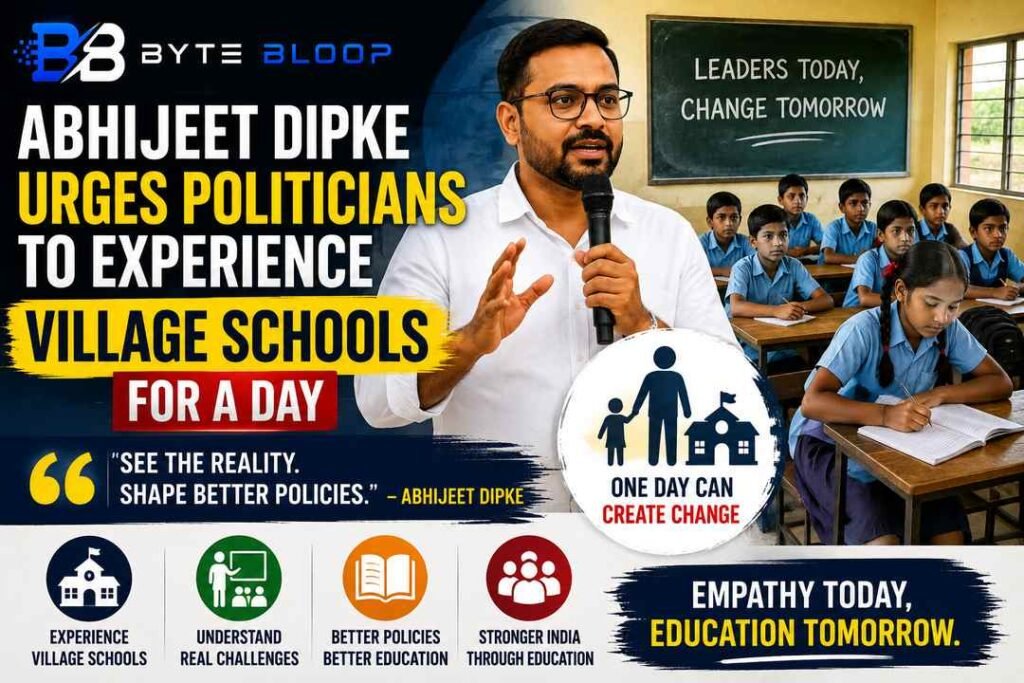
Abhijeet Dipke Urges Politicians to Experience Village Schools for a Day
Introduction
In a striking appeal that has quickly gone viral, social activist Abhijeet Dipke called on elected leaders across India to send their children to a village school for a single day. The challenge, first reported by Times Now, is intended to bridge the widening gap between policy‑makers and the realities faced by rural educators and students. Dipke believes that a brief, immersive experience could transform how politicians view education funding, infrastructure, and curriculum design.
“If you truly want to improve education, you must first understand the environment where most of our children learn,” Dipke said during a recent press conference. His statement has ignited a nationwide conversation, with several political parties promising to take up the challenge, while critics argue that a single day cannot capture the systemic issues plaguing village schools.
Background & Historical Context
India’s rural education system has long struggled with inadequate infrastructure, teacher shortages, and outdated teaching materials. According to the Ministry of Education, over 30% of schools in villages lack basic amenities such as clean drinking water and functional toilets. Historically, policymakers have relied on aggregated data and third‑party reports rather than direct observation, leading to a disconnect between legislation and on‑the‑ground needs.
Activists like Dipke have repeatedly highlighted these gaps. In 2018, a similar “walk‑through” campaign by a coalition of NGOs resulted in a modest increase in budget allocations for rural school upgrades. However, many argue that without sustained political engagement, such gains are temporary. Dipke’s latest initiative builds on this legacy, aiming to create a personal, emotional connection between leaders and the children they serve.
Key Details & Impact Analysis
The challenge is simple yet powerful: each politician must enroll their child—or a willing volunteer—into a government‑run village school for one full academic day. Participants will attend regular classes, interact with teachers, and experience the daily commute that many rural families endure. Dipke has partnered with the NGO RuralLearn to coordinate logistics, ensuring safety and proper documentation of the experience.
Early responses have been mixed. The ruling party’s youth wing announced that three of its senior members will accept the challenge next month, citing “a commitment to grassroots education.” Conversely, opposition leaders have expressed skepticism, suggesting that a token gesture may be used for political mileage rather than genuine reform. Education experts warn that while the initiative could raise awareness, lasting impact will require structural changes—such as increased teacher training, digital resource integration, and community involvement.
Frequently Asked Questions (FAQs)
What is the main goal of Abhijeet Dipke’s challenge?
The primary aim is to give politicians a firsthand glimpse of the conditions in village schools, encouraging them to craft policies that address real‑world challenges rather than relying solely on statistics.
How will the logistics of the one‑day school visit be managed?
Dipke’s team, in collaboration with RuralLearn, will match participating politicians with nearby government schools, arrange transportation, and provide a brief orientation for both the leaders and the school staff. Safety protocols, parental consent, and a post‑visit debrief are mandatory components.
Will this challenge lead to concrete policy changes?
While a single day cannot solve systemic issues, the initiative is designed to spark public discourse and pressure lawmakers to prioritize rural education in budget discussions. Follow‑up actions, such as policy briefs and stakeholder meetings, are planned to translate the experience into measurable reforms.
Conclusion
Abhijeet Dipke’s bold invitation to politicians to spend a day in a village school is more than a publicity stunt; it is a call to align political empathy with educational realities. Whether the challenge translates into substantive policy shifts remains to be seen, but it undeniably places rural schooling at the forefront of national conversation. As India strives to meet its ambitious educational goals, initiatives that bridge the gap between decision‑makers and the classrooms they aim to improve could prove pivotal in shaping a more equitable future.
Source: Times Now
