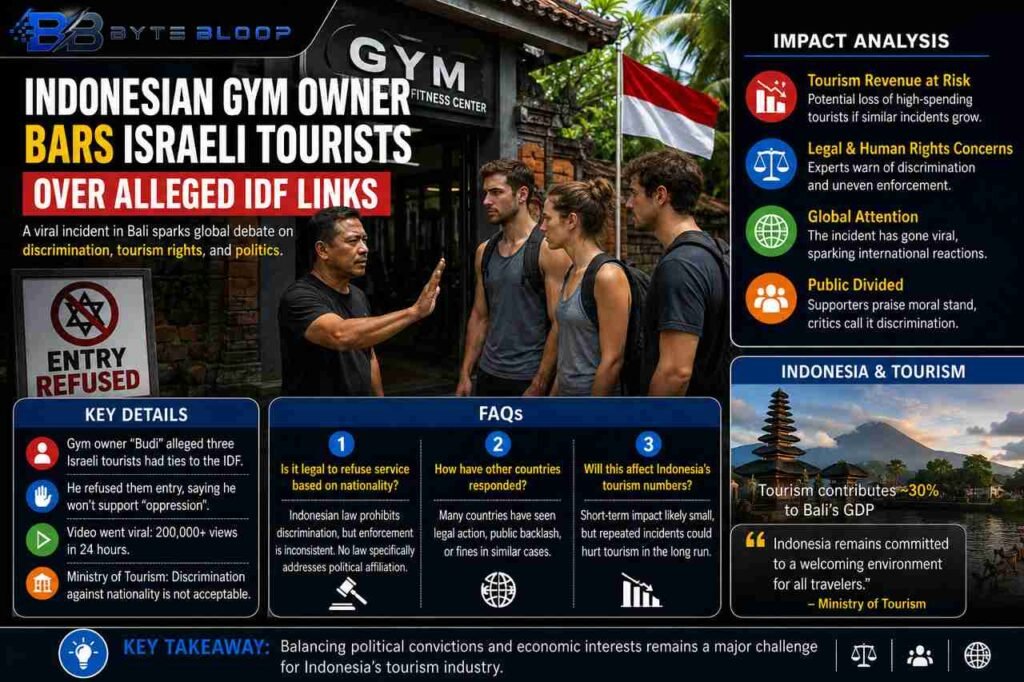
Indonesian Gym Owner Bars Israeli Tourists Over Alleged IDF Links
Introduction
In a move that quickly went viral, a gym owner in Bali, Indonesia, posted a video on social media explaining why he denied entry to three Israeli tourists. The owner claimed the visitors had ties to the Israeli Defense Forces (IDF) and that serving them would conflict with his personal and national values. The video, shared across platforms such as TikTok and Instagram, ignited a heated debate about discrimination, tourism rights, and the broader geopolitical climate in Southeast Asia.
Indonesia, the world’s largest Muslim-majority nation, does not maintain diplomatic relations with Israel, and public sentiment often leans strongly against Israeli policies in the Middle East. Yet the country’s tourism industry, a vital economic pillar, welcomes travelers from around the globe, including Israel. This incident therefore sits at the crossroads of economic necessity and deep‑seated political convictions.
Background & Historical Context
Indonesia’s stance toward Israel dates back to the early 1970s, when it joined the Arab League’s boycott of Israeli goods and services. While the boycott is not officially enforced by law, many Indonesian businesses voluntarily avoid direct dealings with Israeli entities. Over the past decade, the rise of social media has amplified nationalist voices, often turning isolated incidents into nationwide discussions.
Tourism in Bali accounts for roughly 30% of the island’s GDP, with visitors from Europe, Australia, and increasingly East Asia. Israeli tourists, though a small percentage, have been part of the market for years. However, recent conflicts in the Middle East have heightened sensitivities, prompting some local entrepreneurs to reassess the optics of serving Israeli nationals.
Key Details & Impact Analysis
The gym owner, identified only as “Budi” in the video, recorded himself standing outside his fitness centre, pointing to a passport photo of the three tourists. He alleged that the travelers were “linked to the IDF” and that allowing them to use his facilities would be tantamount to supporting a military force he described as “oppressive.” Budi’s video, which amassed over 200,000 views within 24 hours, also included a statement that he would not be “complicit in any form of aggression against the Palestinian people.”
Legal experts note that Indonesia’s constitution guarantees equal treatment for all foreigners, but enforcement is uneven. The Ministry of Tourism has not yet issued a formal response, though a spokesperson indicated that “any discrimination based on nationality is contrary to Indonesia’s commitment to a welcoming tourism environment.” Meanwhile, human‑rights groups have called for an investigation, arguing that the gym owner’s actions could set a dangerous precedent for other businesses.
Economically, the incident could have a ripple effect. If similar refusals become commonplace, Indonesia risks alienating a segment of high‑spending tourists, potentially reducing revenue for local businesses that rely on foreign visitors. Conversely, supporters argue that upholding moral principles may attract tourists who share similar political views, thereby reshaping the market niche.
Frequently Asked Questions (FAQs)
Is it legal for Indonesian businesses to refuse service based on nationality?
Under Indonesian law, discrimination against foreigners is generally prohibited, especially in sectors like hospitality and tourism that are regulated by the Ministry of Tourism. However, enforcement is inconsistent, and there is no specific legislation addressing refusals tied to political affiliations. Legal scholars suggest that while the law leans toward protection, cultural and political pressures often influence outcomes.
How have other countries responded to similar incidents?
Globally, there have been comparable cases where businesses declined service to individuals from certain nations due to political disagreements. In many Western democracies, such actions have resulted in legal challenges, public backlash, and, in some instances, fines. The outcomes typically depend on the strength of anti‑discrimination statutes and the prevailing public sentiment.
Will this affect Indonesia’s overall tourism numbers?
Short‑term impacts are likely to be limited, as the incident involves a single gym and a relatively small tourist demographic. However, if the narrative spreads and more businesses adopt similar policies, Indonesia could see a measurable dip in arrivals from countries perceived as politically contentious. The tourism board is monitoring the situation closely and has pledged to maintain a “welcome to all” stance.
Conclusion
The Bali gym owner’s decision to bar three Israeli tourists underscores the delicate balance Indonesia must strike between its political convictions and its economic reliance on tourism. While the owner’s video resonated with a segment of the population, it also raised serious questions about legal compliance, human rights, and the potential long‑term consequences for the nation’s hospitality sector. As the story continues to unfold, stakeholders—from government officials to business owners and travelers—will be watching closely to see whether Indonesia can reconcile these competing pressures without compromising its reputation as a premier tourist destination.
Source: Al Jazeera
