Product Management: Explained
Introduction
Product management is the strategic engine that drives a company’s entire product journey—from ideation to retirement. It blends market insight, user empathy, and cross‑functional leadership to shape products that solve real problems. In today’s fast‑moving tech landscape, a well‑executed product strategy can mean the difference between a product that thrives and one that flounders. Product managers (PMs) act as the single voice for the product, translating customer needs into actionable roadmaps and ensuring every stakeholder stays aligned. Understanding the core responsibilities, the typical lifecycle, and the skills that underpin success is essential for anyone looking to navigate or lead in the product arena. This guide breaks down the discipline into clear stages, highlights key competencies, and offers practical examples to illustrate how product management translates into tangible business outcomes. Whether you’re a budding PM, a developer, a marketer, or a CEO, grasping these fundamentals will help you collaborate more effectively and drive products that win in the market.
What Does Product Management Actually Do?
At its core, product management is a strategic practice that guides a product’s lifecycle through research, planning, development, launch, support, and optimization. A PM is responsible for defining the product vision, prioritizing features, coordinating cross‑functional teams, and measuring success against business goals. According to ProductPlan, this involves a continuous cycle of discovery, delivery, and iteration, ensuring the product remains relevant and valuable.
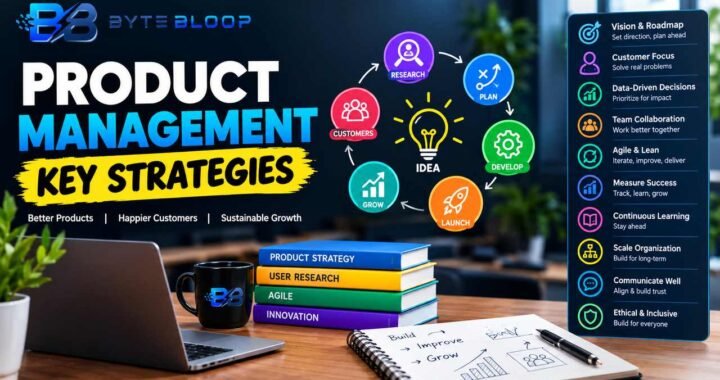
The 8‑Stage Product Management Process (2026)
Emerging frameworks outline an eight‑step process that modern PMs follow:
- Identify Users’ Needs – Gather data through interviews, surveys, and analytics to surface pain points.
- Question the Problem – Validate assumptions and refine the problem statement.
- Translate Insights into Opportunities – Map user needs to potential solutions.
- Define Value Propositions – Articulate why a solution matters to the target audience.
- Prioritize Features – Use frameworks like RICE or MoSCoW to rank initiatives.
- Plan the Roadmap – Align features with business strategy and release cadence.
- Develop and Test – Work with engineering to build, iterate, and validate through MVPs.
- Launch and Optimize – Release to market, gather feedback, and refine.
Each stage feeds into the next, creating a feedback loop that keeps the product aligned with evolving market demands.
Key Skills Every Product Manager Needs
While tools and frameworks differ, certain competencies recur across the industry:
- Strategic Thinking – Ability to see the big picture and translate it into actionable plans.
- Data Literacy – Interpreting metrics to drive decisions.
- Communication – Conveying vision and requirements across engineering, design, marketing, and sales.
- Empathy – Deep understanding of user pain points.
- Leadership – Influencing without formal authority.
Books like Ken Norton’s “The Product Manager’s Playbook” and resources from ProductLeadership.com reinforce these skill sets and provide real‑world case studies.
Real‑World Example: From Idea to Launch
Consider a fintech startup that wants to launch a budgeting app. The PM starts by interviewing 200 users to uncover that many struggle with visualizing monthly expenses. The discovery phase surfaces a need for a simple, drag‑and‑drop interface. The PM prioritizes a minimal viable product (MVP) that includes a dashboard, category tagging, and basic analytics. Working with designers and engineers, the team builds the MVP over six weeks. After a beta release, the PM collects usage data, notes a 30% drop‑off after the first week, and iterates by adding a “save for later” feature. The final launch sees a 45% increase in active users within three months, validating the data‑driven approach.
Why Product Management Matters to Business
Effective product management aligns product development with company strategy, ensuring resources are spent on high‑impact initiatives. It reduces time‑to‑market, mitigates risk through continuous testing, and fosters a culture of data‑backed decision making. For investors, a strong PM function signals disciplined execution and potential for scalable growth.
Key Takeaways
- Product management orchestrates the entire product lifecycle from discovery to retirement.
- An 8‑step process—identify, question, translate, value‑propose, prioritize, roadmap, develop, launch—creates a continuous feedback loop.
- Core PM skills include strategic thinking, data literacy, communication, empathy, and leadership.
- A well‑executed PM strategy reduces risk, speeds time‑to‑market, and aligns teams around shared goals.
- Successful PMs blend quantitative analysis with qualitative insight to build products that resonate with users.
Frequently Asked Questions
What is product management explained?
Product management is the strategic practice of guiding a product’s journey—from identifying user needs, through development and launch, to continuous improvement—while coordinating cross‑functional teams and aligning with business goals.
What are the key features of a product manager’s role?
A product manager defines vision, prioritizes features, creates roadmaps, communicates with stakeholders, measures success, and iterates based on data and user feedback.
What are the best use cases for product management?
Product management excels in environments where user needs evolve rapidly, such as tech startups, SaaS firms, and digital product companies that require agile, data‑driven decision making.
What are the pros and cons of product management?
Pros include focused strategy, cross‑functional alignment, and faster time‑to‑market. Cons can be scope creep, resource constraints, and the need for continuous stakeholder management.
Conclusion
Based on the available information and industry analysis, product management provides a structured framework that turns customer insights into market‑ready solutions, ensuring alignment across teams and maximizing business impact. By mastering the eight‑stage process and cultivating strategic, data‑driven, and empathetic skills, product managers can consistently deliver products that not only meet user needs but also drive sustainable growth.
Related Reading
- Top 10 Product Management Tools for 2026