Google Gemini Models: Key Features
Introduction (Google Gemini Models Key Features)
Google Gemini Models Key Features is a topic worth understanding well. Google Gemini is the company’s flagship family of multimodal AI models that blend text, image, audio, and code understanding. The platform debuted in 2023 and has since expanded to include models such as Gemini 3 Pro, Flash, Ultra, and Nano, each tailored for different performance and cost needs. These models power Google’s own products—search, Workspace, and the new Gemini Enterprise Agent Platform—while also offering API access for developers worldwide.
The key features that set Gemini apart include advanced reasoning, spatial understanding, and turn‑based conversational editing. They also support multi‑image fusion, character generation, and instrument reading, making them versatile for creative and analytical tasks alike. By integrating seamlessly with Google’s ecosystem, Gemini provides a unified AI experience across devices and services. This guide breaks down the most important features, best use cases, and practical examples to help you decide which Gemini model fits your project.
Core Model Lineup
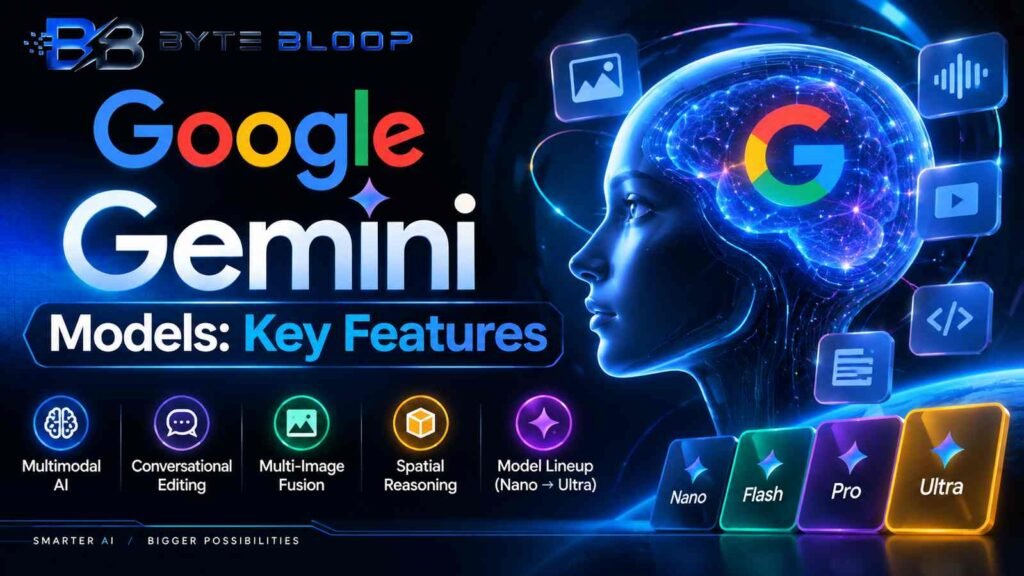
Gemini 3 Pro delivers high‑accuracy text and multimodal generation, ideal for enterprise content creation. Gemini Flash offers a faster, lower‑cost alternative with reduced latency, suitable for real‑time chatbots. Gemini Ultra pushes the envelope with enhanced spatial reasoning, useful for complex problem solving. Gemini Nano, the smallest model, fits edge devices where memory is limited. According to Models | Gemini API, each variant balances speed, cost, and capability to meet diverse developer needs.
Multimodal Capabilities
Gemini can process images, audio, and video alongside text, enabling tasks like image captioning, video summarization, and audio transcription. The 2026 Gemini 3.8 Flash update added instrument reading, allowing the model to interpret musical scores and scientific diagrams. Spatial reasoning is another highlight; Gemini Ultra can analyze 3D layouts and spatial relationships in images, a feature that benefits architecture and design workflows. These capabilities are showcased in the Gemini Enterprise Agent Platform documentation, which lists multi‑image fusion and turn‑based conversational editing as key strengths.
This matters directly for anyone exploring google gemini models key features.
Turn‑Based Conversational Editing
Unlike traditional chat models, Gemini can edit content in a conversational loop, preserving context across turns. This is especially useful for drafting emails, editing code, or refining creative writing. Developers can embed this feature in Google Workspace add‑ons, creating smart assistants that learn from user feedback over time. The feature is highlighted in the Google Gemini: Essential Guide 2026 & Pricing Review, which notes that conversational editing reduces the need for manual revisions.
Getting google gemini models key features right can make a real difference.
Multi‑Image Fusion and Character Generation
Gemini can merge multiple images into a single coherent output, enabling composite design creation and advanced photo editing. It also supports character generation, allowing designers to create avatars or NPCs for games and virtual worlds. These functions are powered by the same underlying transformer architecture that handles text, ensuring consistent quality across media types.
That is a core part of understanding google gemini models key features.
Practical Use Cases
1. Content marketing: Use Gemini 3 Pro to generate blog drafts, social media posts, and SEO‑optimized copy quickly. 2. Customer support: Deploy Gemini Flash in chatbots for instant, context‑aware responses. 3. Product design: Leverage Gemini Ultra’s spatial reasoning to prototype interior layouts or mechanical assemblies. 4. Educational tools: Integrate Gemini into learning platforms for interactive tutoring that can read diagrams and explain concepts.
Many readers look into google gemini models key features for exactly this reason.
Pricing and Access
Google offers a tiered pricing model: free access to Nano and Flash for low‑volume use, while Pro, Ultra, and Enterprise tiers require subscription or usage fees. The Release notes | Gemini API detail the latest pricing changes and feature rollouts. Developers can start with the free tier to prototype before scaling to paid plans.
It is worth revisiting google gemini models key features as things develop.
Alternatives to Consider
OpenAI’s GPT‑4o and Anthropic’s Claude 3.5 are comparable multimodal models. However, Gemini’s tight integration with Google’s ecosystem and its specialized spatial reasoning give it an edge for applications that rely on Google Cloud services or require advanced image analysis.
Google Gemini Models Key Features remains highly relevant here.
Key Takeaways
- Gemini offers a full spectrum of models from Nano to Ultra, balancing speed and capability
- Multimodal input—text, image, audio, video—enables diverse creative and analytical tasks
- Turn‑based conversational editing improves content creation workflows
- Spatial reasoning and multi‑image fusion support advanced design and prototyping
- Free tier access allows rapid prototyping before scaling to paid plans
Frequently Asked Questions
What is Google Gemini?
Google Gemini is a family of advanced multimodal AI models that understand and generate text, images, audio, video, and code, designed to power Google’s products and provide API access for developers.
This is a key consideration when it comes to google gemini models key features.
What are the key features of Gemini models?
Key features include multimodal processing, turn‑based conversational editing, spatial reasoning, instrument reading, multi‑image fusion, character generation, and a tiered model lineup from Nano to Ultra.
This matters directly for anyone exploring google gemini models key features.
What are the best use cases for Gemini models?
Best use cases span content marketing, customer support chatbots, product design, educational tools, and creative media production, leveraging Gemini’s rapid generation and contextual editing.
What are the pros and cons of using Gemini models?
Pros: strong multimodal capabilities, tight Google ecosystem integration, scalable pricing, and advanced reasoning. Cons: higher cost for top tiers, limited open‑source availability, and a learning curve for API integration.
Conclusion
Based on the available information and industry analysis, Google Gemini models provide a versatile, multimodal AI platform that balances performance, cost, and integration depth, making them a compelling choice for developers and enterprises looking to embed advanced AI into their products.
Related Reading
- How to Integrate Gemini Flash into Your Chatbot
- Gemini Ultra vs. GPT‑4o: A Feature‑by‑Feature Comparison
Sources & References
- Models | Gemini API – Google AI for Developers
- Release notes | Gemini API – Google AI for Developers
- Google models | Gemini Enterprise Agent Platform
- What Is Google Gemini? 2026 Guide to Models & Features
Related Articles