Strategy Games: Explained
Introduction
Strategy games have long been a staple of both tabletop and digital entertainment, offering players a chance to outwit opponents through careful planning and resource management. Whether you’re building empires, leading armies, or navigating political intrigue, the core appeal lies in the depth of decision‑making and the satisfaction of seeing a well‑crafted plan unfold. In 2026, the genre continues to thrive, with new releases that blend classic mechanics with modern technology, and a resurgence of printed strategy guides that help players master complex titles. This guide breaks down the main sub‑genres, highlights standout games across platforms, and offers practical tips for both newcomers and seasoned strategists. By understanding the fundamentals, you can choose the right game style and elevate your gameplay experience. Let’s dive into the world of strategy games and uncover what makes them so enduring.
What Are Strategy Games?
At their core, strategy games test a player’s ability to plan ahead, allocate resources, and adapt to changing circumstances. They are typically divided into two broad categories: turn‑based strategy (TBS) and real‑time strategy (RTS). TBS games, like Civilization VI or Crusader Kings III, allow players to think through each move before the next player acts. RTS titles, such as StarCraft II or Age of Empires IV, demand quick decision‑making under pressure, with all units acting simultaneously.
Key Features of Strategy Games
While the specifics vary, most strategy games share a handful of core elements:
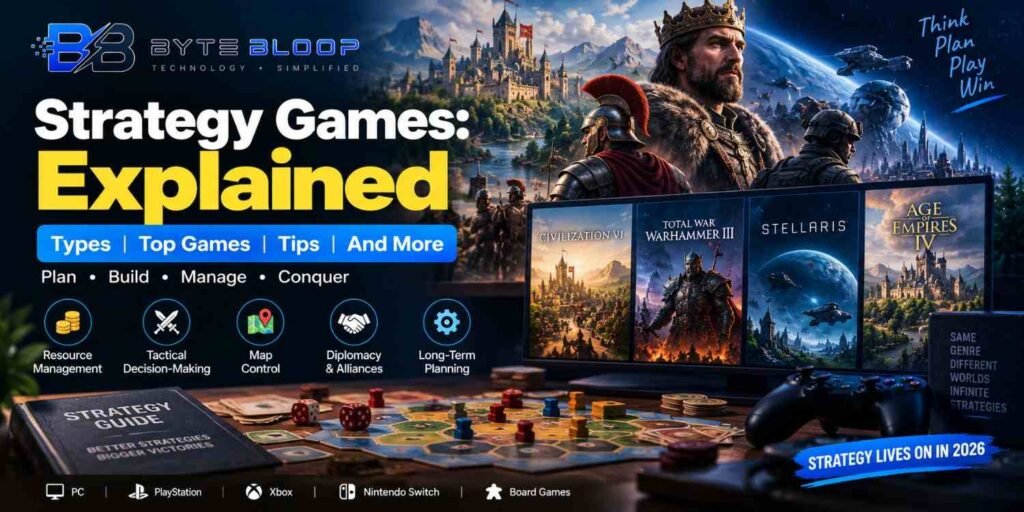
- Resource Management: Collecting and spending gold, food, or technology to sustain your forces.
- Unit and Building Customization: Choosing from a roster of troops or structures to fit your play style.
- Map Control: Securing territories to gain strategic advantages.
- Diplomacy and Alliances: Negotiating with other players or AI factions to advance objectives.
- Long‑Term Planning: Balancing immediate needs with future goals, especially in grand strategy titles.
Top Strategy Games of 2026
According to recent reviews, the best strategy games for PC in 2026 span a range of play styles. For tactical micro‑management, Stellaris remains a favorite, offering deep 4X mechanics. If you prefer base‑building and raids, Total War: Warhammer III delivers massive battles with intricate unit management. For those drawn to long‑term economic planning, Europa Universalis IV and Hearts of Iron IV provide sprawling campaigns that span centuries.
Board game enthusiasts can’t miss the New York Times Wirecutter picks for 2026, which highlight titles like Catan: Starfarers and Terraforming Mars: Ares Expedition—both requiring strategic resource allocation and player interaction. These games translate digital strategy concepts into tactile, social experiences.
Practical Tips for Mastering Strategy Games
1. Learn the Core Loop: Every strategy game has a cycle—resource gathering, unit production, expansion, and conflict. Mastering this loop is key to efficiency.
2. Study Opponent Patterns: In multiplayer, observe how rivals allocate resources and respond to threats. Anticipation can give you a decisive edge.
3. Use Guides Wisely: In 2026, strategy guides still exist in both print and digital formats. They can provide optimal build orders and hidden strategies that save hours of trial and error.
4. Experiment with Modding: Many PC titles support mods that tweak balance or add new content, allowing you to tailor the experience to your preferences.
Who Should Play Strategy Games?
Strategy games appeal to a broad audience. If you enjoy puzzles, problem‑solving, and long‑term planning, you’ll find satisfaction in titles like Crusader Kings III or Sid Meier’s Civilization VI. Competitive players who thrive on quick decisions will appreciate the intensity of RTS games such as StarCraft II. Casual gamers can start with more accessible titles like Age of Empires IV or board games that offer strategic depth without steep learning curves.
Key Takeaways
- Strategy games blend resource management with tactical decision‑making.
- Turn‑based and real‑time styles cater to different play preferences.
- 2026’s top titles include Civilization VI, Total War: Warhammer III, and Stellaris.
- Printed strategy guides remain valuable for mastering complex games.
- Modding and community content extend replayability.
- Strategic depth makes these games appealing to both casual and hardcore players.
Frequently Asked Questions
What is the difference between turn‑based and real‑time strategy games?
Turn‑based strategy games let players take turns making moves, allowing for deliberate planning, while real‑time strategy games require simultaneous action and rapid decision‑making.
What are the key features of grand strategy games?
Grand strategy games focus on long‑term economic planning, diplomatic relations, and large‑scale warfare, often spanning centuries and requiring macro‑level management.
What are the best use cases for printed strategy guides in 2026?
Printed guides help players learn optimal build orders, uncover hidden strategies, and save time on trial‑and‑error, especially in complex titles like Civilization VI and Stellaris.
What are the pros and cons of playing strategy games on PC versus board games?
PC strategy games offer dynamic AI, real‑time action, and mod support, but can be time‑consuming. Board games provide social interaction and tactile engagement but may lack the depth of digital simulations.
How can beginners start learning strategy games?
Begin with accessible titles such as Age of Empires IV or Catan: Starfarers, use beginner guides, and gradually explore more complex games as confidence grows.
Conclusion
Based on the available information and industry analysis, strategy games in 2026 continue to thrive by offering deep decision‑making, diverse play styles, and robust community support. Whether you prefer the measured pace of turn‑based titles, the adrenaline of real‑time battles, or the social engagement of board games, the genre delivers engaging experiences that reward planning, adaptability, and strategic thinking.
Related Reading
- Top 10 Board Games for Strategic Thinkers
- How to Build a Successful Gaming PC for Strategy Titles