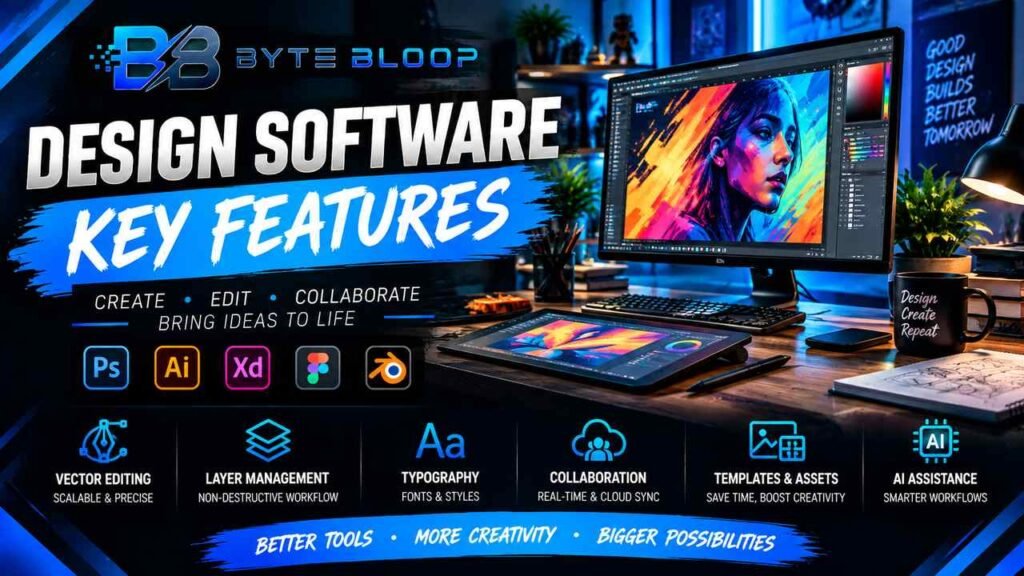
Design Software: Key Features
Introduction
Design Software Key Features is a topic worth understanding well. Design software has become indispensable for artists, engineers, and marketers alike, offering powerful tools that transform raw ideas into polished visuals. Over the past decade, the industry has evolved from simple vector editors to AI‑powered platforms that support real‑time collaboration, advanced typography, and seamless integration with other digital workflows. Whether you’re drafting a brand identity, prototyping a product, or modeling complex mechanical parts, the right software can dramatically reduce iteration time and improve final quality.
This guide explores the core features that define today’s leading design tools, explains why they matter, and provides practical examples of how they can be applied in everyday projects. By understanding these key capabilities, you’ll be better equipped to choose a solution that aligns with your creative goals and technical requirements. In the following sections, we’ll break down the most common feature sets, compare top-tier options, and outline best practices for implementation.
Core Feature Sets of Modern Design Software
Vector Editing & Precision
Vector tools allow designers to create scalable graphics that maintain crisp edges at any resolution. Features such as anchor point manipulation, bezier curves, and shape builders enable intricate illustrations without pixel loss. Adobe Illustrator, for example, offers auto‑detect and color removal capabilities that streamline asset cleanup, as highlighted in the 2026 design software list.
Layer Management & Non‑Destructive Workflow
Layer‑based control lets users isolate elements, apply effects, and adjust opacity without altering underlying content. Non‑destructive editing ensures that changes can be reversed or modified later, a critical feature for iterative design processes. Many tools now support smart objects or component libraries that automatically propagate updates across multiple files.
Typography & Font Integration
Advanced typography modules provide fine control over kerning, ligatures, and variable fonts. Integrated font libraries and the ability to embed typefaces directly into files reduce dependency on external resources. Real‑time preview of text styles across multiple devices helps maintain brand consistency.
This matters directly for anyone exploring design software key features.
Real‑Time Collaboration & Cloud Sync
Cloud‑based platforms enable multiple users to edit the same project simultaneously, with changes reflected instantly. Features such as version history, comment threads, and permission controls support distributed teams and remote workflows. This is especially valuable for agencies and product teams that require rapid feedback loops.
Template & Asset Marketplace
Access to ready‑made templates, icons, and stock imagery accelerates concept development. A curated marketplace often includes vector packs, UI kits, and 3D models that can be customized on the fly. This reduces the time spent on repetitive tasks and encourages creative experimentation.
Getting design software key features right can make a real difference.
AI‑Powered Assistance
Artificial intelligence is increasingly integrated into design tools, offering auto‑layout suggestions, color palette generation, and even automated image retouching. AI can analyze user intent and propose design adjustments that align with current trends, thereby shortening the ideation cycle.
Use Cases Across Industries
Graphic Design & Branding
For branding agencies, vector editing, typography control, and template libraries are essential. Designers can quickly iterate logos, business cards, and marketing collateral while maintaining brand guidelines.
That is a core part of understanding design software key features.
Product Design & CAD
Mechanical engineers rely on CAD modules that support parametric modeling, simulation, and 3D printing workflows. Tools that integrate with manufacturing pipelines reduce the gap between design and production.
UI/UX Prototyping
UI designers benefit from drag‑and‑drop editors, component libraries, and real‑time collaboration. Rapid prototyping tools allow stakeholders to test interactions before development begins.
Many readers look into design software key features for exactly this reason.
Content Creation for Social Media
Marketers use design software to produce engaging visuals for platforms like Instagram and TikTok. Features such as auto‑formatting for multiple aspect ratios and built‑in export presets streamline the publishing process.
Choosing the Right Software
When evaluating design solutions, consider the following criteria:
It is worth revisiting design software key features as things develop.
- Feature Alignment: Does the tool support the specific workflows you need (e.g., vector, CAD, UI)?
- Scalability: Can it handle large files and complex projects without performance degradation?
- Collaboration Needs: Does it offer real‑time editing and version control for team environments?
- Integration Ecosystem: Are there plugins or APIs that connect to your existing tools?
- Cost & Licensing: Does the pricing model fit your budget and usage patterns?
Popular options in 2026 include Adobe Illustrator for vector work, Autodesk Fusion 360 for CAD, and Figma for UI/UX collaboration. Each platform excels in its niche but offers overlapping features that can be leveraged through cross‑platform workflows.
Implementation Best Practices
Adopting new design software requires careful planning. A phased rollout—planning, pilot, training, and full deployment—ensures minimal disruption. According to the practical step‑by‑step guide on design software implementation, focusing on user adoption, data migration, and workflow mapping can accelerate return on investment.
Design Software Key Features remains highly relevant here.
Training programs should emphasize core features and best practices, such as layer organization and non‑destructive editing. Providing templates and style guides within the platform helps maintain consistency across teams.
Finally, establish metrics to track productivity gains, error rates, and design quality improvements. Regular reviews will highlight areas for further optimization and justify ongoing investment in the software ecosystem.
This is a key consideration when it comes to design software key features.
Future Trends to Watch
The next wave of design software will likely deepen AI integration, offering predictive design suggestions and automated compliance checks. Cloud‑native architectures will further enhance collaboration, while open‑source ecosystems may democratize access to advanced CAD and prototyping tools.
By staying informed about these evolving capabilities, designers and teams can future‑proof their workflows and maintain a competitive edge in an increasingly digital marketplace.
This matters directly for anyone exploring design software key features.
Key Takeaways
- Vector editing and precision are essential for scalable graphics
- Layer management and non‑destructive workflows enable iterative design
- Real‑time collaboration and cloud sync support distributed teams
- AI‑powered assistance accelerates ideation and trend alignment
- Integration with existing toolchains ensures a seamless workflow
Frequently Asked Questions
What is design software key features?
Design software key features refer to the core functionalities—such as vector editing, layer management, typography control, real‑time collaboration, and AI assistance—that enable designers to create, refine, and share digital assets efficiently.
What are the key features of top design tools?
Top design tools typically include advanced vector editing, non‑destructive layer control, robust typography options, cloud‑based collaboration, template marketplaces, and AI‑driven suggestions.
What are the best use cases for design software?
Use cases span graphic branding, product CAD design, UI/UX prototyping, and social media content creation, each benefiting from specific feature sets like precise vector control or real‑time collaboration.
What are the pros and cons of adopting new design software?
Pros include increased productivity, streamlined workflows, and enhanced collaboration. Cons may involve learning curves, integration challenges, and upfront licensing costs.
Conclusion
Based on the available information and industry analysis, design software key features provide the foundational tools that enable creative professionals to produce high‑quality, scalable, and collaborative assets. By focusing on vector precision, non‑destructive workflows, real‑time collaboration, and AI‑powered assistance, designers can streamline their processes, reduce iteration times, and maintain consistency across diverse projects. As the industry continues to evolve, staying attuned to emerging trends—such as deeper AI integration and cloud‑native architectures—will help teams future‑proof their workflows and maintain a competitive advantage in the digital marketplace.
Related Reading
- Top 7 Graphic Design Tools for 2026
Sources & References
- List of Top Designing Software in 2026
- Software Development: A Detailed Guide to 2026
- Practical step‑by‑step‑guide for implementing new design software
Related Articles