Jabalpur Workplace Murder: Stabbing Captured on CCTV
Introduction
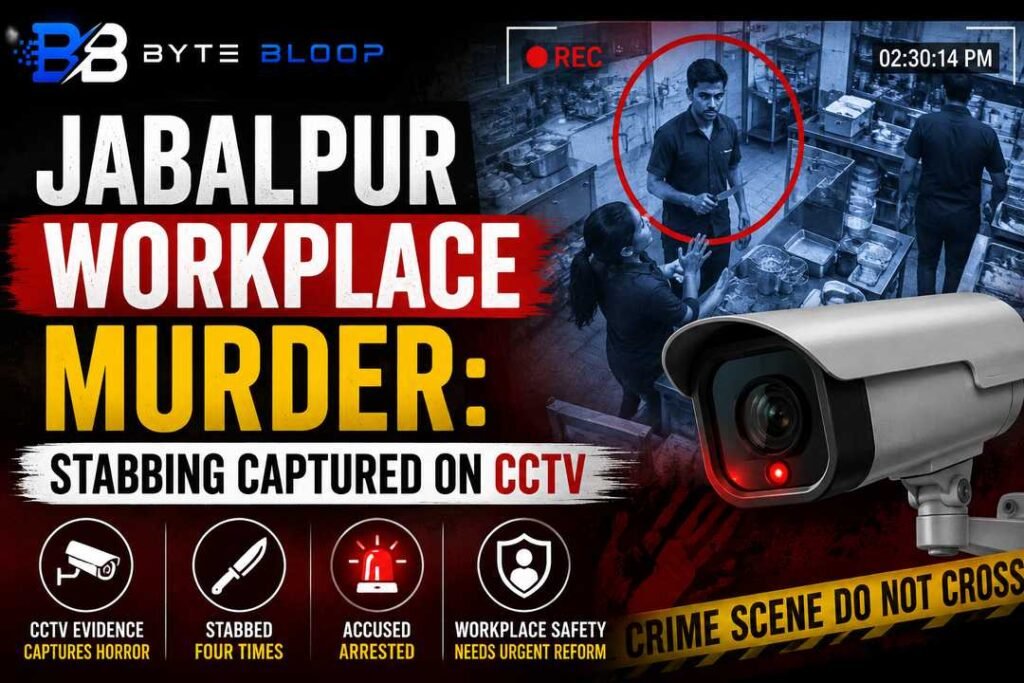
In a chilling incident that has sent shockwaves through the city of Jabalpur, a restaurant employee allegedly stabbed his co‑worker four times before returning to his workstation as if nothing had happened. The entire episode was captured by the establishment’s closed‑circuit television (CCTV) system, providing an unsettling visual record that has quickly gone viral on social media and sparked a heated debate about security protocols in Indian workplaces.
Police officials arrived at the scene after receiving multiple distress calls from employees who heard a scream and later discovered the victim, Muskan Chaudhary, lying motionless on the floor. The alleged perpetrator, identified as Pawan Verma, was seen on camera calmly walking back to the kitchen area, washing his hands, and resuming his duties. The incident has reignited concerns over employee screening, mental‑health support, and the adequacy of surveillance infrastructure in public‑facing businesses.
Background & Historical Context
Jabalpur, a major commercial hub in Madhya Pradesh, has witnessed a rise in workplace‑related violence over the past few years, though incidents of such extreme brutality remain rare. According to a 2024 report by the National Crime Records Bureau, assaults in the hospitality sector increased by 12% between 2022 and 2024, largely attributed to high‑stress environments, irregular working hours, and limited conflict‑resolution mechanisms.
The restaurant where the murder occurred, a popular local eatery known for its fast‑service meals, had previously been praised for its employee-friendly policies. However, internal complaints about interpersonal tension and a lack of clear grievance channels had been documented in an anonymous employee survey conducted earlier this year. While no direct link has been established between those grievances and the current crime, the backdrop underscores the importance of robust workplace safety frameworks.
Key Details & Impact Analysis
According to the police report, the altercation began around 2:30 pm when Verma, reportedly agitated over a minor disagreement regarding shift timings, approached Chaudhary with a kitchen knife. The CCTV footage shows Verma lunging forward, delivering four swift thrusts to Chaudhary’s torso before stepping back, wiping his hands, and walking away. Emergency services were called within minutes, but Chaudhary was pronounced dead at the scene. Verma was apprehended shortly after the incident when he attempted to leave the premises; he is currently being held in Jabalpur Central Jail pending further investigation.
The incident has far‑reaching implications for both the local community and the broader hospitality industry. For employees, the trauma of witnessing such violence can lead to long‑term psychological effects, including PTSD and heightened anxiety about workplace safety. For business owners, the event highlights the urgent need to invest in comprehensive security measures—ranging from real‑time monitoring of CCTV feeds to mandatory conflict‑resolution training. Moreover, the case may prompt legislative bodies to revisit existing labor laws, potentially mandating stricter background checks and mental‑health assessments for frontline staff.
Frequently Asked Questions (FAQs)
What legal charges is the accused facing?
Pawan Verma has been charged under Section 302 of the Indian Penal Code (IPC) for murder, as well as Section 34 for common intention, and Section 34 of the Maharashtra Police Act for assault with a deadly weapon. If convicted, he could face life imprisonment or the death penalty, depending on the court’s discretion.
How reliable is the CCTV footage as evidence?
The CCTV recording is considered a primary piece of evidence because it captures the entire sequence of events in real time, including the exact moments of the attack and the assailant’s subsequent behavior. Forensic analysts have verified the footage’s authenticity, and the video will be presented to the court as part of the prosecution’s case.
What steps can other businesses take to prevent similar incidents?
Experts recommend several proactive measures: (1) installing high‑resolution, 24‑hour surveillance cameras with remote monitoring; (2) conducting regular de‑escalation and anger‑management workshops for staff; (3) establishing clear, anonymous reporting channels for workplace grievances; and (4) performing periodic background and psychological screenings for employees who handle weapons or work in high‑stress environments.
Conclusion
The Jabalpur stabbing serves as a stark reminder that violence can erupt in even the most routine work settings, leaving lasting scars on families, colleagues, and the community at large. While the captured footage provides undeniable proof of the crime, it also offers a crucial learning opportunity for employers, policymakers, and law‑enforcement agencies to strengthen safety protocols, promote mental‑health awareness, and ensure that such tragedies are not repeated. As the legal process unfolds, the hope remains that justice will be served and that the incident will catalyze meaningful reforms across India’s hospitality sector.
Source: India Today