WooCommerce: Explained
Introduction
WooCommerce is the most popular open‑source e‑commerce plugin for WordPress, powering over a million online stores worldwide. Launched in 2011, it transforms a standard WordPress site into a fully functional shop, offering everything from product listings to checkout, shipping, and payment gateways. Its core appeal lies in its flexibility: developers can extend it with plugins, while store owners can customize the look and feel without touching code. WooCommerce’s integration with the WordPress ecosystem means you can leverage themes, plugins, and the familiar admin dashboard to manage inventory, marketing, and analytics. The platform’s free core is complemented by a marketplace of premium extensions, enabling features like subscriptions, bookings, or advanced reporting. Because it’s built on WordPress, it inherits the CMS’s robust security updates, SEO friendliness, and a massive developer community. For small businesses and entrepreneurs looking to launch an online storefront quickly, WooCommerce offers a low‑cost, highly adaptable solution that scales as the business grows.
Below we break down how WooCommerce works, its key components, and why it remains a top choice for e‑commerce in 2026.
How WooCommerce Turns WordPress into a Store
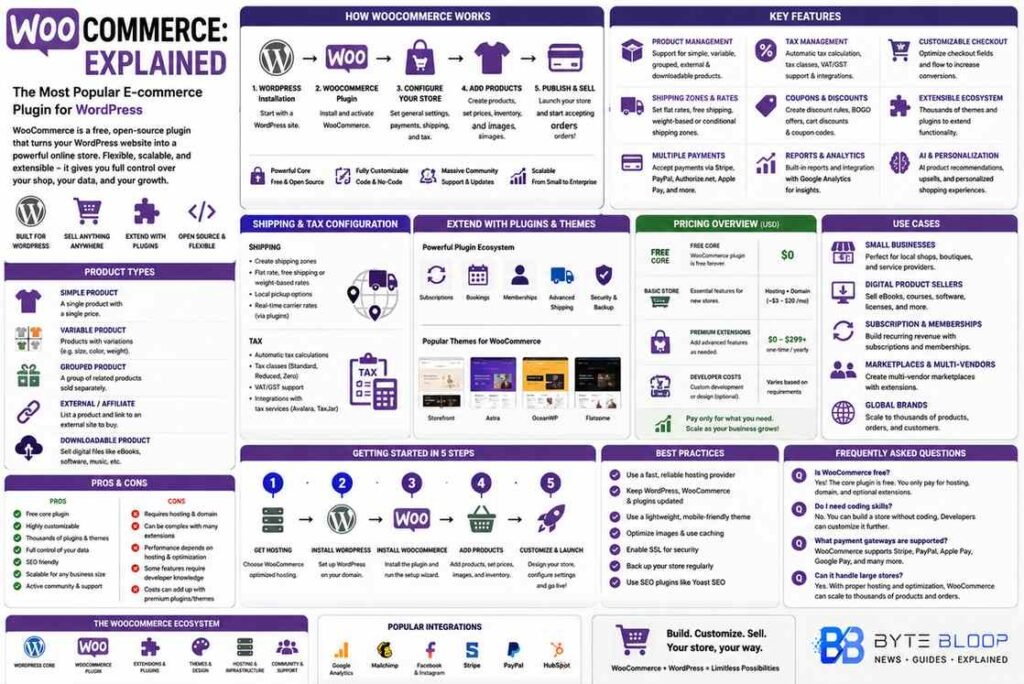
At its core, WooCommerce is a plugin that adds e‑commerce functionality to a WordPress installation. Once activated, it creates new post types—Products, Orders, and Coupons—and a suite of shortcodes that render storefront pages. The admin interface extends the WordPress dashboard, letting you add products, set prices, manage inventory, and configure shipping zones. The checkout process is fully customizable: developers can hook into the woocommerce_checkout_process action to add validation, while store owners can choose from built‑in payment gateways or add third‑party ones like Stripe or PayPal.
Product Types and Variations
WooCommerce supports simple, variable, grouped, external, and downloadable products. Variable products let you offer options—size, color, weight—each with its own SKU and price. Grouped products bundle multiple items under a single listing, useful for accessories or bundles. External products redirect customers to third‑party sellers, while downloadable products enable digital downloads like e‑books or software.
Shipping and Tax Configuration
Shipping is managed through zones, each with its own rates. You can set flat rates, weight‑based rates, or free shipping thresholds. Tax settings allow you to enable automatic calculation based on location, apply tax classes, and integrate with tax APIs. These features make WooCommerce suitable for both local brick‑and‑mortar extensions and global e‑commerce.
Extending WooCommerce: Themes and Plugins
Because WooCommerce runs on WordPress, you can choose from thousands of themes. Many are specifically built for e‑commerce, offering responsive design, product grids, and quick‑view features. The plugin ecosystem further expands functionality: subscription plugins for recurring billing, booking plugins for appointment‑based services, or advanced analytics plugins that integrate with Google Analytics or Shopify’s reporting tools.
AI and Personalization in 2026
Recent updates focus on speed and mobile‑first UX. AI‑powered personalization recommends products based on browsing history, increasing conversion rates. Store owners can deploy machine‑learning models via plugins to suggest upsells or cross‑sells automatically.
Security and Performance Considerations
WooCommerce follows WordPress security best practices: regular core updates, two‑factor authentication, and SSL enforcement. Performance can be enhanced with caching plugins, CDNs, and optimized hosting environments. Because it’s open source, you have full control over the codebase, allowing you to audit and harden the platform as needed.
Use Cases and Success Stories
Small independent artists use WooCommerce to sell prints and merchandise. Mid‑size retailers integrate it with ERP systems for inventory sync. Subscription boxes and digital product vendors rely on its robust licensing and download management. The flexibility to add custom fields and taxonomies means niche businesses—like custom furniture or educational courses—can tailor the store to their workflow.
Pros and Cons
Pros: Free core, extensive plugin ecosystem, deep WordPress integration, scalability, and strong community support.
Cons: Requires hosting and maintenance, can become complex with many extensions, and may need developer help for advanced customizations.
Key Takeaways
- WooCommerce turns WordPress into a full‑featured online store with minimal setup.
- It supports a wide range of product types and shipping options out of the box.
- A vast plugin marketplace adds payment gateways, subscriptions, and AI personalization.
- Security and performance rely on WordPress best practices and third‑party optimizations.
- It scales from small shops to large enterprises with custom development.
Frequently Asked Questions
What is WooCommerce?
WooCommerce is a free, open‑source plugin that adds e‑commerce capabilities to a WordPress site, allowing you to sell physical, digital, and subscription products.
What are the key features of WooCommerce?
Key features include product management, flexible shipping and tax options, multiple payment gateways, extensible plugin ecosystem, and AI‑driven personalization.
What are the best use cases for WooCommerce?
Ideal for small to mid‑size retailers, digital product sellers, subscription services, and businesses that want full control over their storefront and data.
What are the pros and cons of WooCommerce?
Pros: low cost, strong community, extensibility, and WordPress integration. Cons: requires hosting, can become complex with many extensions, and may need developer assistance for advanced customizations.
Conclusion
Based on the available information and industry analysis, WooCommerce remains the leading open‑source e‑commerce solution for WordPress users, combining low cost, scalability, and a rich ecosystem of extensions to meet diverse business needs. Its continued focus on speed, mobile‑first design, and AI personalization positions it well for the evolving online marketplace, making it a compelling choice for entrepreneurs and developers alike.
Related Reading
- Top WordPress Themes for WooCommerce Stores