Antivirus Software: Key Features
Introduction (Antivirus Software Key Features)
Antivirus Software Key Features is a topic worth understanding well. Antivirus software is the frontline defense against the ever‑evolving landscape of digital threats. In an era where malware can morph into ransomware, spyware, or zero‑day exploits, a robust antivirus solution is no longer optional—it’s essential. By scanning files, monitoring network traffic, and employing behavioral analysis, antivirus programs detect and neutralize threats before they can compromise data or disrupt operations. Beyond basic virus detection, modern solutions integrate firewalls, parental controls, and privacy tools to offer a comprehensive security suite.
Understanding the core features that distinguish top‑tier antivirus products empowers users to choose a solution that aligns with their security needs and budget. This guide breaks down those features, highlights real‑world use cases, and provides practical tips for selecting the right software for Windows, Mac, or enterprise environments.
Core Features Every Antivirus Must Offer
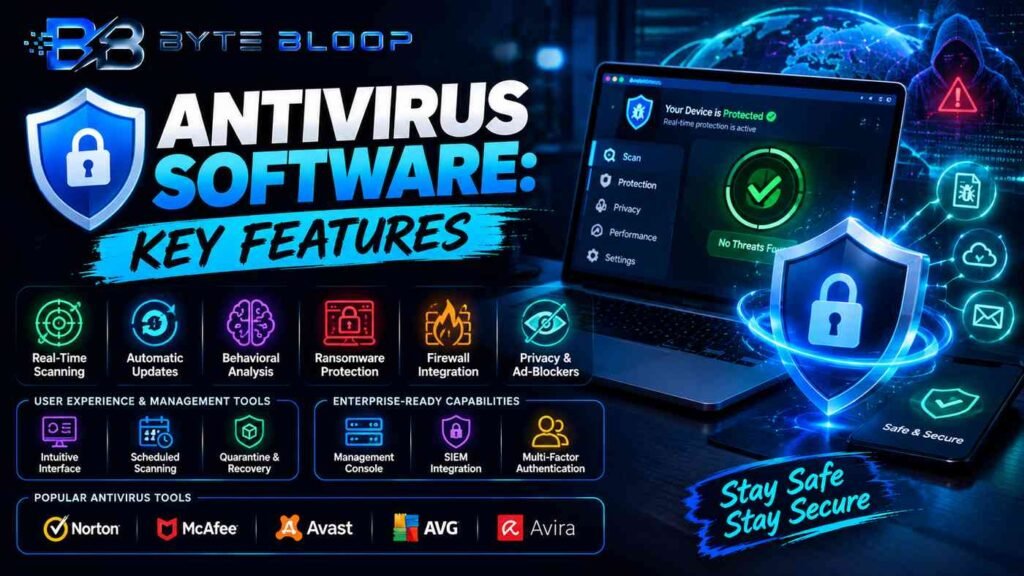
Real‑Time Scanning is the heart of any antivirus program. It continuously monitors files and processes, instantly flagging malicious activity. According to the 2026 Guide to Antivirus Protection and Internet Security, real‑time scanning prevents malware from executing before it can spread.
Automatic Updates keep the virus definition database fresh. Cybercriminals release new variants daily; without timely updates, a system remains vulnerable. Best antivirus software for Windows PCs 2026 notes that products like Norton and Avast maintain a rapid update cadence that outpaces many competitors.
This matters directly for anyone exploring antivirus software key features.
Behavioral Analysis complements signature‑based detection by examining how software behaves. This technique identifies unknown threats that lack a known signature. The Antivirus Malware Software Protection Guide 2026 highlights behavioral analysis as a critical layer for zero‑day protection.
Getting antivirus software key features right can make a real difference.
Ransomware Protection safeguards files by monitoring for suspicious encryption patterns and offering file‑level backups. The Best Antivirus Software We’ve Tested for 2026 lists ransomware protection as a top feature in Norton AntiVirus Plus.
That is a core part of understanding antivirus software key features.
Firewall Integration blocks unauthorized inbound and outbound traffic, reducing the attack surface. Many leading solutions bundle a hardened firewall, as seen in the reviews of McAfee and Avira Prime.
Many readers look into antivirus software key features for exactly this reason.
Privacy & Ad‑Blockers shield personal data from tracking scripts and malicious ads. The 10 Best Antivirus Software for Windows in 2026 article notes that privacy modules are increasingly common in premium suites.
It is worth revisiting antivirus software key features as things develop.
User Experience and Management Tools
Intuitive Interface lowers the learning curve. A user‑friendly dashboard allows quick access to scans, reports, and settings. The 10 Important Features Every Antivirus Software Must Have article lists an intuitive interface as a baseline requirement.
Antivirus Software Key Features remains highly relevant here.
Scheduled Scanning automates periodic checks, ensuring that the system remains clean without manual intervention. This feature is especially valuable for businesses that need to maintain compliance with security audits.
This is a key consideration when it comes to antivirus software key features.
Quarantine & Recovery safely isolates infected files, preventing accidental execution while allowing recovery of legitimate data. Many solutions offer a one‑click restore function, simplifying incident response.
This matters directly for anyone exploring antivirus software key features.
Enterprise‑Ready Capabilities
For organizations, scalability and centralized management are paramount. Antivirus suites often provide a management console that allows IT teams to deploy policies, view real‑time dashboards, and roll out updates across thousands of endpoints.
Getting antivirus software key features right can make a real difference.
Advanced threat hunting tools, integration with SIEM platforms, and the ability to enforce multi‑factor authentication are hallmarks of enterprise‑grade software. The Antivirus Malware Software Protection Guide 2026 discusses how these features enable proactive defense in complex networks.
Choosing the Right Antivirus for Your Needs
When evaluating options, consider the following:
- Operating system compatibility (Windows, apple.com/macos” target=”_blank” rel=”noopener noreferrer”>macOS, Linux)
- Resource footprint—lighter solutions reduce performance impact
- Budget—premium suites often bundle additional tools like VPNs or backup services
- Support—24/7 help desks and community forums can be lifesavers during a breach
For budget‑conscious users, AVG and Avira Prime offer solid protection at a lower price point, while Norton and Avast provide a richer feature set for those willing to invest more. McAfee’s offering is a middle ground, delivering robust firewall and backup tools without the premium cost of the top tier.
Real‑World Applications
Home users benefit from easy‑to‑use interfaces and automatic cloud‑based updates, ensuring their personal data stays safe from phishing and ransomware. Small businesses often rely on scheduled scans and quarantine features to protect sensitive customer information. Large enterprises deploy centralized consoles to enforce uniform security policies, monitor threat landscapes, and comply with regulatory frameworks such as GDPR or HIPAA.
Key Takeaways
- Real‑time scanning and automatic updates are the backbone of effective protection.
- Behavioral analysis catches zero‑day threats that signature‑based engines miss.
- Enterprise features like centralized management and SIEM integration enable scalable security.
- Ransomware protection and backup tools safeguard critical data from encryption attacks.
- User‑friendly interfaces and scheduled scans simplify security for non‑technical users.
Frequently Asked Questions
What is antivirus software?
Antivirus software is a program designed to detect, block, and remove malicious software such as viruses, malware, and ransomware from computers and networks.
What are the key features of antivirus software?
Key features include real‑time scanning, automatic updates, behavioral analysis, ransomware protection, firewall integration, privacy tools, intuitive interfaces, scheduled scanning, quarantine and recovery, and enterprise management consoles.
What are the best use cases for antivirus software?
Use cases range from protecting personal devices at home, securing small business networks, to safeguarding large enterprise infrastructures with centralized policy enforcement and threat hunting.
What are the pros and cons of antivirus software?
Pros: comprehensive threat detection, automated protection, and peace of mind. Cons: potential performance impact, subscription costs, and occasional false positives that may block legitimate files.
Conclusion
Based on the available information and industry analysis, antivirus software remains a cornerstone of digital security, offering layered protection that adapts to new threats through real‑time scanning, behavioral analysis, and ransomware safeguards. By selecting a solution that balances features, usability, and cost, users can confidently defend their devices and data against evolving cyber risks.
Related Reading
- Top 5 Free Antivirus Programs for 2026
Sources & References
- A 2026 Guide to Antivirus Protection and Internet Security
- Best antivirus software for Windows PCs 2026
- Antivirus Malware Software Protection Guide 2026
- The Best Antivirus Software We’ve Tested for 2026
- Understanding Antivirus Software
Related Articles