Biotechnology: How It Works
Introduction (Biotechnology How It Works)
Biotechnology How It Works is a topic worth understanding well. Biotechnology sits at the crossroads of biology, engineering, and computer science, turning living systems into tools that can heal, feed, and protect us. At its core, it involves harnessing cells, organisms, or biological molecules to produce products or develop processes that solve real‑world problems. From the first recombinant insulin to the latest CRISPR‑based gene therapies, the field has evolved from simple fermentation techniques to sophisticated genome editing and synthetic biology platforms.
These advances have already reshaped medicine, agriculture, and environmental stewardship, and they promise even greater impact as AI and high‑throughput screening accelerate discovery. Understanding how biotechnology works requires a look at its foundational tools, typical workflows, and the ethical questions that accompany such power. This article unpacks those elements, offers concrete examples, and looks ahead to the next wave of bio‑innovation.
Foundational Tools and Techniques
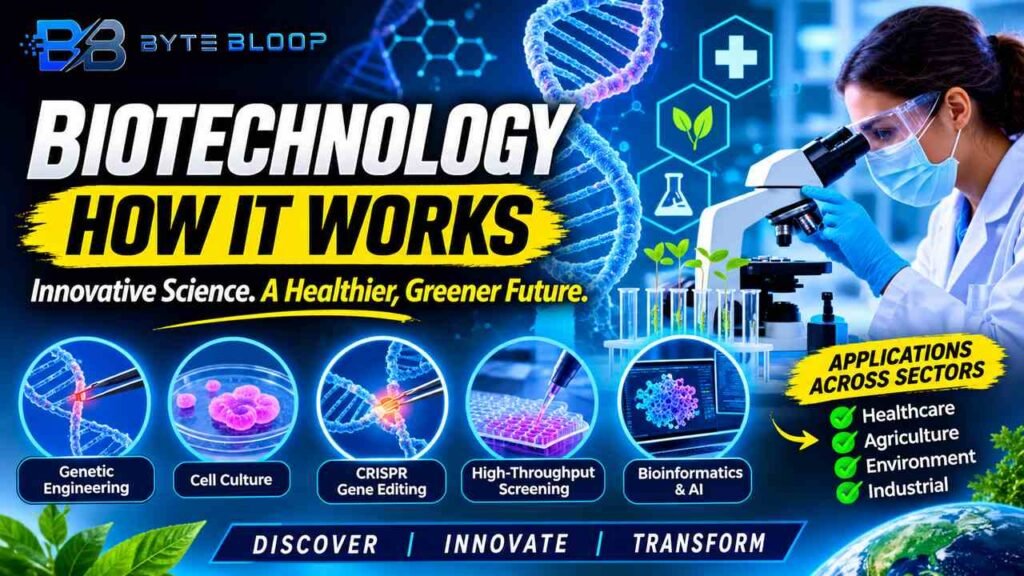
Biotechnology relies on a handful of core techniques that have become standard in research and industry.
- Genetic Engineering – Modifying DNA sequences to introduce, delete, or replace genes. This is the backbone of recombinant protein production, such as insulin or monoclonal antibodies.
- Cell Culture – Growing cells in controlled environments to produce biologics or to study cellular responses.
- CRISPR‑Cas Systems – Precise gene‑editing tools that enable targeted modifications in genomes, opening doors to disease‑free crops and personalized medicine.
- High‑Throughput Screening – Automated assays that test thousands of compounds or genetic variants simultaneously, speeding up drug discovery.
- Bioinformatics & AI – Computational methods that analyze biological data, predict protein structures, and design novel biomolecules.
Typical Biotech Workflow
While each application varies, most biotech projects follow a similar pipeline:
This matters directly for anyone exploring biotechnology how it works.
- Discovery – Identifying a biological target or natural product with therapeutic or industrial potential.
- Design & Engineering – Using genetic tools to create a biological construct or organism that expresses the desired trait.
- Production – Scaling up the engineered system in bioreactors or cell lines to produce measurable quantities.
- Testing & Validation – Assessing safety, efficacy, and stability through in vitro assays, animal models, and clinical trials.
- Regulatory Approval & Deployment – Navigating FDA or EMA guidelines before bringing the product to market.
Practical Examples Across Sectors
Biotechnology’s reach is wide and growing.
Getting biotechnology how it works right can make a real difference.
- Healthcare – Gene therapies like oncolytic viruses and CAR‑T cells treat cancers that once had limited options. RNA vaccines, accelerated during the COVID‑19 pandemic, demonstrate rapid response capabilities.
- Agriculture – CRISPR‑edited crops with drought tolerance or pest resistance reduce reliance on chemical inputs and improve yield stability.
- Environmental – Microbes engineered to degrade plastic or capture atmospheric CO₂ offer promising climate‑mitigation strategies.
- Industrial – Enzymes produced in yeast or bacteria enable bio‑based plastics and biofuels, lowering the carbon footprint of manufacturing.
Emerging Trends Shaping the Future
Recent reports highlight several technologies poised to redefine biotechnology by 2026 and beyond.
That is a core part of understanding biotechnology how it works.
- AI‑Enhanced Biosciences – Machine learning models predict protein folding and optimize metabolic pathways, shortening development cycles.
- Scalable Personalized Medicine – Bioprinting and organoid cultures allow patient‑specific drug testing and regenerative therapies.
- Programmable Biology – Synthetic gene circuits enable organisms to perform complex tasks, from biosensing to autonomous production.
- RNA Therapeutics – Beyond vaccines, mRNA is being explored for protein replacement and gene regulation.
Ethical and Regulatory Considerations
With great power comes responsibility. The rapid pace of biotech innovation raises questions about biosafety, equitable access, and dual‑use risks. Regulatory bodies such as the European Food Safety Authority publish guidelines to ensure new products meet safety standards. Public engagement and transparent policy frameworks are essential to maintain trust and guide responsible deployment.
Many readers look into biotechnology how it works for exactly this reason.
Key Takeaways
- Biotechnology blends biology with engineering to create life‑changing products.
- Core tools include genetic engineering, CRISPR, cell culture, and AI‑driven analytics.
- Typical workflows span discovery, design, production, testing, and regulatory approval.
- Emerging trends like AI‑enhanced biosciences and RNA therapeutics are accelerating innovation.
- Ethical oversight is crucial to balance progress with safety and equity.
Frequently Asked Questions
What is biotechnology?
Biotechnology is the application of biological systems, living organisms, or derivatives to develop products and solve problems, often through genetic manipulation and advanced analytics.
It is worth revisiting biotechnology how it works as things develop.
What are the key features of modern biotechnological methods?
Modern biotech relies on precise genome editing (e.g., CRISPR), high‑throughput screening, scalable cell culture, and AI‑driven design to accelerate discovery and production.
Biotechnology How It Works remains highly relevant here.
What are the best use cases for biotechnology in healthcare?
Use cases include gene therapies for rare diseases, CAR‑T cell treatments for cancers, and mRNA vaccines for rapid pandemic response.
This is a key consideration when it comes to biotechnology how it works.
What are the pros and cons of biotechnology?
Pros: targeted therapies, sustainable production, and environmental remediation. Cons: high development costs, regulatory hurdles, and ethical concerns about genetic manipulation.
Conclusion
Based on the available information and industry analysis, biotechnology offers transformative solutions across medicine, agriculture, and the environment, driven by advances in genome editing, AI, and scalable production. Its continued growth hinges on responsible regulation, equitable access, and sustained investment in research and development.
Related Reading
- The Rise of CRISPR: A Deep Dive into Gene Editing
Sources & References
- Biotechnology: The science behind tomorrow’s breakthroughs
- What is Biotechnology? A Complete Guide for Beginners
- Advances in biotechnology – EFSA – European Union
- Three technologies that will shape biotech in 2026
Related Articles