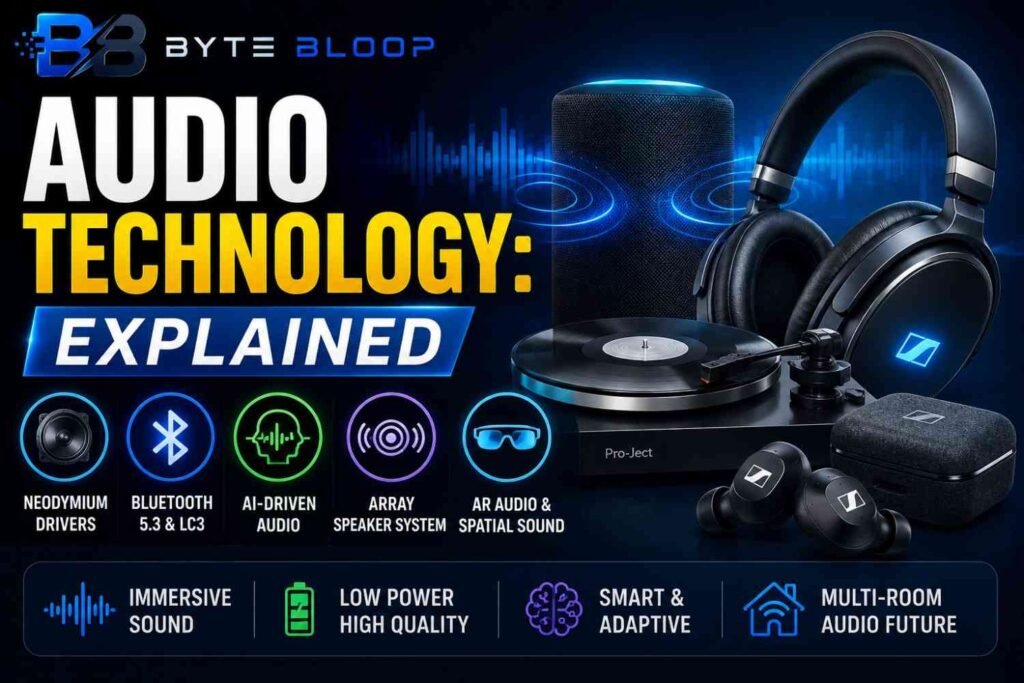
Audio Technology: Explained
Introduction
Audio technology has evolved from bulky analog gear to sleek, AI‑powered wireless systems that fit in the palm of your hand. Today’s consumers demand immersive sound, seamless connectivity, and intelligent customization, all while maintaining portability. The industry is witnessing a convergence of high‑fidelity drivers, advanced codecs, and machine‑learning algorithms that adapt in real time. For designers, engineers, and audiophiles, understanding these components is essential to stay ahead of the curve. In this guide, we unpack the core elements of contemporary audio tech, illustrate real‑world examples, and explore the future landscape shaped by Bluetooth 5.3, neodymium drivers, and augmented‑reality audio. Whether you’re a developer building the next smart speaker or a hobbyist looking to upgrade your home setup, this article will give you a clear, research‑based overview of what audio technology truly entails in 2026.
Core Building Blocks of Modern Audio
At its heart, audio technology relies on three pillars: hardware drivers, wireless protocols, and software intelligence. Neodymium‑based drivers, now standard in high‑end headphones, deliver deeper bass and clearer highs by leveraging a rare earth magnet that offers superior magnetic flux. Array speaker systems, popular in cinema and flagship smart speakers, use multiple drivers arranged in a grid to create spatially accurate sound fields. On the connectivity side, Bluetooth 5.3 introduces low‑energy modes and improved audio codecs like LC3, enabling richer sound at lower power consumption.
Software intelligence has become the differentiator. AI‑driven audio engines analyze room acoustics, user listening habits, and ambient noise to adjust equalization and compression on the fly. This adaptive approach, highlighted in recent industry reports, ensures that a pair of earbuds delivers the same quality whether you’re in a quiet office or a bustling street.
Practical Examples in Everyday Devices
1. Sennheiser’s flagship wireless earbuds combine Bluetooth 5.3 with an AI‑enhanced noise‑cancellation engine that learns the wearer’s environment. The earbuds also feature a built‑in microphone array that supports voice assistants with near‑zero latency.
2. Pro‑Ject’s entry‑level turntable incorporates a digital signal processor (DSP) that applies room‑acoustic corrections, allowing vinyl enthusiasts to experience studio‑grade sound without a full speaker system.
3. Smart home speakers now routinely use array speaker systems to deliver 360° sound. When paired with AR audio overlays, users can localize sound sources in a virtual space, enhancing gaming and virtual‑tour experiences.
Emerging Trends Shaping the Future
Bluetooth is moving beyond mere connectivity. Industry experts predict that by 2028, Bluetooth mesh networking will enable multi‑room audio orchestration without a central hub, simplifying home automation. Meanwhile, augmented‑reality audio is set to transform how we interact with digital content, using spatial sound cues to guide users through virtual environments.
AI’s role is expanding from post‑processing to real‑time generation. Voice‑activated AI can now synthesize music on the fly, tailoring melodies to the listener’s mood or activity. This capability, showcased in recent demos, hints at a future where sound is as programmable as code.
Challenges and Considerations
While the technology is impressive, manufacturers face hurdles such as battery life, heat dissipation in compact drivers, and regulatory constraints on wireless spectrum. Consumers must also navigate a fragmented market where codec support varies across devices, leading to inconsistent audio quality.
For developers, ensuring backward compatibility with older Bluetooth versions and providing transparent user controls for AI settings are critical for adoption. In contrast, audiophiles often prioritize analog fidelity, pushing the industry toward hybrid designs that blend digital convenience with analog warmth.
How to Choose the Right Audio Tech for You
1. Identify your primary use case: streaming music, gaming, professional audio production, or casual listening.
2. Check codec support: look for LC3 or aptX HD for higher bandwidth.
3. Evaluate AI features: if you value adaptive sound, choose devices with machine‑learning engines.
4. Consider form factor: true wireless earbuds offer mobility, while in‑room speakers provide depth and volume.
5. Read reviews on real‑world performance: lab specs can be misleading without context on room acoustics and user behavior.
Key Takeaways
- Neodymium drivers deliver richer bass and clearer highs in compact form
- Bluetooth 5.3 and LC3 codecs enable high‑quality audio with lower power
- AI engines adapt sound in real time based on environment and user habits
- Array speaker systems create spatially accurate sound fields for immersive experiences
- Emerging trends like mesh networking and AR audio will redefine multi‑room setups
Frequently Asked Questions
What is audio technology explained?
Audio technology refers to the tools, components, and software that capture, process, transmit, and reproduce sound. It covers everything from analog microphones to modern AI‑driven digital signal processors.
What are the key features of modern audio devices?
Key features include high‑fidelity drivers like neodymium magnets, advanced wireless protocols such as Bluetooth 5.3 with LC3 codec, AI‑driven adaptive equalization, and spatial audio capabilities via array speaker systems.
What are the best use cases for AI‑driven audio?
AI‑driven audio excels in environments that demand real‑time adaptation—smartphones in noisy streets, gaming setups requiring dynamic soundscapes, and professional studios that need precise acoustic corrections.
What are the pros and cons of wireless audio?
Pros: portability, convenience, and integration with smart ecosystems. Cons: potential latency, battery limitations, and variable codec support leading to inconsistent quality.
Conclusion
Based on the available information and industry analysis, audio technology in 2026 offers a blend of high‑fidelity hardware, low‑latency wireless protocols, and intelligent software that together deliver immersive, adaptive sound experiences. As manufacturers continue to refine AI algorithms and adopt emerging standards like Bluetooth mesh, consumers can expect even more seamless integration and personalized audio that adapts to their environment and preferences.
Related Reading
- The Rise of AI-Driven Audio in 2026