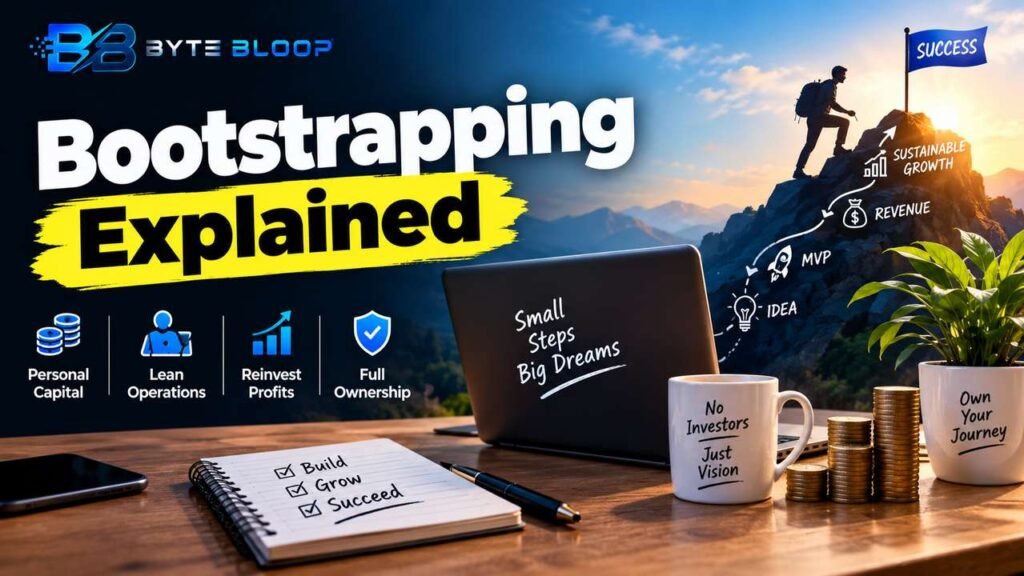
Bootstrapping: Explained
Introduction
Bootstrapping is the art of building a company from the ground up using only the founder’s own resources, whether that be savings, credit, or the cash flow generated by early sales. Unlike venture‑backed startups that rely on external capital, bootstrapped firms grow at a pace dictated by revenue, cost discipline, and strategic reinvestment. This approach forces founders to validate ideas quickly, keep overhead low, and maintain full ownership, which can translate into greater agility and a sharper focus on profitability. In an era where venture funding is both abundant and highly selective, bootstrapping offers a viable alternative for entrepreneurs who value control, speed, and lean operations. Understanding the mechanics, benefits, and pitfalls of bootstrapping is essential for anyone considering a self‑sufficient launch path. Below we break down the core principles, practical tactics, and real‑world examples that illustrate how bootstrapping can be a powerful growth engine.
What Bootstrapping Really Means
At its core, bootstrapping is the practice of starting and scaling a business without outside investment. Instead of seeking angel or venture capital, founders rely on personal savings, early customer revenue, and careful expense management. This strategy is rooted in the idea that a company can grow organically by reinvesting profits and by making incremental, data‑driven decisions that keep costs in check.
Key Pillars of Bootstrapping
- Personal Capital: Initial funding often comes from savings, credit cards, or small personal loans.
- Sweat Equity: Founders trade time and labor for equity, reducing cash burn.
- Revenue Reinvestment: Early profits are funneled back into the business to fuel growth.
- Lean Operations: Minimal staff, outsourced services, and a focus on essential functions keep overhead low.
Why Choose Bootstrapping?
Bootstrapping offers several compelling advantages:
- Full Ownership: No dilution of equity means founders retain control over strategy and culture.
- Financial Discipline: Limited capital forces rigorous budgeting, leading to a culture of efficiency.
- Speed to Market: Without the need to pitch to investors, founders can iterate rapidly based on customer feedback.
- Resilience: Companies that survive early cash crunches are often better positioned to weather market downturns.
Common Bootstrapping Strategies
Successful bootstrapped businesses employ a mix of tactics to stretch limited resources.
1. Start Small, Scale Gradually
Launch a minimum viable product (MVP) that addresses a core customer pain point. Use early sales to validate demand before expanding features.
2. Keep Overhead Low
Work from home or shared spaces, outsource non‑core functions, and negotiate favorable vendor terms. Tools like cloud services and open‑source software reduce upfront costs.
3. Leverage Partnerships
Collaborate with complementary businesses for co‑marketing, shared resources, or joint product bundles. Partnerships can unlock new customer segments without significant capital.
4. Reinvest Profits Strategically
Allocate a high percentage of net income back into product development, sales, or marketing. Prioritize initiatives that directly drive revenue growth.
Real‑World Examples
Several well‑known companies began as bootstrapped ventures:
- Basecamp: The project‑management software started with a $10,000 loan and grew to a multi‑million dollar company by reinvesting profits.
- Mailchimp: Founded with a $5,000 seed and a focus on email marketing, it became a leading SaaS provider without external funding.
- GoPro: Initially funded by the founders’ savings and early sales of action cameras, GoPro scaled through reinvested revenue before going public.
Challenges of Bootstrapping
While bootstrapping offers control, it also presents obstacles:
- Capital Constraints: Limited funds can slow product development or marketing efforts.
- Risk Exposure: Personal finances are at stake, increasing personal risk.
- Growth Limits: Scaling quickly may be harder without external capital to fund hiring or infrastructure.
Mitigating these risks involves meticulous financial planning, a clear focus on cash flow, and building a network of advisors who can provide guidance without equity stakes.
When Bootstrapping Makes Sense
Bootstrapping is most suitable when:
- The business model can generate early revenue.
- Founders are comfortable with personal financial risk.
- The product or service can be developed with minimal upfront investment.
- Control and ownership are high priorities.
For founders who value speed, autonomy, and disciplined growth, bootstrapping can be a strategic pathway to sustainable success.
Key Takeaways
- Bootstrapping relies on personal funds and early revenue, not external investors.
- It fosters financial discipline and rapid iteration, preserving full ownership.
- Key tactics include starting small, keeping overhead low, and reinvesting profits.
- Successful bootstrapped companies prove that growth is possible without venture capital.
- Risks include capital constraints and personal financial exposure.”]
- tags
- :
- startup funding,lean startup,entrepreneurship
- faqs
- :
- [object Object],[object Object],[object Object],[object Object]
- conclusion
- :
- Based on the available information and industry analysis
- bootstrapping provides a viable path for startups that prioritize control
- lean operations
- and disciplined growth
- allowing founders to build sustainable businesses without diluting equity or relying on external capital.
- related_article_suggestions
- :
- [object Object],[object Object]
- last_updated
- :
- 2026-09-17
Conclusion
Based on the available information, this topic provides essential insights for readers looking to understand the core concepts and practical applications.