MVP Development: Explained
Introduction (Mvp Development Explained)
What Is an MVP and Why It Matters
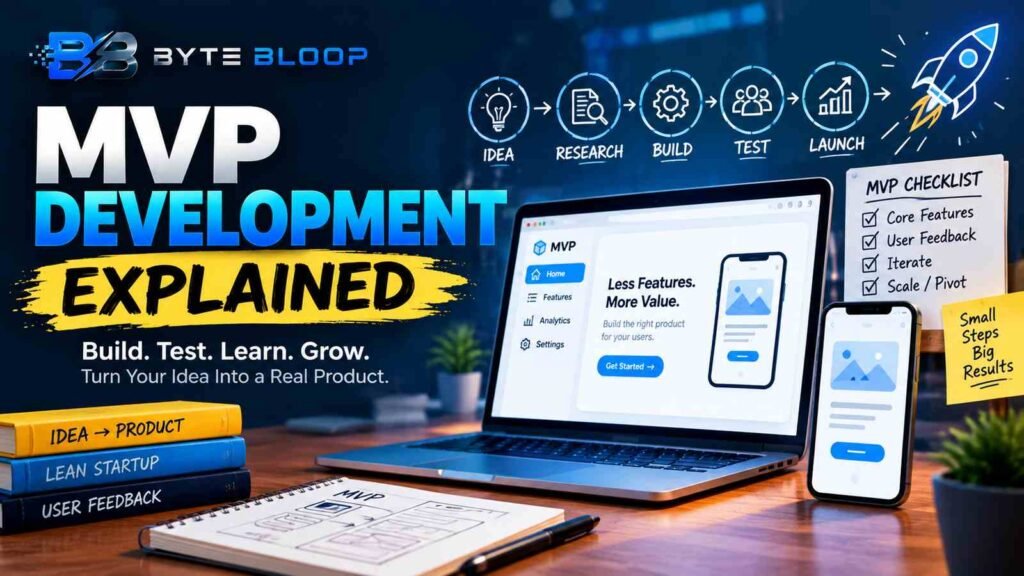
Mvp Development Explained is a topic worth understanding well. An MVP, or minimum viable product, is a stripped‑down version of a product that includes only the core features necessary to solve a user’s problem and to gather feedback. The concept, popularized by Eric Ries’s Lean Startup methodology, allows companies to test assumptions quickly and with minimal investment.
In 2026, startups still rely on MVPs to validate market fit before scaling, as the cost and speed of launching a lean prototype can mean the difference between a $15,000 test and a multi‑million dollar failure. A well‑executed MVP also signals to investors that a team understands its target audience and can pivot based on real data. The process typically involves market research, feature prioritization, rapid prototyping, and iterative releases. By focusing on the most valuable functionality, teams reduce wasted effort on non‑essential components and accelerate time to market.
Step 1: Define the Problem and Validate the Idea
Before any code is written, founders must articulate the problem their product solves. According to the Ultimate Guide to MVP Development for Startups in 2026, the first step is rigorous market research: identify pain points, segment the audience, and confirm that a solution is needed. Validation can be as simple as a landing page, a survey, or a prototype that demonstrates the core value proposition. This stage helps avoid the classic pitfall of building a product that nobody wants.
Step 2: Prioritize Features and Set Scope
Feature scoping is where the MVP truly gets its name. The Best Practices for MVP Software Development guide outlines a “must‑have” versus “nice‑to‑have” matrix. Only the essential features that enable users to achieve the primary goal should be included. A typical MVP might have 3–5 core functionalities, a simple UI, and basic analytics. By limiting scope, teams can keep costs between $15,000 and $100,000+, as reported by the 2026 MVP Development Cost, Timeline & Process guide.
This matters directly for anyone exploring mvp development explained.
Step 3: Choose the Right Technology Stack
Deciding between no‑code platforms and custom development hinges on scalability, security, and time constraints. The 2026 Guide From Idea to Launch stresses that no‑code tools are ideal for quick prototypes but may lock teams into vendor constraints as the product grows. Custom development offers flexibility but requires a larger upfront budget. Many startups start with a low‑code framework to validate the concept and then transition to a fully custom stack once traction is proven.
Getting mvp development explained right can make a real difference.
Step 4: Build, Test, and Iterate
Agile development cycles are the backbone of MVP creation. The MVP Development Guide 2026 recommends short sprints, continuous integration, and automated testing to keep the product stable. After each release, collect user feedback through in‑app surveys, usage analytics, and direct interviews. The goal is to learn what works, what doesn’t, and what users actually value. This iterative loop ensures the product evolves based on real data rather than assumptions.
That is a core part of understanding mvp development explained.
Step 5: Launch, Measure, and Pivot
Once the MVP meets the minimum criteria, it goes live to a limited audience. Key performance indicators—such as activation rate, churn, and net promoter score—should be tracked meticulously. The 2026 Guide From Idea to Launch notes that early investors often look for these metrics to decide whether to fund the next phase. If the data shows strong demand, the team can scale; if not, pivoting or even abandoning the idea may be the smartest move.
Many readers look into mvp development explained for exactly this reason.
Common Pitfalls to Avoid
1. Feature Creep: Adding non‑essential features dilutes focus and inflates costs.
It is worth revisiting mvp development explained as things develop.
2. Ignoring User Feedback: An MVP is a learning tool; neglecting insights can lead to product‑market mismatch.
Mvp Development Explained remains highly relevant here.
3. Premature Scaling: Building a scalable architecture before validating demand wastes resources.
This is a key consideration when it comes to mvp development explained.
Key Takeaways
- Start with clear problem definition and market validation.
- Scope only the core features that deliver value.
- Choose tech that balances speed and future scalability.
- Iterate rapidly, using data to guide decisions.
- Track KPIs to decide whether to scale or pivot.
Frequently Asked Questions
What is an MVP?
An MVP, or minimum viable product, is a simplified version of a product that includes only the essential features needed to solve a user’s problem and to gather early feedback.
This matters directly for anyone exploring mvp development explained.
What are the key features of a successful MVP?
A successful MVP focuses on a single core problem, includes only must‑have functionalities, uses a simple user interface, and incorporates basic analytics for feedback.
What are the best use cases for MVP development?
MVPs are ideal for startups testing new markets, validating product ideas, securing early investment, and launching quickly to gather user data.
What are the pros and cons of using no‑code versus custom development for an MVP?
No‑code platforms allow faster prototyping and lower upfront costs but may limit scalability and customization. Custom development offers flexibility and control but requires more time and budget.
Conclusion
Based on the available information and industry analysis, MVP development provides a disciplined framework for startups to validate ideas, reduce risk, and accelerate time to market. By focusing on essential features, leveraging rapid prototyping, and iterating based on real user data, founders can make informed decisions about scaling or pivoting, ensuring that resources are invested only in products that meet genuine market demand.
Related Reading
- Scaling Beyond the MVP: Strategies for Growth
Sources & References
- MVP Development For Startups in 2026 | Ultimate Guide
- MVP Development Cost, Timeline & Process (2026 Guide)
- Best Practices for MVP Software Development
- MVP Development: 2026 Guide From Idea to Launch
- MVP Development for Startups in 2026 – GateTouch
- MVP Development Guide 2026
Related Articles