Analytics Tool Reviews: Features Tested
Introduction (Analytics Tool Reviews Features Tested)
Analytics Tool Reviews Features Tested is a topic worth understanding well. Analytics tools shape how companies understand customer journeys, optimize conversions, and drive growth. In 2026, the market has expanded beyond classic web analytics to include real‑time behavioral platforms, performance dashboards, and AI‑powered insights. Choosing the right tool requires evaluating features that match your team’s workflow, data volume, and strategic goals. This guide distills the most common feature sets, highlights key differences among leading platforms, and explains how each fits specific use cases. By focusing on tested capabilities rather than hype, you can avoid costly mis‑investments and unlock actionable data faster. The following sections break down the essential features, performance expectations, and practical trade‑offs of today’s top analytics solutions.
Core Feature Landscape
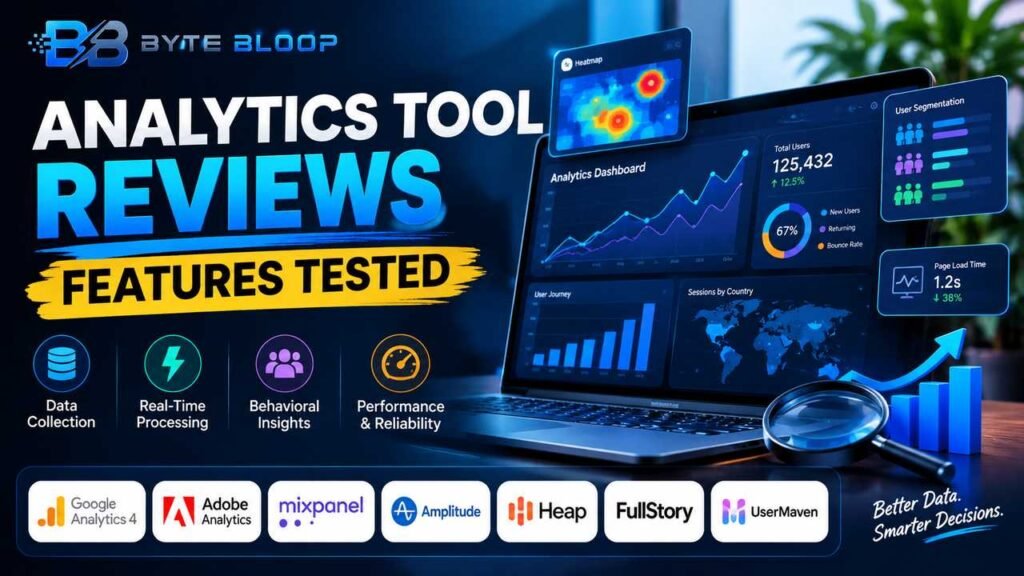
Most analytics platforms now bundle four pillars: data collection, real‑time processing, behavioral depth, and advanced analytics. According to the FullStory blog, real‑time platforms like FullStory and Quantum Metric prioritize event‑level tracking and instant dashboards. GA4 and Adobe Analytics remain strong in cross‑device attribution and long‑term cohort analysis. Performance analytics tools such as UserMaven focus on load times, error rates, and user experience metrics. Finally, product analytics suites—Amplitude, Mixpanel, and Heap—offer funnel analysis, retention curves, and user segmentation.
Data Collection & Integration
Drag‑and‑drop data preparation is a common requirement. Gartner’s 2026 review notes that modern BI platforms support user‑friendly data blending, reducing reliance on SQL. Integration with marketing stacks, CRM systems, and cloud warehouses is essential for unified reporting. Tools like Adobe Analytics provide native connectors to Adobe Experience Cloud, while open‑source friendly platforms like Looker Studio allow custom API pulls.
This matters directly for anyone exploring analytics tool reviews features tested.
Real‑Time Processing
Real‑time dashboards enable rapid hypothesis testing. FullStory’s real‑time heatmaps, as highlighted in the 2026 blog, allow teams to spot friction points within seconds. Quantum Metric’s “live‑view” feature streams data to the UI, reducing latency to under a minute. In contrast, GA4’s real‑time reporting offers a broader view but with a 15‑minute delay.
Getting analytics tool reviews features tested right can make a real difference.
Behavioral Depth & User Segmentation
Behavioral analytics tools excel at mapping user journeys. According to the YouTube review, platforms like Mixpanel and Amplitude provide event‑level granularity and cohort segmentation. Heap’s auto‑capture model eliminates the need for manual tagging, but may generate noisy data if not curated. For product teams, the ability to drill down from a single event to a full user path is a decisive factor.
That is a core part of understanding analytics tool reviews features tested.
Performance & Reliability Metrics
Performance analytics platforms such as UserMaven specialize in page load, error, and resource usage metrics. They integrate with browser dev tools to surface bottlenecks in real time. For marketing teams, performance insights help correlate site speed with conversion rates, a trend underscored by the 2026 Top Enterprise Website Analytics Tools Guide.
Many readers look into analytics tool reviews features tested for exactly this reason.
Comparative Snapshot
While each tool has its niche, a quick comparison helps clarify choices:
It is worth revisiting analytics tool reviews features tested as things develop.
- FullStory & Quantum Metric: Real‑time behavioral depth, instant heatmaps.
- GA4 & Adobe Analytics: Cross‑device attribution, long‑term cohort analysis.
- UserMaven: Performance dashboards, load time monitoring.
- Amplitude, Mixpanel, Heap: Funnel analysis, retention curves, auto‑capture.
Pros & Cons
Pros of real‑time platforms include rapid iteration and low data latency. Cons often involve higher cost and steeper learning curves. Traditional web analytics tools offer robust attribution but may lag in real‑time insight. Performance tools deliver actionable speed metrics but can overlook deeper behavioral context. Product analytics suites provide rich segmentation but may require dedicated data teams to maintain data quality.
Analytics Tool Reviews Features Tested remains highly relevant here.
Who Should Use Which Tool?
Small startups with limited data teams benefit from all‑in‑one solutions like Amplitude, which combine behavioral depth with easy setup. Mid‑size enterprises that need cross‑channel attribution often choose GA4 or Adobe Analytics. Teams focused on site speed and UX optimization gravitate toward UserMaven or similar performance platforms. Large enterprises with complex data pipelines may layer multiple tools, using a BI layer for consolidation.
This is a key consideration when it comes to analytics tool reviews features tested.
Key Takeaways
Frequently Asked Questions
What is the difference between real‑time and batch analytics?
Real‑time analytics process data as events occur, delivering near‑instant insights, while batch analytics aggregate data at scheduled intervals, often with a delay.
This matters directly for anyone exploring analytics tool reviews features tested.
What are the key features of top analytics platforms?
Key features include event tracking, real‑time dashboards, user segmentation, cohort analysis, performance monitoring, and integration with marketing or BI tools.
What are the best use cases for performance analytics tools?
Performance tools are ideal for monitoring page load times, error rates, and resource usage, helping teams correlate technical health with conversion metrics.
What are the pros and cons of using a single all‑in‑one analytics platform?
Pros include simplified setup and unified data; cons involve higher cost, potential feature overload, and limited depth in niche areas.
Conclusion
Based on the available information and industry analysis, analytics tool reviews reveal that no single platform dominates all use cases. Real‑time behavioral platforms excel in rapid experimentation, while traditional web analytics provide deep attribution. Performance tools deliver critical speed insights, and product analytics suites enable detailed user journey mapping. Selecting the right mix depends on team size, data maturity, and specific business objectives.
Related Reading
- Choosing the Right Web Analytics Platform for Your Business
Sources & References
- 14 of the Best Real-time Analytics Platforms in 2026 — Find the best real-time analytics platform for your team. See how Fullstory and other tools compare on behavioral depth, real-time …
- Top 10 web analytics tools for 2026.
- Analytics and Business Intelligence Platforms Reviews …
- 10 best performance analytics tools in 2026 (compared)
- Best Product Analytics Tools (2026) – My Honest Review
- 7 Best Data Analysis Tools for 2026
- 2026 Top Enterprise Website Analytics Tools Guide
- 12 Best Marketing Analytics Platforms for 2026 [According …
Related Articles