DNS: Explained – A Comprehensive Guide
Introduction
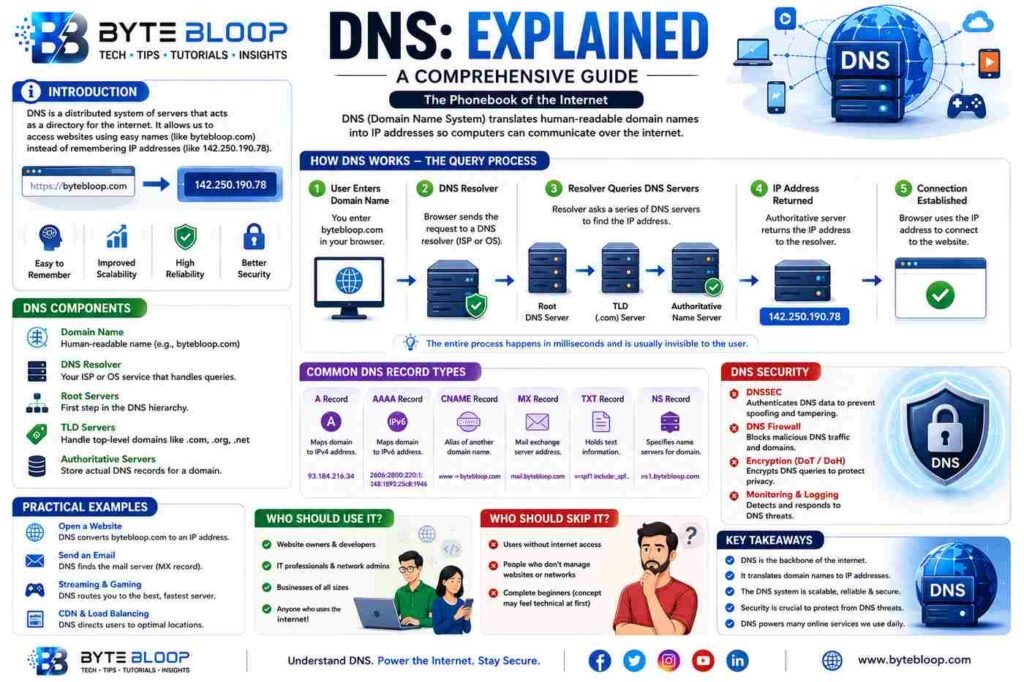
The Domain Name System, commonly referred to as DNS, is a critical component of the internet infrastructure. It serves as a phonebook for the internet, translating human-readable domain names into machine-readable IP addresses. This process enables computers to communicate with each other over the internet, allowing users to access websites and online services using easy-to-remember domain names instead of difficult-to-remember IP addresses. The DNS is a network of directories that work together to provide this translation service, making it possible for users to connect to websites and other online resources. The importance of DNS cannot be overstated, as it plays a vital role in the functioning of the internet as we know it. Without DNS, users would have to remember the IP addresses of every website they want to visit, which would be impractical and inconvenient. The DNS system is designed to be scalable, reliable, and secure, ensuring that users can access online resources quickly and efficiently.
The DNS system consists of a hierarchical structure of domain name servers, each of which is responsible for a specific domain or subdomain. When a user enters a domain name into their web browser, the browser sends a request to a DNS resolver, which then queries a series of DNS servers to determine the IP address associated with the domain name. This process is typically transparent to the user, who is only aware of the domain name they entered into their browser. The DNS system also provides a number of other features, including load balancing, content delivery network (CDN) integration, and security measures such as DNSSEC. These features help to ensure that the DNS system is reliable, efficient, and secure, and that users can access online resources quickly and safely.
How DNS Works
The DNS query process involves a series of steps, starting with the user entering a domain name into their web browser. The browser then sends a request to a DNS resolver, which is typically provided by the user’s internet service provider (ISP) or operating system. The DNS resolver then queries a series of DNS servers, starting with the root DNS servers, to determine the IP address associated with the domain name. The root DNS servers direct the query to the top-level domain (TLD) DNS servers, which then direct the query to the authoritative name servers for the domain. The authoritative name servers then return the IP address associated with the domain name to the DNS resolver, which then returns the IP address to the user’s browser. The browser can then use the IP address to connect to the website or online resource.
DNS Security
DNS security is an important consideration, as the DNS system is a critical component of the internet infrastructure. A number of security threats can affect the DNS system, including DNS spoofing, DNS amplification attacks, and DNS tunneling. To mitigate these threats, a number of security measures have been developed, including DNSSEC, which provides a way to authenticate the source of DNS data and ensure that it has not been tampered with. Other security measures include DNS firewalls, which can help to block malicious DNS traffic, and DNS monitoring, which can help to detect and respond to DNS-related security incidents.
Practical Examples
A number of practical examples illustrate the importance of DNS in everyday life. For example, when a user enters the domain name of a website into their web browser, the DNS system is used to translate the domain name into an IP address that the browser can use to connect to the website. Similarly, when a user sends an email, the DNS system is used to determine the IP address of the mail server that will receive the email. The DNS system is also used in a number of other applications, including online gaming, video streaming, and social media.
In addition to its use in these applications, the DNS system is also used in a number of other contexts, including load balancing, content delivery networks (CDNs), and cloud computing. For example, a company may use the DNS system to direct users to different servers based on their location, in order to improve the performance and availability of their website. The DNS system can also be used to integrate with CDNs, which can help to improve the performance and availability of online content.
Key Takeaways
- The Domain Name System (DNS) is a critical component of the internet infrastructure.
- DNS translates human-readable domain names into machine-readable IP addresses.
- The DNS system is designed to be scalable, reliable, and secure.
- DNS security is an important consideration, with a number of security threats and measures available to mitigate them.
- The DNS system has a number of practical applications, including load balancing, content delivery networks (CDNs), and cloud computing.
Frequently Asked Questions
What is DNS?
The Domain Name System (DNS) is a critical component of the internet infrastructure that translates human-readable domain names into machine-readable IP addresses.
How does DNS work?
The DNS query process involves a series of steps, starting with the user entering a domain name into their web browser, and ending with the browser using the IP address to connect to the website or online resource.
What are the benefits of using DNS?
The benefits of using DNS include improved scalability, reliability, and security, as well as a number of practical applications, including load balancing, content delivery networks (CDNs), and cloud computing.
What are the security considerations for DNS?
A number of security threats can affect the DNS system, including DNS spoofing, DNS amplification attacks, and DNS tunneling, which can be mitigated using security measures such as DNSSEC, DNS firewalls, and DNS monitoring.
Conclusion
Based on the available information and industry analysis, the Domain Name System (DNS) is a critical component of the internet infrastructure that plays a vital role in the functioning of the internet as we know it, providing a number of benefits, including improved scalability, reliability, and security, as well as a number of practical applications.
Related Reading
- Introduction to Web Development