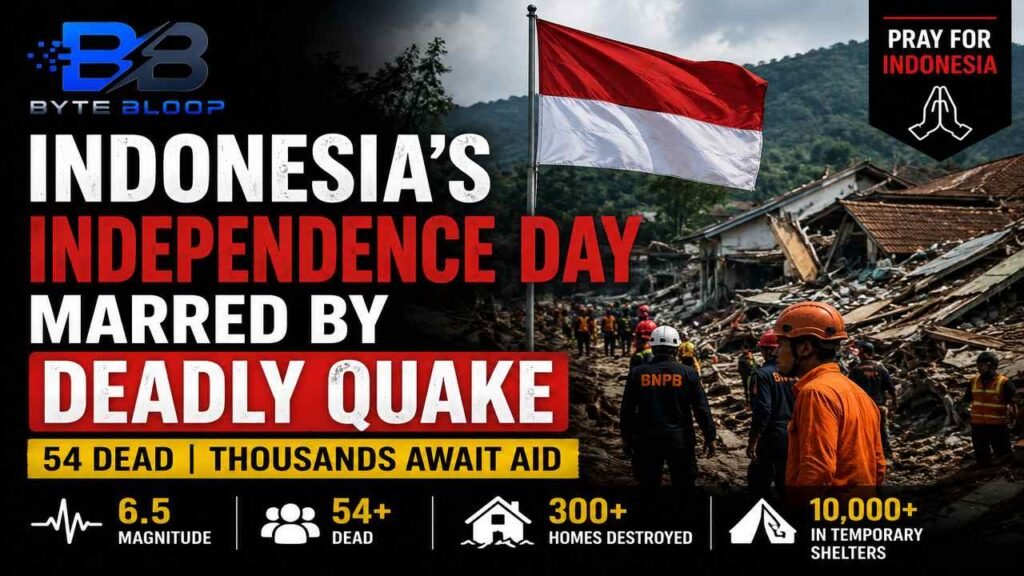
Indonesia’s Independence Day Marred by Deadly Quake: Thousands Await Aid
Introduction
Indonesia celebrated its 79th Independence Day on Monday with flag‑raising ceremonies, cultural performances, and fireworks. Yet the nation’s festive mood was shattered when a powerful 6.5‑magnitude earthquake struck the northern province of West Java, killing at least 54 people and injuring dozens more. Entire villages have been reduced to rubble, and an estimated 10,000 residents are now sleeping in temporary shelters, desperately awaiting food, water, and medical assistance.
Local authorities, humanitarian NGOs, and the Indonesian National Board for Disaster Management (BNPB) have mobilised rescue teams, but logistical bottlenecks and aftershocks are slowing the delivery of life‑saving aid. The disaster comes at a symbolic moment for the archipelago, underscoring the fragility of infrastructure in a country prone to seismic activity.
Background & Historical Context
Indonesia sits on the Pacific Ring of Fire, where the Indo‑Australian and Eurasian tectonic plates converge. The region experiences an average of 80‑90 earthquakes each year, many of which cause significant damage. The most devastating recent event was the 2018 Sulawesi quake and tsunami that claimed over 4,000 lives. In West Java, the last major quake of comparable magnitude occurred in 2009, prompting the construction of stricter building codes that, critics say, were not uniformly enforced.
Independence Day, observed on August 17, is a national holiday marked by parades, concerts, and community gatherings. This year’s celebrations were intended to showcase Indonesia’s economic progress and cultural diversity. Instead, the tragedy has forced the nation to redirect resources from celebration to emergency response, highlighting the ongoing challenge of disaster preparedness in a rapidly growing population.
Key Details & Impact Analysis
The epicentre of the quake was located near the coastal town of Cilegon, approximately 120 km southeast of Jakarta. Initial reports indicated 54 confirmed fatalities, though the death toll could rise as rescue crews continue to search collapsed structures. Over 300 homes have been completely destroyed, while another 1,200 suffered severe damage, leaving thousands without safe shelter. Power outages have affected more than 50,000 households, and the region’s main highway, the Trans‑Java toll road, suffered landslides that impede the transport of relief supplies.
Humanitarian response is being coordinated by BNPB, which has deployed 150 personnel, 20 medical teams, and several search‑and‑rescue dogs. International aid agencies, including the Red Cross and UNICEF, have pledged cash and material assistance. However, logistical hurdles—damaged bridges, blocked roads, and aftershocks that threaten unstable structures—are slowing distribution. Residents in the hardest‑hit villages report shortages of clean water and food, and many are suffering from exposure to the elements as temporary shelters become overcrowded.
Frequently Asked Questions (FAQs)
What immediate assistance is being provided to quake victims?
BNPB and partner NGOs are delivering emergency kits that contain rice, bottled water, blankets, and basic medical supplies. Mobile health units are set up in temporary shelters to treat injuries and prevent disease outbreaks. In the coming days, additional food rations and temporary housing units are expected to arrive via airlift and sea transport.
How can people outside Indonesia help?
Donations to reputable organisations such as the Indonesian Red Cross (PMI), UNICEF Indonesia, and the World Food Programme are the most effective way to support relief efforts. Many of these agencies have set up dedicated online fundraising pages that accept international credit cards and PayPal. Volunteers with relevant expertise (e.g., medical, logistics, engineering) can also register with the United Nations Office for the Coordination of Humanitarian Affairs (OCHA) for possible deployment.
Will the earthquake affect Indonesia’s Independence Day celebrations?
Yes. While some official ceremonies in Jakarta will proceed, many local events in West Java and surrounding provinces have been cancelled or postponed out of respect for the victims. The government has announced a moment of silence during the national broadcast and is urging citizens to donate to relief funds instead of attending large gatherings.
Conclusion
The tragic earthquake that struck Indonesia on its Independence Day serves as a stark reminder of the nation’s vulnerability to natural disasters. As the death toll climbs and thousands remain displaced, coordinated relief efforts are essential to prevent a secondary humanitarian crisis. By supporting credible aid organisations and advocating for stronger building standards, the international community can help Indonesia rebuild stronger, more resilient communities for future generations.
Source: DW News
