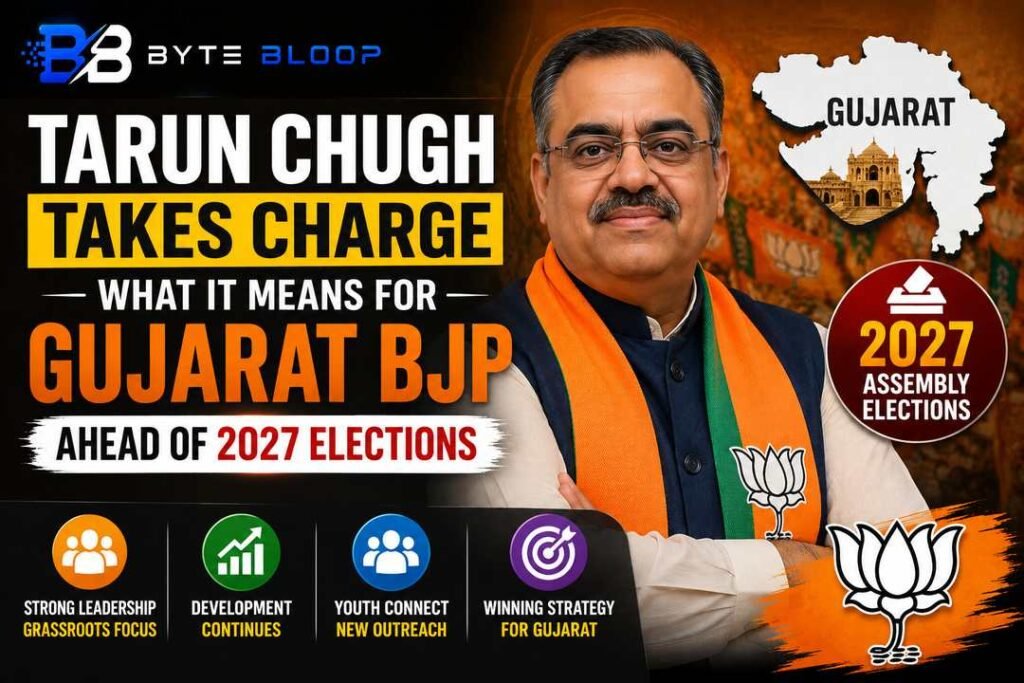
Tarun Chugh Takes Charge: What It Means for Gujarat BJP Ahead of 2027 Elections
Introduction
On August 18, 2026, the Bharatiya Janata Party (BJP) announced the appointment of veteran leader Tarun Chugh as the in‑charge of its Gujarat unit. The decision arrives at a critical juncture, with the 2027 Gujarat Legislative Assembly elections looming and the party seeking to consolidate its dominance in a state that has been a BJP stronghold for over two decades. Chugh, a former minister and a trusted confidante of senior national leaders, brings a blend of administrative experience, electoral acumen, and deep grassroots connections that could reshape the party’s campaign strategy.
Beyond the immediate political calculus, the appointment carries symbolic weight. It reflects the BJP’s intent to balance continuity with renewal, ensuring that the party’s organizational machinery remains robust while also appealing to younger voters and emerging regional issues. Analysts suggest that Chugh’s stewardship may be pivotal in navigating intra‑party dynamics, managing coalition partners, and countering the growing opposition narrative in Gujarat.
Background & Historical Context
Gujarat has been synonymous with BJP success since the early 1990s, producing two prime ministers—Atal Bihari Vajpayee (as a national figure) and Narendra Modi, who served as the state’s chief minister before moving to the national stage. The party’s governance model, emphasizing industrial growth, infrastructure development, and a pro‑business environment, has resonated with a broad cross‑section of voters. However, recent years have witnessed a gradual erosion of margins, with the Congress and emerging regional outfits making inroads in urban pockets and tribal districts.
Tarun Chugh’s political journey mirrors the evolution of the BJP in Gujarat. He entered politics in the early 1990s, rose through the ranks of the party’s youth wing, and held key portfolios such as Water Resources and Rural Development during his tenure as a cabinet minister (2007‑2012). Known for his hands‑on approach to water scarcity issues in Kutch and his advocacy for farmer-friendly policies, Chugh earned a reputation as a pragmatic administrator. After a brief hiatus from frontline politics, he served as a senior advisor to the national party’s election committee, contributing to strategy formulation for the 2019 general elections.
Key Details & Impact Analysis
The appointment grants Chugh authority over candidate selection, campaign messaging, and coordination with central leadership. One immediate impact is expected in the candidate vetting process. By leveraging his experience in rural development, Chugh is likely to prioritize aspirants with proven track records in local governance, especially in districts where the BJP’s vote share has slipped. This could rejuvenate the party’s image in tribal constituencies like Dahod and Dang, where community-specific outreach has been lacking.
Another significant dimension is the potential recalibration of the BJP’s narrative. While the party has traditionally emphasized economic growth and national security, Chugh’s background suggests a shift toward addressing agrarian distress, water management, and youth unemployment—issues that have surfaced in recent farmer protests and urban job market surveys. By integrating these themes into the campaign, the BJP aims to pre‑empt opposition criticism and broaden its appeal beyond its conventional urban middle‑class base.
Frequently Asked Questions (FAQs)
What are Tarun Chugh’s main responsibilities as Gujarat BJP in‑charge?
Chugh will oversee the selection of assembly candidates, coordinate the state’s election campaign, manage relationships with local party units, and act as the primary liaison between Gujarat’s BJP leadership and the national command. He will also guide policy messaging to align with both state-specific concerns and the party’s broader national agenda.
How might Chugh’s appointment affect the BJP’s chances in the 2027 Gujarat elections?
By emphasizing grassroots issues such as water scarcity, farmer welfare, and youth employment, Chugh could help the BJP regain lost ground in rural and tribal areas. His experience in candidate vetting may also ensure a slate of credible, locally respected candidates, potentially improving the party’s overall vote share.
Will the appointment lead to any major changes in the BJP’s campaign strategy?
Yes. Expect a more localized campaign that blends the party’s traditional development narrative with targeted outreach on agrarian and youth concerns. The BJP may also increase its digital engagement and on‑ground mobilization in districts where opposition parties have recently gained traction.
Conclusion
Tarun Chugh’s elevation to Gujarat BJP in‑charge is more than a routine reshuffle; it is a calculated move aimed at reinforcing the party’s organizational depth while addressing emerging voter anxieties ahead of the 2027 assembly polls. By marrying his administrative expertise with a renewed focus on grassroots issues, Chugh could prove instrumental in sustaining the BJP’s dominance in Gujarat. The coming months will reveal whether his strategic adjustments resonate with the electorate, setting the tone for one of India’s most closely watched state elections.
Source: India Today
