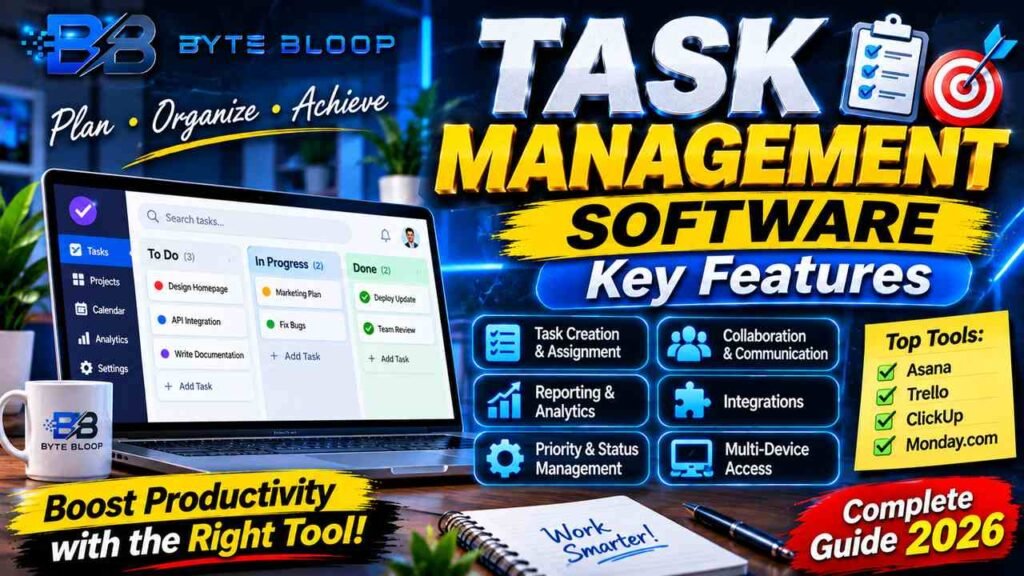
Task Management Software: Key Features
Introduction (Task Management Software Key Features)
Task Management Software Key Features is a topic worth understanding well. Task management software has become indispensable for teams that need to keep projects on track, meet deadlines, and maintain clear accountability. In 2026, the market is saturated with tools ranging from simple to-do lists to full-fledged project orchestration suites. What sets the best solutions apart is a combination of core planning, real‑time collaboration, and data visibility. This guide unpacks the most critical features that every modern task manager should offer, illustrating how they translate into real‑world productivity gains.
Whether you’re a solo freelancer or a distributed team, understanding these capabilities will help you evaluate options and align the tool with your workflow. The article covers feature categories, practical use cases, and a balanced look at pros and cons, all grounded in recent industry research.
Core Planning and Tracking Features
At the heart of any task management system lies the ability to create, assign, and monitor work items. According to Essential project management software features in 2026, core planning and tracking features allow teams to create tasks, assign ownership, set priorities, track dependencies, and plan deadlines using multiple views such as list, board, and calendar. These fundamentals are non‑negotiable for teams that need a single source of truth.
Task Creation and Assignment
Simple task creation—title, description, due date, and assignee—forms the baseline. Advanced tools let you attach files, add custom fields, and link tasks to larger epics or milestones. The ability to bulk‑create or import tasks from spreadsheets speeds up onboarding and migration.
Priority and Status Management
Prioritization tags (e.g., high, medium, low) and status columns (e.g., to‑do, in‑progress, review, done) enable teams to surface the most critical work. Some platforms add dynamic priority scoring based on due dates, effort estimates, or stakeholder impact.
This matters directly for anyone exploring task management software key features.
Dependency Tracking
When one task hinges on another, visibility into dependencies prevents bottlenecks. Tools like Asana and ClickUp provide visual dependency arrows or blockers that alert users when a prerequisite is delayed.
Collaboration and Communication Layer
Task management is not just about data; it’s about people working together. Modern solutions embed communication directly into task cards, reducing context switching.
Getting task management software key features right can make a real difference.
Comment Threads and Mentions
Inline comments keep conversations tied to the relevant work item. Mentioning teammates with @username triggers notifications, ensuring the right people stay in the loop.
File Attachments and Version Control
Uploading documents, images, or code snippets to a task keeps all resources centralized. Some platforms offer basic version history, while others integrate with cloud storage for full versioning.
That is a core part of understanding task management software key features.
Real‑Time Updates and Notifications
Instant updates via web, mobile, or desktop ensure that changes are visible immediately. Customizable notification settings let users choose email, push, or in‑app alerts for task changes, due dates, or comments.
Reporting, Analytics, and Visibility
Decision makers need data to gauge progress, spot risks, and optimize workflows. Robust reporting tools provide insights beyond the task list.
Many readers look into task management software key features for exactly this reason.
Dashboards and Custom Views
Drag‑and‑drop widgets allow teams to create personalized dashboards showing burn‑down charts, workload distribution, or cycle time. Custom views can filter tasks by project, owner, or priority.
Time Tracking and Estimation
Built‑in timers or manual time entries help teams capture effort. Combined with estimate fields, these data points feed into productivity analytics and future planning.
It is worth revisiting task management software key features as things develop.
Export and API Access
Exporting data to CSV, PDF, or integrating via APIs enables deeper analysis in BI tools or syncing with other systems like CRM or accounting software.
Integration Ecosystem
No tool exists in isolation. The best task managers connect with email, calendar, code repositories, and communication platforms.
Task Management Software Key Features remains highly relevant here.
Calendar Sync
Linking to Google Calendar or Outlook ensures that task deadlines appear in personal schedules.
Developer Tool Integration
For tech teams, integration with GitHub, GitLab, or Jira bridges development and project management, automatically creating tasks from commits or pull requests.
This is a key consideration when it comes to task management software key features.
Third‑Party App Marketplace
An active marketplace expands functionality—adding time‑tracking apps, document signing, or advanced reporting plugins.
Usability and Flexibility
Even the most feature‑rich tool can fail if it’s hard to use. Usability is a key differentiator, especially for small teams or freelancers.
This matters directly for anyone exploring task management software key features.
Board vs. List vs. Calendar Views
Visual board views (Kanban) help sprint planning; list views simplify task lists; calendar views aid in deadline management.
Mobile Experience
Responsive mobile apps allow on‑the‑go updates, ensuring that remote or field workers stay connected.
Getting task management software key features right can make a real difference.
Customizability
Custom fields, workflow states, and automation rules let teams tailor the tool to their processes without code.
Pros and Cons of Popular Solutions
Below is a quick comparison of widely adopted tools, highlighting strengths and potential drawbacks.
That is a core part of understanding task management software key features.
- Asana – Excellent for visual planning and collaboration; can become cluttered with large teams.
- ClickUp – Highly customizable and feature‑rich; steeper learning curve.
- Monday.com – Intuitive interface and strong integrations; pricing can rise quickly with add‑ons.
- Todoist – Lightweight and free tier robust; limited advanced reporting.
Practical Example: A Marketing Campaign
Consider a cross‑functional marketing team launching a product. Using a task manager, the project manager creates a campaign epic, breaks it into tasks (content creation, graphic design, social media scheduling), assigns owners, and sets due dates. Dependencies link the design task to the content task, ensuring the graphic is ready before the copy is finalized. The team uses the calendar view to monitor the release date, while the dashboard shows the workload distribution. As tasks progress, comments keep stakeholders informed, and the built‑in reporting tracks time spent versus estimates, feeding into the next sprint planning session.
Key Takeaways
- Core planning and tracking features are non‑negotiable for any task manager.
- Real‑time collaboration tools (comments, mentions, file attachments) reduce context switching.
- Dashboards and reporting enable data‑driven decision making.
- Integration with calendars, code repos, and third‑party apps extends functionality.
- Customizability and a mobile‑first design ensure the tool fits diverse workflows.
- Choosing the right tool depends on team size, complexity, and budget.
Frequently Asked Questions
What is task management software?
Task management software is a digital platform that helps teams create, assign, track, and collaborate on tasks, ensuring projects stay on schedule and within scope.
Many readers look into task management software key features for exactly this reason.
What are the key features of task management software?
Key features include task creation and assignment, priority and status tracking, dependency management, collaboration tools (comments, mentions, file attachments), real‑time updates, dashboards and reporting, time tracking, integration capabilities, and mobile accessibility.
What are the best use cases for task management software?
Ideal for project teams, remote or distributed workers, freelancers, and small businesses that need to coordinate tasks, monitor progress, and maintain accountability across multiple projects.
What are the pros and cons of popular task management tools?
Pros: visual planning, strong collaboration, extensive integrations, and customization. Cons: potential complexity for large teams, pricing tiers that grow with features, and occasional learning curves.
Conclusion
Based on the available information and industry analysis, task management software that combines core planning, real‑time collaboration, and robust reporting delivers measurable productivity gains. By aligning tool capabilities with team workflows, organizations can streamline task ownership, reduce bottlenecks, and make data‑driven decisions that keep projects on track.
Related Reading
- Choosing the Right Project Management Tool for Small Teams
Sources & References
- Essential project management software features in 2026
- Best project management tools and software: My 21 top …
- Affordable task management software 10 picks for 2026
- Best Project Management Software for Small Teams in 2026
- How to Choose the Best Task Management Software in 2026
- Top 11 Task Management Software for Teams in 2026
- Task Management System: Which Platform Is Right …
- 7 Best Task Management & Tracking Tools
Related Articles