API Clients: Explained
Introduction
When modern applications need to communicate, they do so through APIs—interfaces that expose functionality and data across services. An API client is the software that sends requests to these interfaces and interprets the responses. Think of it as the bridge that lets developers and applications talk to external systems without writing raw HTTP code from scratch. In 2026, API clients have evolved from simple REST tools to sophisticated platforms that support GraphQL, gRPC, and even AI‑powered request generation. They streamline development, enable rapid prototyping, and help maintain consistency across environments. Understanding how to choose, configure, and use an API client can dramatically reduce the time spent on integration and testing. Below we unpack the core concepts, highlight popular tools, and provide real‑world scenarios where a well‑chosen client pays off.
What Is an API Client?
An API client is a library or application that encapsulates the logic for constructing HTTP requests, handling authentication, managing retries, and parsing responses. It can be a command‑line tool, a graphical interface, or an SDK generated from an OpenAPI specification. The client abstracts away low‑level details, allowing developers to focus on business logic instead of plumbing.
Key Features of Modern API Clients
- Request Builder: Intuitive UI or code snippets to craft GET, POST, PUT, DELETE, and custom method calls.
- Authentication Management: Built‑in support for OAuth2, API keys, JWT, and custom headers.
- Response Parsing: Automatic JSON, XML, or binary deserialization into language‑specific objects.
- Environment Variables: Switch between dev, staging, and prod endpoints without code changes.
- Testing & Automation: Integrate with CI pipelines to run automated tests against live endpoints.
- Mocking & Recording: Capture requests for offline replay or generate mock servers.
Best Use Cases
API clients shine in scenarios that demand rapid iteration and reliability:
- Rapid Prototyping: Quickly test third‑party services before committing to code.
- API Testing: Automate regression tests to catch breaking changes early.
- Documentation: Embed live examples in API docs for developers to try on the fly.
- Monitoring: Continuously ping endpoints and alert on latency or error spikes.
Popular API Client Tools in 2026
Developers have a growing toolbox, each with its niche strengths:
- Thunder Client – Lightweight VS Code extension that offers a full request builder and collection runner.
- Hoppscotch – Browser‑based, open‑source tool with real‑time collaboration and WebSocket support.
- Apidog – Cloud‑hosted platform that adds AI‑assisted request generation and versioned API monitoring.
- Postman – Enterprise‑ready solution with advanced workflow automation and mock server capabilities.
Pros and Cons
Like any tool, API clients have trade‑offs. On the upside, they reduce boilerplate, enforce consistency, and expose powerful testing features. On the downside, some clients can become bloated, require learning curves, or lock you into proprietary ecosystems. Choosing the right balance depends on team size, project complexity, and integration depth.
Practical Example: Testing a Weather API
Suppose you need to consume the OpenWeatherMap API. Using Hoppscotch, you can:
- Create a new request, set the endpoint to
https://api.openweathermap.org/data/2.5/weather. - Add query parameters like
q=Londonandappid=YOUR_KEY. - Send the request and instantly view the JSON response.
- Save the request to a collection and run it nightly to monitor uptime.
With Thunder Client, the same steps are available inside VS Code, allowing developers to keep everything in one environment.
Integrating Clients into CI/CD
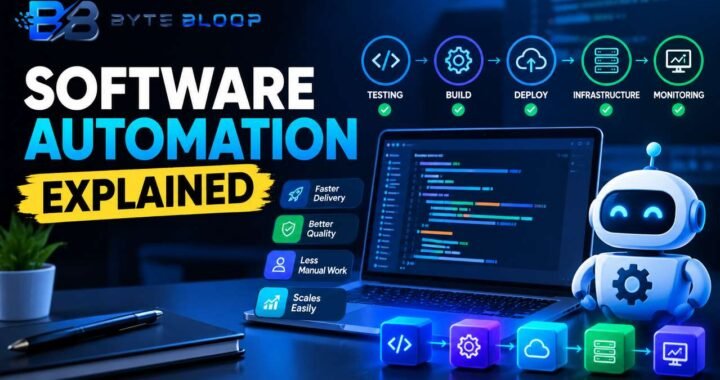
Automated API tests can be added to pipelines using tools like Fern or Postman’s new CLI. By scripting requests and asserting on status codes and payloads, teams catch breaking changes before they reach production. This practice aligns with the API versioning best practices outlined in 2026 guides, ensuring backward compatibility.
Future Trends
2026 sees a rise in AI‑augmented clients that suggest request parameters based on context, auto‑generate SDKs in multiple languages, and provide predictive error handling. These advancements aim to further lower the barrier to entry for non‑technical stakeholders and accelerate the API economy.
Key Takeaways
- API clients abstract HTTP plumbing, letting developers focus on logic.
- Modern tools support REST, GraphQL, gRPC, and AI‑assisted request building.
- They’re essential for rapid prototyping, testing, and documentation.
- Choosing the right client depends on team size, workflow, and ecosystem lock‑in.
- Automation and CI integration turn API clients into continuous monitoring tools.
- Future clients will increasingly leverage AI to reduce manual effort.
Frequently Asked Questions
What is an API client?
An API client is a tool or library that sends requests to an API and handles the responses, abstracting low‑level HTTP details.
What are the key features of modern API clients?
Features include request builders, authentication management, response parsing, environment handling, testing automation, and mocking.
What are the best use cases for API clients?
Rapid prototyping, automated testing, live documentation, and endpoint monitoring are prime scenarios.
What are the pros and cons of using an API client?
Pros: reduced boilerplate, consistency, testing power. Cons: potential bloat, learning curves, ecosystem lock‑in.
How can API clients be integrated into CI/CD pipelines?
By scripting requests and assertions in tools like Fern or Postman CLI, teams can run automated API tests during builds.
Conclusion
Based on the available information and industry analysis, API clients serve as indispensable tools for developers in 2026, turning complex HTTP interactions into streamlined, repeatable workflows. By selecting the right client—whether a lightweight extension or a cloud‑based platform—teams can accelerate development, enhance testing rigor, and maintain robust integration across evolving API ecosystems.
Related Reading
- The Rise of AI‑Powered API Development