Indie Games: Explained
Introduction
Indie games have reshaped the gaming landscape, proving that creativity and passion can rival big‑budget titles. The term “indie” originally described games produced outside the major studio ecosystem, but today it encompasses a wide spectrum of studios, from solo developers to small teams with a handful of employees. In 2026, indie titles continue to dominate niche markets, introduce innovative mechanics, and push artistic boundaries. Their impact is evident in festivals like Summer Game Fest, where new releases such as I Cant Escape The Backrooms and The Beginner’s Guide to Elden generate buzz that rivals AAA announcements. Indie games also offer accessible entry points for players who value narrative depth or experimental gameplay over polished graphics. This guide will unpack what makes a game “indie,” highlight the current ecosystem, and provide actionable advice for gamers and creators alike.
What Defines an Indie Game?
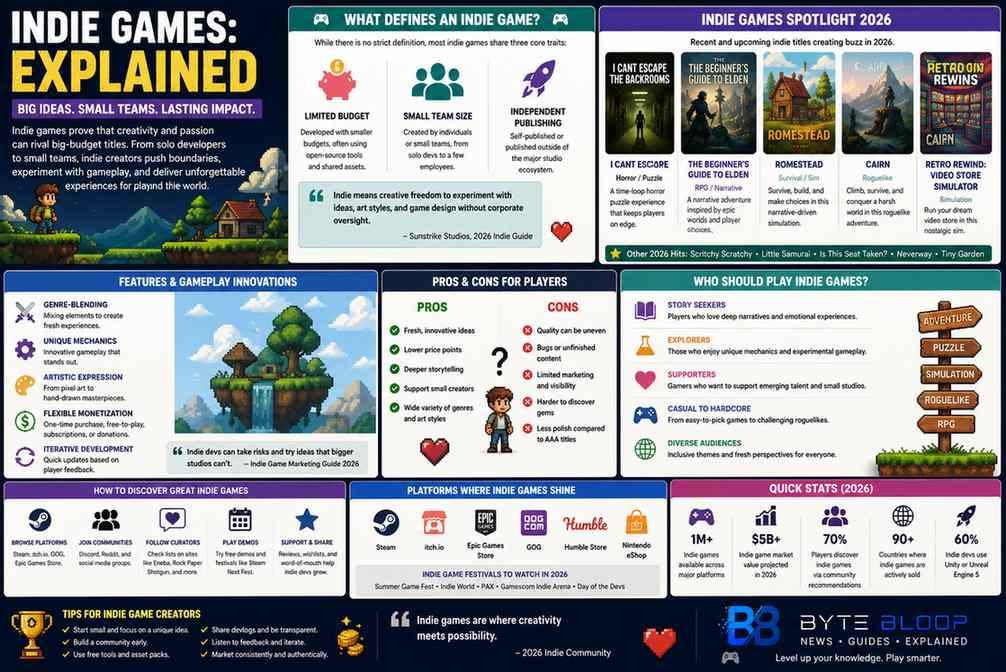
While there is no strict definition, industry consensus points to three core criteria: limited budget, small team size, and independent publishing. The 2026 guide from Sunstrike Studios notes that many indie studios now use engines like Unity or Unreal Engine 5, but they keep costs low through open‑source tools and shared assets. The indie label also implies a higher degree of creative freedom; developers can experiment with narrative structures, art styles, and monetization models without corporate oversight.
Current Trends in 2026
Recent releases show a surge in genre‑blending titles. Romestead combines survival simulation with narrative choices, while Cairn offers a roguelike experience set in a mythic landscape. According to The Gamer’s 2026 list, the top ten indie hits include Scritchy Scratchy and Retro Rewind: Video Store Simulator, reflecting a market that values both nostalgia and fresh storytelling. Marketing strategies have evolved; indie creators now rely heavily on community building via Discord, Patreon, and early‑access demos, as outlined in the 2026 Indie Game Marketing guide.
Features and Gameplay Innovations
Indie games often prioritize unique mechanics over high production values. Examples include the time‑loop puzzles of I Cant Escape The Backrooms and the narrative branching of The Beginner’s Guide to Elden. Many titles adopt minimalist art to focus on atmosphere, while others use hand‑drawn visuals to stand out. Monetization varies: some release free‑to‑play with cosmetic microtransactions, others use one‑time purchases or subscription models. The flexibility allows developers to iterate quickly based on player feedback, a practice highlighted in the 2026 indie guide.
Pros and Cons for Players
Players benefit from fresh ideas, diverse genres, and often lower price points. Indie titles can offer deeper storytelling or experimental gameplay that mainstream releases miss. However, quality can be uneven; some projects suffer from bugs or unfinished content. Discovering hidden gems requires research and community engagement, which is why platforms like Eneba’s curated lists are invaluable.
Who Should Play Indie Games?
Indie games appeal to players seeking narrative depth, artistic expression, or innovative mechanics. They are also ideal for those who enjoy supporting emerging talent or exploring games outside the mainstream. Casual gamers can find approachable titles, while hardcore fans may appreciate the depth of roguelikes or simulation games. If you value creativity over polish, indie games are a must‑try.
Key Takeaways
- Indie games thrive on creativity and low budgets, not corporate backing.
- 2026’s top indie titles blend genres and push narrative boundaries.
- Community-driven marketing is essential for indie visibility.
- Quality varies; research and community reviews help spot gems.
- Indie games offer unique experiences for players who value innovation.
Frequently Asked Questions
What is an indie game?
An indie game is typically developed by a small team or solo developer with limited budget and independent publishing, allowing for creative freedom.
What are the key features of indie games?
Low production costs, experimental gameplay, unique art styles, and flexible monetization models such as one‑time purchases or microtransactions.
What are the best use cases for indie games?
They are ideal for players seeking fresh narratives, niche genres, or artistic expression, and for developers wanting to test new ideas without large financial risk.
What are the pros and cons of indie games?
Pros include innovation, affordability, and community engagement. Cons can be inconsistent quality, limited marketing, and occasional bugs.
Conclusion
Based on the available information and industry analysis, indie games provide a vibrant counterpoint to AAA titles, offering creative freedom, diverse gameplay, and community-driven development that keeps the gaming ecosystem dynamic and inclusive.
Related Reading
- Top Indie Game Development Tools for 2026