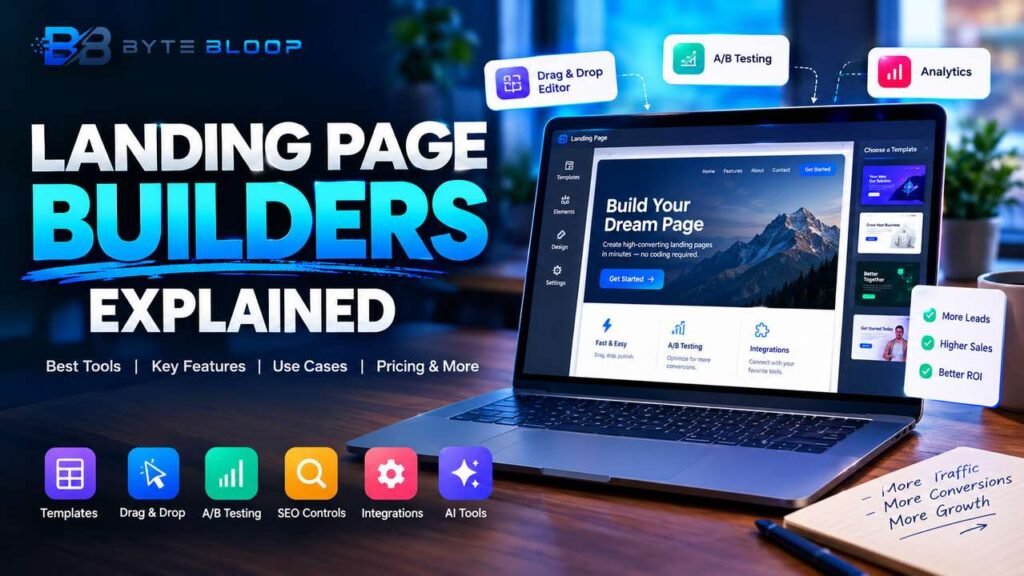
Landing Page Builders: Explained
Introduction
Landing page builders are specialized web‑design tools that let marketers, entrepreneurs, and small businesses craft single‑purpose pages aimed at a specific conversion goal—be it lead capture, product sales, or event registration. Unlike full‑stack website builders, these platforms focus on speed, testing, and optimization, offering drag‑and‑drop editors, pre‑made templates, and built‑in analytics. They eliminate the need for coding, allowing non‑technical users to deploy pages in minutes. The surge in digital marketing budgets and the demand for rapid experimentation have made landing page builders a staple in modern conversion‑rate‑optimization (CRO) strategies. As of 2026, the market hosts a mix of free and premium options, each with unique strengths in design flexibility, integration depth, and AI‑powered insights. Understanding what each builder offers and how they fit your workflow is essential for maximizing ROI on every click. This guide breaks down the core features, best use cases, pricing tiers, and top alternatives so you can choose the right tool for your next campaign.
What Makes a Landing Page Builder Stand Out?
At its core, a landing page builder must deliver three pillars: speed, ease of use, and conversion focus. Speed comes from pre‑designed templates and a visual editor that bypasses the need for custom coding. Ease of use is achieved through intuitive drag‑and‑drop interfaces and contextual help. Conversion focus is reflected in built‑in A/B testing, analytics dashboards, and integration with CRM and email platforms. According to ScoreApp’s guide, these features enable marketers to publish, test, and iterate pages in a fraction of the time it would take to build from scratch.
Key Features to Look For
- Template Library – Ready‑made designs that can be customized with branding assets.
- Drag‑and‑Drop Editor – Visual manipulation of elements without HTML or CSS knowledge.
- A/B Testing & Analytics – Split‑testing tools and real‑time conversion metrics.
- SEO Controls – Meta tags, structured data, and fast load times.
- Integrations – Seamless connection to CRMs, email services, and analytics platforms.
- AI‑Powered Recommendations – Automated copy, layout, and optimization suggestions.
Popular Builders in 2026
Several builders dominate the market, each catering to different needs. The Zapier article on the best landing page builders lists Carrd, Kit, Instapage, Leadpages, and others as top choices for quick deployment. Unbounce remains a leader for CRO, offering AI insights to boost conversions, as highlighted by Unbounce’s own site. Other notable players include HubSpot’s landing page builder, Mailchimp’s landing page creator, and the free Canva landing page tool. A comparative review by Venture Harbour ranks Unbounce, Instapage, and Leadpages high for advanced features, while Baserow emphasizes the ease of use for beginners.
Free vs. Paid Options
Free builders like Canva and HubSpot’s basic tier offer essential templates and basic analytics, making them ideal for small businesses or solo entrepreneurs. Paid plans typically unlock advanced A/B testing, custom domains, and deeper integration capabilities. For example, Unbounce’s Pro plan includes unlimited pages and AI optimization, while Instapage’s Enterprise tier offers dedicated support and advanced analytics. The Jotform blog lists eight top builders, noting that many paid options provide a 14‑day free trial to evaluate features before committing.
Practical Use Cases
Landing page builders excel in scenarios where speed and conversion data are paramount:
- Product Launches – Quickly create a page that showcases features, collects email leads, and integrates with e‑commerce platforms.
- Lead Generation – Design forms, offer gated content, and tie the data directly into a CRM.
- Event Promotion – Build RSVP pages with countdown timers and ticket integrations.
- Ad Campaigns – Deploy custom pages for each ad variant to test messaging and imagery.
– Iterate headlines, CTAs, and layouts to identify the highest‑converting version.
Choosing the Right Builder for Your Team
Consider the following when evaluating a landing page builder:
- Team size and technical skill level.
- Frequency of page creation and need for rapid iteration.
- Integration requirements with existing marketing tech stack.
- Budget constraints and expected ROI from conversion optimization.
- SEO and performance needs for mobile and desktop users.
Future Trends in Landing Page Builders
2026 sees a push toward AI‑driven design, where builders suggest layout tweaks and copy improvements based on real‑time performance data. Additionally, the integration of chatbots and dynamic content is becoming standard, allowing pages to adapt to visitor behavior instantly. Speed continues to be a differentiator, with Webflow and other builders emphasizing lightweight code for faster load times, a critical factor for SEO and user experience.
Getting Started
Most builders offer a free trial or a freemium tier. A good practice is to start with a template, customize it to match your brand, and then run a split test on a headline or CTA. Track performance through the built‑in analytics dashboard and iterate until you hit your target conversion rate. If you’re already using a marketing stack like HubSpot or Salesforce, look for native integrations to avoid data silos.
Key Takeaways
- Landing page builders focus on speed, ease of use, and conversion optimization
- Top 2026 options include Unbounce, Instapage, Leadpages, and free tools like Canva
- Free tiers are suitable for small projects; paid plans unlock advanced testing and integrations
- AI features are emerging to suggest design and copy improvements
- SEO controls and fast load times are critical for mobile performance
Frequently Asked Questions
What is a landing page builder?
A landing page builder is a specialized web‑design tool that lets users create single‑purpose pages aimed at a specific conversion goal without coding.
What are the key features of landing page builders?
Key features include template libraries, drag‑and‑drop editors, built‑in A/B testing, analytics dashboards, SEO controls, and integrations with CRMs and email platforms.
What are the best use cases for landing page builders?
They are ideal for product launches, lead generation, event promotion, ad campaign landing pages, and rapid A/B testing.
What are the pros and cons of using a landing page builder?
Pros: fast deployment, no coding, conversion tools, and integrations. Cons: limited design flexibility on free plans, potential learning curve for advanced features, and reliance on third‑party services.
Conclusion
Based on the available information and industry analysis, landing page builders provide a streamlined, code‑free pathway to create high‑converting pages, enabling marketers to iterate quickly and integrate seamlessly with existing tech stacks. Their built‑in testing and analytics empower data‑driven decisions, while AI‑driven suggestions help refine messaging and design. For businesses seeking to accelerate growth and optimize conversions, selecting the right builder—whether a premium platform like Unbounce or a free tool like Canva—can be a decisive factor in campaign success.
Related Reading
- Best Email Marketing Platforms for 2026
Sources & References
- Landing page builder software: the complete guide for 2026
- The 7 best landing page builders in 2026
- Unbounce: The Best Landing Page Builder and CRO platform
- 22 Best Landing Page Builders (2026)
- Best Website and Landing Page Builders Guide
- The 8 best paid and free landing page builders in 2026
- Free Website Landing Page Builder & Creator
- Best SEO-Friendly Landing Page Builders Compared (2026)