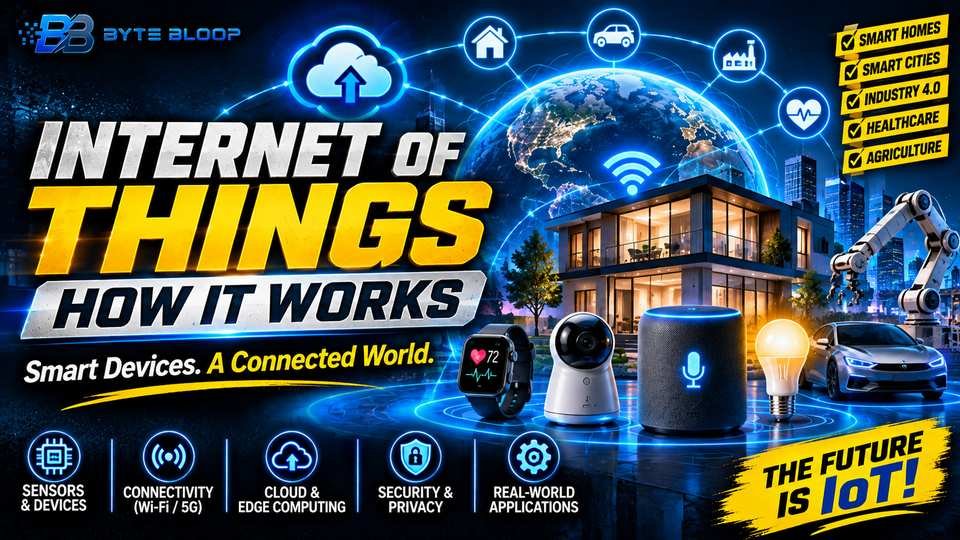
Internet of Things: How It Works
Introduction (Internet of Things How It Works)
Internet of Things How It Works is a topic worth understanding well. Internet of Things, or IoT, is the network that stitches everyday objects—thermostats, cars, factory machines, and even kitchen appliances—into a digital tapestry. At its core, IoT relies on embedded sensors and software that gather data, transmit it over wireless or wired links, and then act on that information or share it with cloud services. This seamless flow turns static items into interactive, data‑rich assets, enabling smarter decisions and automated processes across homes, cities, and industries. By 2026, the IoT ecosystem is projected to grow to billions of connected devices, driving new efficiencies and revenue streams worldwide.
Understanding IoT requires unpacking three foundational layers: the device layer, the connectivity layer, and the cloud/application layer. Devices, often called “things,” carry sensors that capture temperature, motion, location, or other metrics. Connectivity—whether via Wi‑Fi, Bluetooth, Zigbee, or emerging 5G networks—transports this data to edge or cloud platforms. Finally, cloud services process the influx, apply analytics, and deliver actionable insights back to users or automated systems. Together, these layers create a closed loop that powers everything from smart thermostats adjusting home climate to predictive maintenance in manufacturing.
Device Layer: Sensors and Actuators
Every IoT journey starts with a physical object. Sensors convert real‑world phenomena into digital signals, while actuators perform actions based on received instructions. For instance, a smart light bulb measures ambient light and adjusts brightness automatically, whereas an industrial valve receives remote commands to open or close. According to the Complete Beginners Guide to IoT 2026, these components are now increasingly affordable, enabling hobbyists and enterprises alike to prototype and deploy solutions quickly.
This matters directly for anyone exploring internet of things how it works.
Connectivity Layer: From Local to Global
Once data leaves the device, it must travel to a processing hub. Traditional Wi‑Fi remains common in homes, but low‑power wide‑area networks like LoRaWAN and NB‑IoT are expanding coverage in rural and urban settings. The rise of 5G, highlighted by India’s Digital Economy report, promises lower latency and higher bandwidth, unlocking real‑time applications such as autonomous vehicles and smart grids. Connectivity choices depend on range, power consumption, and required data rates.
Getting internet of things how it works right can make a real difference.
Cloud and Edge Processing
Data arriving at the cloud is aggregated, stored, and analyzed. Machine learning models can detect anomalies, forecast demand, or optimize energy usage. Edge computing—processing data closer to the source—reduces latency and bandwidth costs, essential for time‑critical tasks like collision avoidance in drones. The balance between edge and cloud varies by use case: simple sensor readings may stay local, while complex analytics benefit from cloud scalability.
That is a core part of understanding internet of things how it works.
Real‑World Applications
Smart Homes: Thermostats like Nest learn user preferences, reducing energy consumption. Wearables monitor heart rate and send alerts to healthcare providers. Industrial IoT (IIoT) monitors machinery vibration to predict failures, cutting downtime. Agriculture employs soil moisture sensors and drone imaging to optimize irrigation, boosting yields while conserving water. In cities, connected streetlights adjust brightness based on pedestrian flow, improving safety and saving electricity.
Many readers look into internet of things how it works for exactly this reason.
Security and Privacy Considerations
With billions of devices transmitting sensitive data, security is paramount. Weak encryption, default passwords, and lack of firmware updates can expose networks to breaches. The Gartner IT insights report stresses the need for robust identity management and regular vulnerability assessments. Privacy regulations, such as GDPR, mandate transparent data handling practices, especially when IoT devices collect personal information.
It is worth revisiting internet of things how it works as things develop.
Future Trends
Edge AI is set to become mainstream, allowing devices to make smarter decisions without cloud dependency. 6G research points to even faster speeds and ultra‑low latency, opening possibilities for real‑time holographic interfaces. Interoperability standards, like those championed by the Industrial Internet Consortium, aim to reduce fragmentation and simplify integration across vendors.
Internet of Things How It Works remains highly relevant here.
Getting Started with IoT
For developers, open‑source platforms such as Arduino and Raspberry Pi provide affordable entry points. Cloud services like AWS IoT Core, Azure IoT Hub, and Google Cloud IoT offer managed connectivity, device registry, and analytics pipelines. Start by defining a clear use case, selecting appropriate sensors, and choosing a connectivity method that balances cost and performance.
This is a key consideration when it comes to internet of things how it works.
Key Takeaways
- IoT fuses sensors, connectivity, and cloud to create smart, data‑driven systems.
- Connectivity options range from Wi‑Fi to 5G, each suited to different ranges and power needs.
- Security is a critical concern; proper encryption and firmware updates protect against breaches.
- Edge computing reduces latency for time‑critical applications, complementing cloud analytics.
- Interoperability standards are emerging to simplify cross‑vendor integration.
Frequently Asked Questions
What is the Internet of Things?
The Internet of Things, or IoT, is a network of physical objects embedded with sensors, software, and connectivity that allows them to collect and exchange data.
This matters directly for anyone exploring internet of things how it works.
What are the key components of an IoT system?
An IoT system consists of devices (sensors/actuators), connectivity (Wi‑Fi, Bluetooth, 5G, etc.), and cloud or edge platforms for data processing and analytics.
Getting internet of things how it works right can make a real difference.
What are common use cases for IoT?
Common use cases include smart homes, wearable health monitors, industrial equipment monitoring, precision agriculture, and connected city infrastructure.
What are the pros and cons of IoT?
Pros include increased automation, efficiency, and data insights. Cons involve security vulnerabilities, privacy concerns, and the need for reliable connectivity.
Conclusion
Based on the available information and industry analysis, the Internet of Things provides a powerful framework for connecting everyday objects to digital intelligence, enabling smarter decisions and operational efficiencies across sectors. As connectivity technologies evolve and security practices mature, IoT’s influence will only deepen, shaping how we live, work, and interact with the physical world.
Related Reading
- 5G and IoT: How Next‑Gen Networks Power Smart Cities
Sources & References
- Complete Beginners Guide to Internet of Things 2026 — Discover IoT (Internet of Things), how it works, and real-world examples
- What is the Internet of Things (IoT)? — IoT refers to a network of devices, vehicles, appliances and other physical objects that are embedded with sensors, software and network connectivity.
- India – Digital Economy — 5G is expected to further enhance network performance and enable advanced applications such as the Internet of Things (IoT) and smart cities.
Related Articles