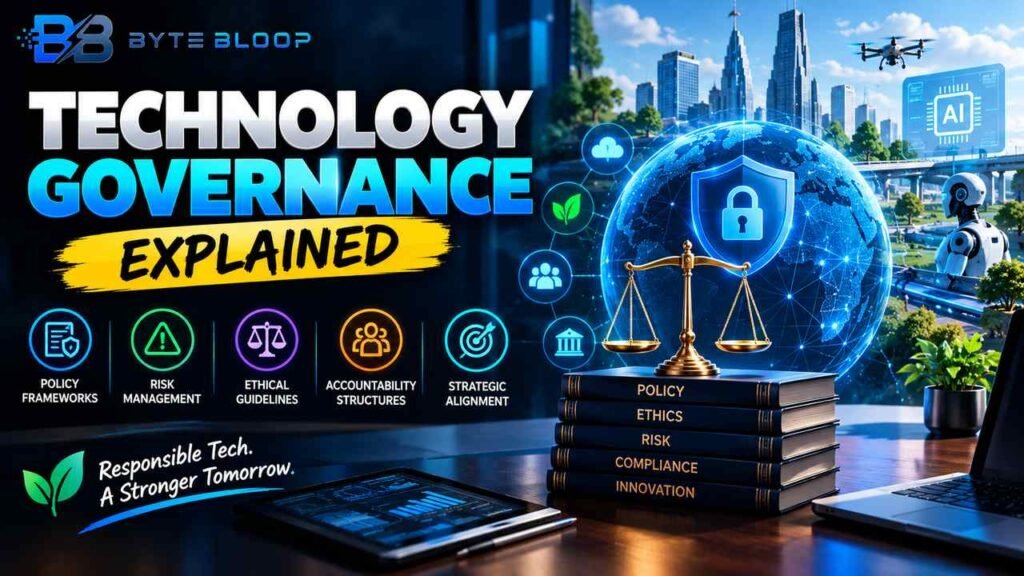
Technology Governance: Explained
Introduction
Technology Governance Explained is a topic worth understanding well. Technology governance refers to the frameworks, policies, and processes that guide the development, deployment, and use of technology within organizations and societies. It blends legal, ethical, and strategic considerations to ensure that technology aligns with broader goals such as public safety, economic growth, and social equity. In an era where artificial intelligence, quantum computing, and autonomous systems are rapidly evolving, governance becomes a critical tool for managing risk and unlocking value.
Effective governance structures help stakeholders anticipate unintended consequences, enforce accountability, and foster innovation responsibly. By establishing clear decision‑making pathways, technology governance also supports transparency, stakeholder engagement, and long‑term sustainability. Understanding its principles is essential for policymakers, business leaders, and technologists alike, as they navigate the complex interplay between rapid innovation and societal impact.
Core Components of Technology Governance
At its heart, technology governance comprises several interlocking elements:
- Policy Frameworks – Codified rules that define acceptable use, data handling, and compliance requirements.
- Risk Management – Processes for identifying, assessing, and mitigating technical, operational, and reputational risks.
- Ethical Guidelines – Norms that address fairness, privacy, and bias, often informed by shared societal values.
- Accountability Structures – Clear roles and responsibilities for decision‑makers, auditors, and oversight bodies.
- Strategic Alignment – Ensuring technology initiatives support organizational or national objectives.
Governance in Practice: From Government to Enterprise
Governance models vary by context. In government, future technologies such as drones, wearable devices, and robots are increasingly deployed for public services. According to the Institute for Government, these tools must be directed by humans and regulated to protect citizens’ rights and safety. In the private sector, enterprises are turning to AI as the backbone of their architecture. Capgemini’s 2026 tech trends report notes that AI reshapes software lifecycle development and cloud consumption, making governance essential to manage data integrity and algorithmic bias.
This matters directly for anyone exploring technology governance explained.
Emerging Technology Governance
The OECD’s anticipatory governance framework stresses that technology development should be guided by shared values—both foundational and technology‑specific. This approach encourages proactive dialogue among stakeholders to shape norms before widespread adoption. Similarly, research on Kondratiev waves suggests that technology waves bring cycles of innovation and regulatory adaptation, underscoring the need for dynamic governance that evolves with technological maturity.
Getting technology governance explained right can make a real difference.
Key Skills for Governance Professionals
As technology landscapes shift, so do the skill sets required for effective governance. Simplilearn’s 2026 learning roadmap highlights high‑paying fields such as agentic AI, quantum computing, and hyper‑automation. Professionals versed in these areas can better anticipate technical uncertainties and design governance that accommodates rapid change. Moreover, the Indian government’s 2026 report on technology services emphasizes research and development that tackles genuine technical uncertainty, a core competency for governance analysts.
That is a core part of understanding technology governance explained.
Practical Examples of Governance in Action
1. AI Ethics Boards – Many firms now establish cross‑functional boards to review algorithmic decisions and ensure compliance with ethical guidelines.
Many readers look into technology governance explained for exactly this reason.
2. Data Protection Regulations – The General Data Protection Regulation (GDPR) in Europe sets a global benchmark for data governance, influencing corporate policies worldwide.
It is worth revisiting technology governance explained as things develop.
3. Public‑Private Partnerships – Collaborative frameworks between governments and tech firms help manage shared risks in deploying autonomous vehicles and smart city infrastructure.
Technology Governance Explained remains highly relevant here.
Challenges and Opportunities
Governance faces obstacles such as rapid technology cycles, fragmented regulatory environments, and the difficulty of quantifying ethical outcomes. Yet, these challenges also present opportunities: robust governance can unlock trust, attract investment, and enable responsible innovation. By integrating risk management with strategic vision, organizations can transform governance from a compliance burden into a competitive advantage.
This is a key consideration when it comes to technology governance explained.
Key Takeaways
- Governance blends policy, risk, ethics, and accountability to guide tech deployment.
- Shared societal values are central to anticipatory governance of emerging tech.
- Dynamic governance models adapt to technology waves and regulatory shifts.
- AI ethics boards and data protection laws illustrate practical governance frameworks.
- Strong governance turns risk management into a strategic asset.
Frequently Asked Questions
What is technology governance explained?
Technology governance is the set of policies, processes, and structures that guide the responsible development, deployment, and use of technology within organizations and societies.
What are the key features of technology governance?
Key features include policy frameworks, risk management, ethical guidelines, accountability structures, and strategic alignment with broader objectives.
What are the best use cases for technology governance?
Use cases span government regulation of drones and wearables, enterprise AI oversight, data protection compliance, and public‑private partnerships for smart infrastructure.
What are the pros and cons of technology governance?
Pros: risk mitigation, ethical alignment, stakeholder trust, and strategic advantage. Cons: potential for slow innovation, regulatory complexity, and resource demands.
Conclusion
Based on the available information and industry analysis, technology governance provides a structured approach to managing the rapid evolution of digital tools, ensuring that innovation aligns with societal values, legal requirements, and strategic objectives. By embedding ethical considerations, risk assessment, and accountability into every stage of technology life cycles, organizations can navigate uncertainty, foster trust, and unlock sustainable growth.
Related Reading
- AI Ethics in Corporate Governance
Sources & References
- Future technology in government
- Top Trending Technologies To Learn In 2026 | Simplilearn
- India’s Technology Services – Reimagination Ahead
- Anticipatory governance of emerging technologies
- Key Technologies and Skills to Learn in 2026
- Top Tech Trends 2026: AI Backbone, Intelligent …
Related Articles
