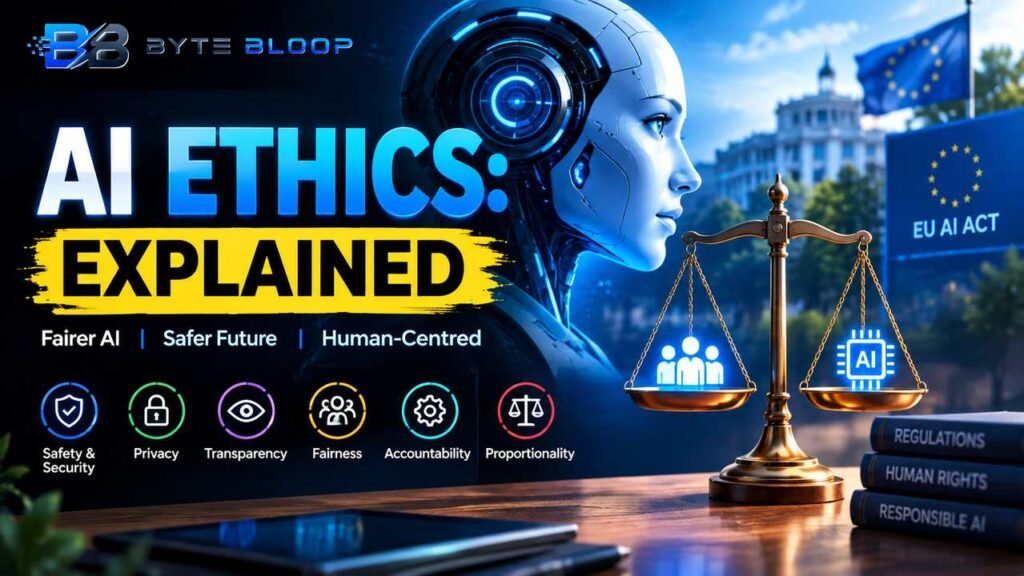
AI Ethics: Explained
Introduction
Artificial intelligence is reshaping industries from healthcare to finance, but its rapid deployment raises profound ethical questions. At its core, AI ethics is a set of principles that guide how AI systems are designed, trained, and used to ensure they respect human rights, fairness, and accountability. Researchers and policymakers now emphasize a human‑rights‑centred approach, outlining key dimensions such as proportionality, safety, and transparency. These guidelines are not abstract ideals; they inform regulations like the EU AI Act and corporate governance frameworks that companies must navigate to avoid legal and reputational risk. Understanding AI ethics is essential for developers, business leaders, and consumers alike, as it determines whether AI will empower society or reinforce existing inequities. This article breaks down the foundational principles, explores practical examples, and offers actionable steps for embedding ethics into AI projects. By the end, you will know how to assess bias, protect privacy, and ensure that AI systems operate safely and responsibly. AI ethics explained is not a niche academic topic—it is a business imperative that shapes trust and innovation.
Core Principles of Responsible AI
International bodies and industry groups converge on six core dimensions that form the backbone of responsible AI. According to the UNESCO Recommendation on the Ethics of Artificial Intelligence, these include proportionality and do‑no‑harm, safety and security, privacy, transparency, accountability, and fairness. ParallelHQ’s 2026 guide expands on these, adding clarity around how each principle manifests in real systems. For example, proportionality means AI should not be deployed when a simpler solution exists, while fairness requires systematic bias audits to prevent discriminatory outcomes.
Regulatory Landscape in 2026
Regulation is a major driver of ethical AI practice. The EU AI Act, effective from 2024, codifies risk‑based requirements and mandates compliance for high‑risk applications such as hiring or credit scoring. In parallel, OECD and NIST frameworks provide technical guidance for bias evaluation and transparency reporting. FutureAGI’s 2025 review notes that enterprises now routinely integrate these frameworks into their AI pipelines, using automated bias detection tools and audit trails that record data lineage and decision logic.
Practical Examples of Ethical AI in Action
1. Healthcare diagnostics: A hospital uses an AI model to triage emergency patients. By embedding a fairness audit, the system ensures equal sensitivity across age and ethnicity groups, preventing disproportionate delays for minority patients. 2. Financial credit scoring: A fintech platform implements a transparent explainability layer that allows regulators to review why a loan was denied, satisfying both fairness and accountability requirements. 3. Smart city traffic management: An AI‑driven traffic light system incorporates real‑time safety checks, preventing algorithmic decisions that could increase accident risk during peak hours.
Steps to Build Ethical AI
1. Define ethical objectives: Start with a clear statement of values—privacy, fairness, safety—and map them to business goals. 2. Data stewardship: Ensure data is collected with informed consent, anonymized where possible, and stored securely. 3. Bias detection: Use automated tools to test for disparate impact across demographic groups before training. 4. Explainability: Integrate model‑agnostic explainers so stakeholders can understand decisions. 5. Continuous monitoring: Deploy dashboards that flag deviations in performance or fairness metrics over time. 6. Governance: Establish an ethics review board that includes diverse voices and holds the development team accountable.
Common Challenges and Mitigation Strategies
Organizations often struggle with data scarcity, opaque algorithms, and resource constraints. Mitigation involves adopting open‑source bias‑audit libraries, investing in cross‑functional ethics teams, and leveraging cloud‑based compliance services that automate regulatory checks. By embedding ethics early—during requirement gathering rather than as an after‑thought—companies can avoid costly redesigns and reputational damage.
Key Takeaways
- Human‑rights‑centred principles guide AI design and use
- EU AI Act and OECD/NIST frameworks set global compliance standards
- Bias audits and explainability are essential for fairness and accountability
- Continuous monitoring turns ethics from policy into practice
- Ethical AI builds consumer trust and mitigates regulatory risk
Frequently Asked Questions
What is AI ethics explained?
AI ethics refers to the set of principles and guidelines that govern the responsible design, deployment, and use of artificial intelligence systems, ensuring they respect human rights, fairness, transparency, and accountability.
What are the key features of responsible AI frameworks?
Key features include proportionality, safety, privacy, transparency, accountability, and fairness, as outlined by UNESCO, OECD, NIST, and the EU AI Act.
What are the best use cases for ethical AI?
Ethical AI is critical in high‑risk domains such as healthcare diagnostics, financial credit scoring, and smart city infrastructure, where decisions directly affect human welfare.
What are the pros and cons of implementing AI ethics?
Pros include increased trust, regulatory compliance, and reduced bias; cons involve higher upfront costs, slower development cycles, and the need for specialized expertise.
Conclusion
Based on the available information and industry analysis, AI ethics provides a structured framework that balances innovation with societal responsibility. By integrating fairness, transparency, and accountability into every stage of development, organizations can not only meet regulatory demands but also cultivate trust among users and stakeholders. The adoption of global standards such as the EU AI Act and OECD guidelines demonstrates that ethical AI is becoming a competitive advantage rather than a compliance burden. Ultimately, responsible AI practices safeguard human rights, reduce bias, and ensure that technology serves the common good.
Related Reading
- How to Audit Bias in Machine Learning Models
Sources & References
- Recommendation on the Ethics of Artificial Intelligence – AI — Ten core principles
- AI Ethics: What It Is and Why It Matters
- What Is AI Ethics? Complete Guide (2026)
- AI Ethics Frameworks in 2026: EU AI Act + Tools
- What Is AI Ethics? The Complete 2026 Guide
- AI Ethics Awareness – Responsible AI Use in the Workplace
- AI Ethical Concerns in 2026: What Enterprises Must Address