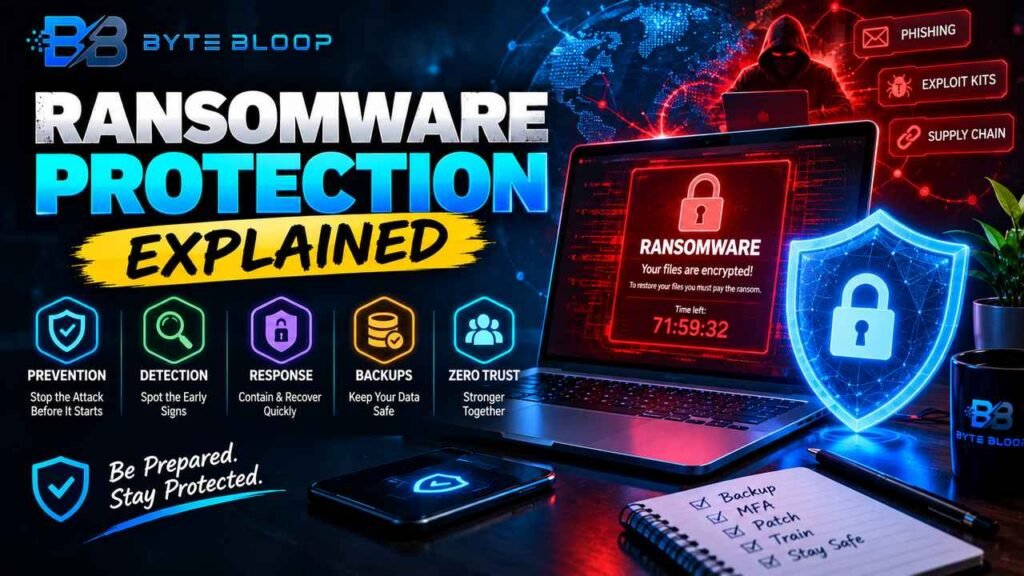
Ransomware Protection: Explained
Introduction
Ransomware Protection Explained is a topic worth understanding well. Ransomware remains one of the most damaging cyber threats, encrypting files and demanding payment to restore access. The threat landscape has evolved, with attackers using sophisticated phishing, exploit kits, and supply‑chain compromises to gain footholds. A robust defense requires a layered approach that blends prevention, detection, and rapid response. Organizations that adopt a zero‑trust mindset and assume compromise can limit damage and accelerate recovery. In this guide we break down the core components of ransomware protection, illustrate how they work together, and provide actionable steps to strengthen your defenses.
What Is Ransomware and Why It Matters
According to the StopRansomware Guide, ransomware is malware that encrypts files on a device, rendering them and the systems that rely on them unusable. The encryption is typically coupled with a ransom demand, often in cryptocurrency, to unlock the data. The financial and reputational costs can reach millions of dollars, as seen in high‑profile breaches in 2025 and early 2026. Understanding how ransomware operates is the first step toward effective protection.
Core Pillars of Ransomware Defense
1. Prevention: Stop the Attack Before It Starts
Modern protection requires security leaders to assume compromise and design environments where attackers cannot turn initial access into a full‑blown breach. The 2026 guide from ZeroNetworks emphasizes the importance of network segmentation, least‑privilege access, and hardened endpoints. Phishing simulation programs and user training reduce the likelihood of credential compromise.
This matters directly for anyone exploring ransomware protection explained.
2. Detection: Spot the Early Signs
Detection tools that monitor file activity, anomalous network traffic, and ransomware‑specific indicators can alert teams before encryption spreads. Endpoint detection and response (EDR) solutions that use behavioral analytics are particularly effective. According to Seceon’s 15 Proven Strategies guide, real‑time visibility is critical for rapid containment.
Getting ransomware protection explained right can make a real difference.
3. Response: Contain and Recover Quickly
Once a ransomware event is detected, isolation protocols and backup restoration become paramount. The 2026 playbook from Blumira recommends maintaining immutable backups and testing recovery drills. A well‑documented incident response plan reduces downtime and limits ransom negotiations.
That is a core part of understanding ransomware protection explained.
Practical Implementation Steps
- Implement multi‑factor authentication (MFA) across all critical accounts.
- Deploy a layered backup strategy: local, off‑site, and cloud, ensuring backups are immutable.
- Use network segmentation to isolate sensitive systems from general user traffic.
- Apply the principle of least privilege to limit user and application access.
- Regularly patch operating systems and applications to close known vulnerabilities.
- Run endpoint protection with ransomware‑specific detection capabilities.
- Conduct quarterly phishing simulations and security awareness training.
- Maintain an up‑to‑date incident response playbook and test it annually.
Choosing the Right Tools
Several vendors specialize in ransomware defense. The Top Data Protection Software guide lists solutions that combine backup, endpoint security, and compliance features. When evaluating tools, look for:
Many readers look into ransomware protection explained for exactly this reason.
- Immutable backup capabilities.
- Behavioral analytics for early detection.
- Zero‑trust integration with identity and access management.
- Automated rollback and recovery workflows.
Real‑World Example: The 2026 Supply‑Chain Breach
A mid‑size manufacturing firm fell victim to a ransomware attack that began with a compromised third‑party vendor. The attackers used a legitimate software update to deliver malicious code, then leveraged stolen credentials to move laterally. Because the firm had segmented its network and maintained immutable backups, the attack was contained to a single production server, and data was restored within 48 hours without paying a ransom.
It is worth revisiting ransomware protection explained as things develop.
Common Misconceptions
Many organizations believe that installing antivirus software alone is enough. In reality, ransomware often bypasses traditional signature‑based defenses by using zero‑day exploits or social engineering. A comprehensive strategy that includes prevention, detection, and response is essential.
Ransomware Protection Explained remains highly relevant here.
Key Takeaways
- Ransomware attacks are increasingly sophisticated and costly.
- Layered defense—prevention, detection, response—offers the best protection.
- Immutable backups and network segmentation limit damage and recovery time.
- Zero‑trust principles and MFA reduce credential compromise.
- Regular training and phishing simulations keep users vigilant.
Frequently Asked Questions
What is ransomware protection explained?
Ransomware protection explained refers to a holistic set of strategies, tools, and practices designed to prevent, detect, and respond to ransomware attacks, ensuring data integrity and operational continuity.
This is a key consideration when it comes to ransomware protection explained.
What are the key features of ransomware protection?
Key features include multi‑factor authentication, network segmentation, immutable backups, endpoint detection and response, least‑privilege access, regular patching, and a documented incident response plan.
This matters directly for anyone exploring ransomware protection explained.
What are the best use cases for ransomware protection?
Ransomware protection is critical for any organization that handles sensitive data, relies on continuous uptime, or has a distributed workforce, such as healthcare, finance, and manufacturing.
What are the pros and cons of relying solely on antivirus software?
Pros: Basic malware detection and removal. Cons: Cannot block sophisticated ransomware that uses zero‑day exploits or social engineering; lacks containment and recovery capabilities.
Conclusion
Based on the available information and industry analysis, ransomware protection provides a multi‑layered shield that combines prevention, detection, and rapid response to mitigate the financial and reputational damage of modern attacks. By adopting zero‑trust principles, maintaining immutable backups, and fostering a culture of security awareness, organizations can transform ransomware from a catastrophic threat into a manageable risk.
Related Reading
- How to Build a Zero‑Trust Network Architecture
Sources & References
- StopRansomware Guide — Ransomware is a form of malware designed to encrypt files on a device, rendering them and the systems that rely on them unusable.
- How to Protect Against Ransomware (2026 Guide) — Modern ransomware protection requires security leaders to assume compromise and design environments where attackers cannot turn initial access …
- Prevent Ransomware Attacks: 15 Proven Strategies to …
- Ransomware Prevention Best Practices 2026: A Complete …
- What Is Ransomware Protection? — Ransomware protection is a robust combination of strategies, tools, and practices to safeguard your computer systems and critical data from ransomware attacks.
- Top Data Protection Software in 2026: Expert Guide
- Ransomware Protection: The 2026 Defense Playbook — Build operational resilience and ransomware protection with a practical 2026 playbook that transforms security into a manageable strength.
- The Complete Guide to Ransomware Solutions — Contents. The Complete Guide to Ransomware Solutions. Ransomware attacks are becoming increasingly common, more sophisticated and more expensive to address.
Related Articles