Cloud Business Tools: Explained
Introduction (Cloud Business Tools Explained)
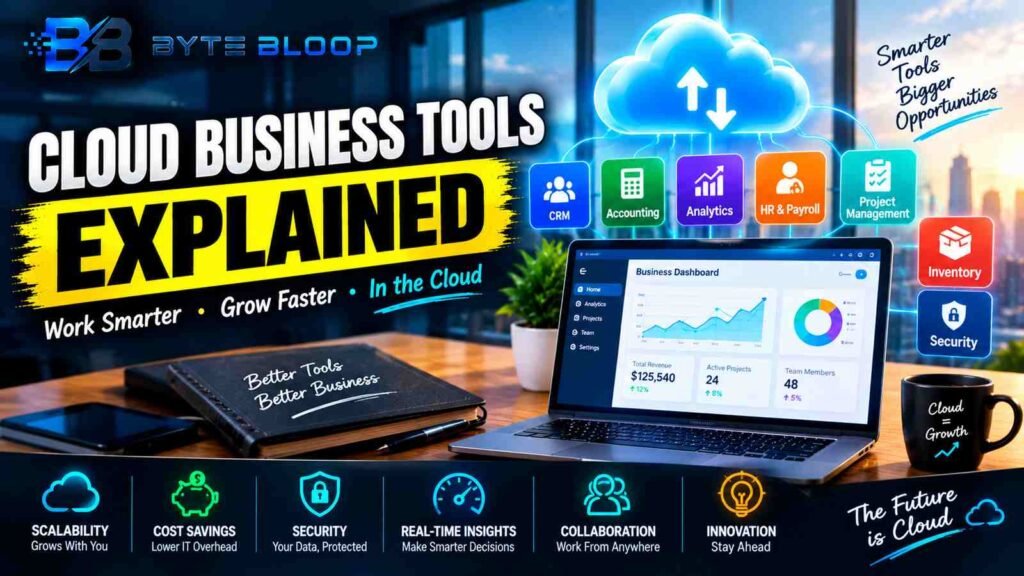
Cloud Business Tools Explained is a topic worth understanding well. Cloud business tools are the digital workhorses that enable companies to manage operations, analyze data, and collaborate from anywhere. By moving core functions—such as accounting, customer relationship management, and project planning—into the cloud, firms can scale quickly, reduce IT overhead, and access real‑time insights. The shift to cloud tools is not just a technological upgrade; it represents a strategic pivot that aligns with the growing demand for flexibility, security, and data‑driven decision making.
Businesses of all sizes are now adopting multi‑cloud or hybrid models to balance cost, compliance, and performance. The result is a more responsive organization that can pivot on market signals in minutes rather than months. In this guide we unpack the most common categories of cloud business tools, illustrate how they work in practice, and outline the key factors that determine success. Whether you’re a startup founder or a C‑suite executive, understanding these tools is essential for staying competitive in 2026 and beyond.
1. Cloud Business Intelligence (BI)
Business intelligence in the cloud aggregates data from disparate sources, applies analytics, and delivers dashboards that inform strategy. According to How to Deal With Cloud Business Intelligence in 2026, companies adopt cloud BI to reduce on‑premise infrastructure costs and to leverage elastic compute power for large data sets. A typical deployment involves a data lake, a processing layer, and a visualization front‑end—all hosted on a provider such as AWS, Azure, or Google Cloud. Real‑time dashboards allow executives to spot trends, forecast demand, and adjust pricing without waiting for monthly reports.
2. Cloud Accounting and Finance
Cloud accounting software automates bookkeeping, invoicing, and tax compliance. Cloud Accounting Software Guide (2026) highlights that these tools save time, cut costs, and automate VAT returns. Features often include multi‑currency support, bank feeds, and audit trails. Small businesses benefit from subscription pricing that scales with revenue, while larger enterprises can integrate with ERP systems for end‑to‑end finance management.
This matters directly for anyone exploring cloud business tools explained.
3. Customer Relationship Management (CRM)
CRM platforms in the cloud centralize customer data, streamline sales pipelines, and enable personalized marketing. Cloud CRMs such as Salesforce, HubSpot, and Zoho provide mobile access, AI‑driven lead scoring, and integration with email and social media. The elasticity of the cloud means that a sudden spike in sales activity can be handled without manual server provisioning.
Getting cloud business tools explained right can make a real difference.
4. Human Resources (HR) and Payroll
HR and payroll tools hosted in the cloud manage employee records, benefits, and compliance. Best Cloud-Based Business Management Software in India 2026 notes that these solutions reduce administrative overhead and improve data accuracy. Cloud HR platforms often include self‑service portals, automated leave approvals, and real‑time analytics on workforce metrics.
That is a core part of understanding cloud business tools explained.
5. Project Management and Collaboration
Modern project management suites such as Asana, Monday.com, and Jira Cloud provide task tracking, Gantt charts, and real‑time collaboration. The cloud removes the need for local installations, enabling distributed teams to stay aligned. Integration with version control, communication tools, and cloud storage further enhances productivity.
Many readers look into cloud business tools explained for exactly this reason.
6. Inventory and Supply Chain Management
Cloud inventory tools track stock levels, automate reordering, and forecast demand. By integrating with point‑of‑sale systems and supplier APIs, businesses can maintain optimal inventory without overstocking. Real‑time visibility also supports just‑in‑time manufacturing and reduces carrying costs.
It is worth revisiting cloud business tools explained as things develop.
7. Security and Compliance Suites
Security tools in the cloud—such as identity and access management (IAM), threat detection, and data encryption—protect sensitive business data. Providers offer built‑in compliance frameworks (GDPR, HIPAA, ISO 27001) that simplify audit processes. Cloud security also benefits from continuous monitoring and rapid patching.
Cloud Business Tools Explained remains highly relevant here.
8. Choosing the Right Cloud Strategy
According to Cloud strategy 2026: The guide, a successful cloud strategy balances cost, performance, and risk. Companies should start with a clear migration plan, choose a provider that aligns with their regulatory needs, and prove ROI through measurable KPIs. A phased approach—beginning with non‑critical workloads—reduces disruption.
This is a key consideration when it comes to cloud business tools explained.
9. Migration Best Practices for Small Businesses
Small businesses often hesitate to migrate due to perceived complexity. Cloud Migration for Small Business recommends a step‑by‑step process: assess readiness, choose a migration partner, pilot test, and then scale. Leveraging managed services can offload maintenance and ensure high availability.
This matters directly for anyone exploring cloud business tools explained.
10. Emerging Trends in 2026
Artificial intelligence is increasingly embedded in cloud tools, providing predictive analytics, automated customer support, and intelligent workflow automation. Edge computing is also gaining traction, allowing real‑time processing closer to data sources for latency‑sensitive applications.
Getting cloud business tools explained right can make a real difference.
Key Takeaways
- Cloud tools reduce IT overhead and enable real‑time decision making
- Multi‑cloud strategies balance cost, performance, and compliance
- Security and compliance are built into most cloud platforms
- Migration can be phased to minimize disruption
- AI integration is a growing trend in cloud business solutions
Frequently Asked Questions
What is a cloud business tool?
A cloud business tool is a software application hosted on a cloud platform that helps companies manage functions such as accounting, CRM, HR, or analytics without on‑premise infrastructure.
What are the key features of cloud accounting software?
Key features include automated invoicing, bank feeds, multi‑currency handling, VAT or tax return automation, and real‑time financial dashboards.
What are the best use cases for cloud BI?
Cloud BI is ideal for organizations that need to aggregate data from multiple sources, perform large‑scale analytics, and provide executives with real‑time dashboards for strategic decisions.
What are the pros and cons of cloud migration for small businesses?
Pros include reduced capital expenditure, scalability, and access to advanced features; cons involve initial migration effort, potential data security concerns, and the need for reliable internet connectivity.
Conclusion
Based on the available information and industry analysis, cloud business tools provide a scalable, cost‑effective, and secure foundation for modern enterprises, enabling them to harness data, streamline operations, and innovate at pace.
Related Reading
- Top 5 Cloud Accounting Platforms for SMEs
- How to Build a Cloud Adoption Roadmap
Sources & References
- How to Deal With Cloud Business Intelligence in 2026
- Cloud Accounting Software Guide (2026)
- Cloud strategy 2026: The guide
- Cloud Migration for Small Business: A Step‑By‑Step Guide to …
- Best Cloud-Based Business Management Software in India 2026…
Related Articles