Small Business Ideas: Key Strategies
Introduction (Small Business Ideas Key Strategies)
Small Business Ideas Key Strategies is a topic worth understanding well. Launching a small business in 2026 requires more than a great idea—it demands a clear strategy that aligns with market demand, scalability, and personal strengths. In an economy where digital transformation and sustainability are accelerating, entrepreneurs must choose ventures that not only fill a niche but also adapt to rapid change. Successful founders start by validating demand through data, then build lean operations that can pivot as consumer habits evolve. This guide distills the latest industry insights into actionable steps, from idea selection to execution, ensuring your startup stands out in a crowded marketplace.
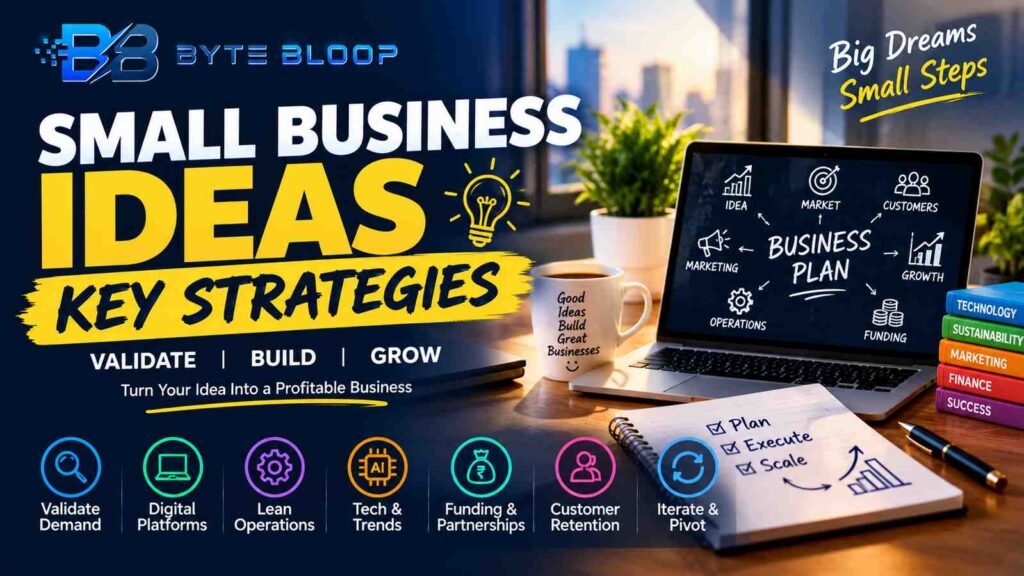
First, research shows that the most promising small business ideas for 2026 are those with clear market demand, high scalability, and the ability to integrate emerging technologies. Whether you’re eyeing e‑commerce, green services, or AI‑driven consulting, the core strategy remains the same: validate, iterate, and expand. Below, we break down the key strategies that turn a spark of inspiration into a thriving enterprise.
1. Validate Demand Before You Build
Market validation is the foundation of any successful venture. According to the U.S. Chamber’s 2026 business ideas report, the best ideas are those with proven demand and room for growth. Start with a simple survey or landing page to gauge interest. Use tools like Google Trends, social listening, and industry reports to confirm that your target audience is actively searching for solutions you can deliver.
This matters directly for anyone exploring small business ideas key strategies.
For example, a boutique online store selling eco‑friendly kitchen gadgets might attract a niche audience, but validation through pre‑orders or a minimal viable product (MVP) can confirm willingness to pay before you invest heavily in inventory.
Getting small business ideas key strategies right can make a real difference.
2. Leverage Low‑Cost Digital Platforms
Digital platforms lower the barrier to entry, enabling entrepreneurs to test concepts with minimal capital. The Xero guide recommends starting with a Shopify store, a WordPress site, or a social‑media shop. These platforms offer built‑in analytics, payment processing, and marketing tools that streamline operations.
That is a core part of understanding small business ideas key strategies.
When you launch, focus on a single product line or service and use A/B testing to refine messaging, pricing, and user experience. This data‑driven approach reduces risk and accelerates learning.
Many readers look into small business ideas key strategies for exactly this reason.
3. Build a Lean, Scalable Operation
Scalability means your business can grow without a proportional increase in overhead. The PrometAI guide emphasizes modular service delivery and automation. For instance, a digital marketing agency can use workflow automation tools like Zapier or HubSpot to handle repetitive tasks, freeing up time for high‑value client work.
It is worth revisiting small business ideas key strategies as things develop.
Outsource non‑core functions—such as bookkeeping or graphic design—to freelancers or agencies. This keeps fixed costs low while allowing rapid expansion into new markets or services.
Small Business Ideas Key Strategies remains highly relevant here.
4. Align with Emerging Trends and Technologies
2026’s top business ideas often intersect with AI, sustainability, and the creator economy. According to the 50+ Small Business Ideas guide, AI‑powered chatbots, personalized wellness apps, and subscription‑based eco‑products are high‑growth segments.
This is a key consideration when it comes to small business ideas key strategies.
Integrating AI into customer support or product recommendation engines can differentiate your brand and improve customer retention. Likewise, offering a subscription model for niche products creates predictable revenue streams.
This matters directly for anyone exploring small business ideas key strategies.
5. Secure Flexible Funding and Partnerships
Funding options have diversified beyond traditional loans. The Tata Capital blog highlights crowdfunding, angel investors, and revenue‑based financing as viable alternatives for small businesses with limited collateral.
Getting small business ideas key strategies right can make a real difference.
Build a compelling pitch deck that showcases market validation, a clear growth roadmap, and a realistic financial model. Partnerships—such as co‑branding with established retailers or collaborating with influencers—can amplify reach without large marketing budgets.
6. Prioritize Customer Experience and Retention
Customer retention is often cheaper than acquisition. The 26 Profitable Business Ideas video stresses the importance of a robust CRM system and personalized communication. Implement loyalty programs, referral incentives, and proactive support to keep customers engaged.
Use data analytics to track churn, average order value, and customer lifetime value. Adjust your strategy based on insights—such as tailoring product bundles to high‑spending segments or improving shipping times for time‑sensitive orders.
7. Iterate and Pivot Quickly
Agility is a competitive advantage. The Coursera article on small business ideas recommends a continuous feedback loop: launch, measure, learn, and iterate. Use agile project management tools like Trello or Asana to coordinate rapid iterations.
When market signals change—such as a shift in consumer preferences or new regulations—be prepared to pivot. A flexible business model allows you to reallocate resources to more profitable opportunities without significant downtime.
Key Takeaways
- Validate demand with data before building
- Leverage low‑cost digital platforms for rapid testing
- Maintain a lean, scalable operation
- Integrate AI and sustainability trends
- Secure flexible funding and strategic partnerships
- Prioritize customer retention and agile iteration
Frequently Asked Questions
What is the first step in launching a small business?
The first step is to validate market demand using surveys, landing pages, or MVPs to ensure there is a genuine need for your product or service.
How can I keep startup costs low?
Use low‑cost digital platforms like Shopify or WordPress, outsource non‑core tasks, and focus on a single product line to test the market before scaling.
What role does AI play in small business growth?
AI can automate customer support, personalize marketing, and optimize operations, providing a competitive edge with minimal additional overhead.
What are the best funding options for new entrepreneurs?
Beyond traditional loans, consider crowdfunding, angel investors, and revenue‑based financing to secure capital without giving up equity or taking on high debt.
Conclusion
Based on the available information and industry analysis, small business ideas that combine validated demand, digital scalability, and emerging tech trends are positioned for robust growth in 2026. By starting lean, leveraging automation, and prioritizing customer experience, entrepreneurs can create resilient ventures that adapt to shifting markets and sustain long‑term profitability.
Related Reading
- Top Digital Marketing Tools for Small Businesses
Sources & References
- 50 Business Ideas Positioned for Growth in 2026 and Beyond
- Small Business Ideas to Start in 2026
- 20 Best New Small Business Ideas in India to Start in 2026
- 10 Trending Small Business Ideas for 2026 | PrometAI Guide
- 50+ Small Business Ideas for 2026 Guide
Related Articles