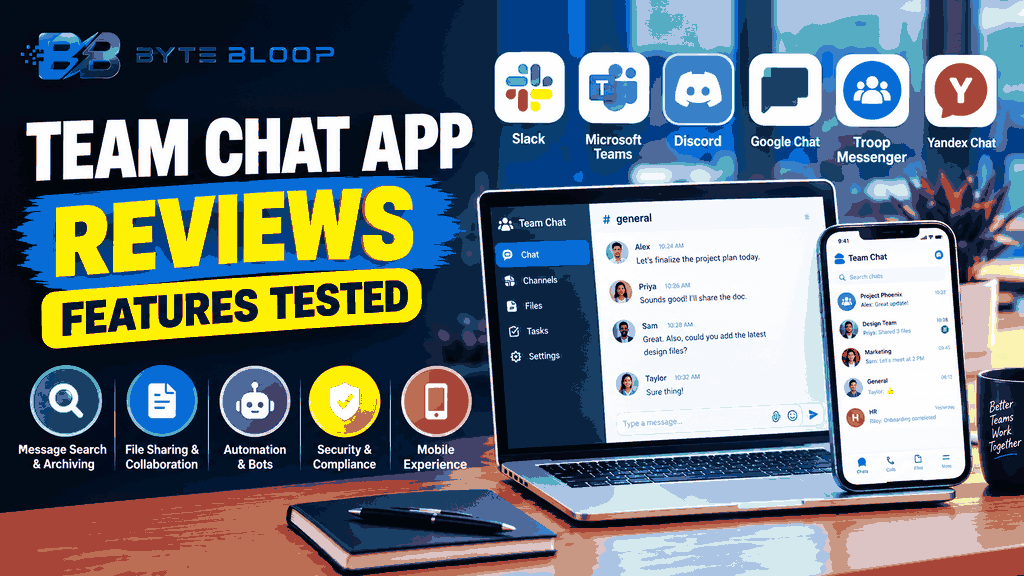
Team Chat App Reviews: Features Tested
Introduction (Team Chat App Reviews Features Tested)
Team Chat App Reviews Features Tested is a topic worth understanding well. Team chat apps have become the backbone of modern workplace collaboration. They combine instant messaging, file sharing, and task coordination into a single platform. As remote and hybrid work grow, choosing the right tool is crucial for productivity and culture. This guide examines the most popular options in 2026, focusing on tested features and real‑world performance. It also highlights how each app handles security, scalability, and integration with other business tools.
Recent studies reviewed dozens of chat solutions, from Slack and Microsoft Teams to emerging Russian alternatives. They evaluated key criteria such as ease of onboarding, message search, and automation capabilities. The findings reveal clear leaders and niche performers that fit different team sizes and workflows. Whether you run a startup or a multinational, the right chat app can reduce email overload and streamline communication.
Below you will find a concise comparison of top apps, practical pros and cons, and guidance on who should adopt which platform. The goal is to help you make a data‑driven decision without sifting through endless marketing copy.
This matters directly for anyone exploring team chat app reviews features tested.
Overview of Leading Team Chat Apps
According to the 2026 Zapier review, Slack remains a favorite for its extensible ecosystem. Microsoft Teams dominates in organizations already using Office 365, thanks to deep integration with Word, Excel, and Teams meetings. Discord, originally a gaming platform, has evolved with workspace features suitable for creative teams. Troop Messenger and Google Chat offer robust free tiers, appealing to small businesses. Russian apps like Yandex Chat provide strong privacy controls for teams in regulated industries.
Getting team chat app reviews features tested right can make a real difference.
Key Features Tested
- Message Search & Archiving – Teams and Slack provide advanced search filters; Discord offers a searchable chat history with limited retention.
- File Sharing & Collaboration – Teams and Google Chat allow real‑time co‑editing; Slack relies on third‑party integrations.
- Automation & Bots – Zapier reports that Teams and Slack support hundreds of bots; Discord’s bot ecosystem is growing but less mature.
- Security & Compliance – Teams offers enterprise‑grade encryption and audit logs; Discord and Troop Messenger provide GDPR‑compliant options.
- Mobile Experience – All major apps have native iOS/Android apps, but Teams’ UI is noted for consistency across devices.
Performance & User Experience
Teams delivers a unified hub where chat, meetings, and file sharing coexist. Users report fewer context switches compared to separate tools. Slack’s interface is praised for its clean design, but some find the notification system overwhelming. Discord’s lightweight client is ideal for rapid conversations, yet its lack of native file co‑editing can be a drawback for document‑heavy teams. Troop Messenger offers a simple, ad‑free experience but lacks advanced analytics.
That is a core part of understanding team chat app reviews features tested.
Pros and Cons
- Slack – Pros: Extensive integrations, customizable workflows. Cons: Higher cost for larger teams, limited native file collaboration.
- Microsoft Teams – Pros: Tight Office 365 integration, strong security. Cons: Steeper learning curve, occasional performance lag.
- Discord – Pros: Free tier, low latency. Cons: Limited enterprise features, less formal structure.
- Troop Messenger – Pros: Simple UI, affordable. Cons: Fewer third‑party apps, basic analytics.
Who Should Use Which App?
Startups and creative agencies often gravitate toward Slack for its flexibility. Medium‑to‑large enterprises that already use Microsoft 365 find Teams the most seamless choice. Remote teams that value low latency and community feel may prefer Discord. Small businesses on a tight budget can rely on Troop Messenger or Google Chat for essential collaboration.
Many readers look into team chat app reviews features tested for exactly this reason.
Key Takeaways
- Slack excels in integration and workflow customization
- Microsoft Teams offers deep Office 365 synergy and enterprise security
- Discord provides a lightweight, low‑cost option for rapid communication
- Troop Messenger is ideal for small teams seeking simplicity
- Security and compliance vary; Teams leads in enterprise standards
Frequently Asked Questions
What is the main advantage of Microsoft Teams for large enterprises?
Teams integrates natively with Office 365, providing a unified hub for documents, meetings, and chat, which reduces context switching.
It is worth revisiting team chat app reviews features tested as things develop.
What are the key features tested in this review?
Message search, file sharing, automation, security compliance, and mobile experience were the primary features evaluated.
Team Chat App Reviews Features Tested remains highly relevant here.
What are the best use cases for Discord as a team chat app?
Discord works best for creative teams or remote groups that prioritize low latency, community feel, and a free tier.
This is a key consideration when it comes to team chat app reviews features tested.
What are the pros and cons of Slack compared to Microsoft Teams?
Slack offers extensive integrations and a clean UI, but can be costly for large teams and lacks native co‑editing; Teams provides tighter Office integration and stronger security, though it has a steeper learning curve.
Conclusion
Based on the available information and industry analysis, the 2026 team chat app landscape shows a clear division between feature‑rich, enterprise‑grade solutions like Microsoft Teams and flexible, integration‑heavy platforms such as Slack. Discord and Troop Messenger fill niche roles for teams prioritizing low cost or lightweight communication. Ultimately, the best choice depends on existing tool ecosystems, security requirements, and the team’s preferred workflow.
Related Reading
- Choosing the Right Collaboration Suite for Remote Work
Sources & References
Related Articles