Project Management: Key Strategies
Introduction (Project Management Key Strategies)
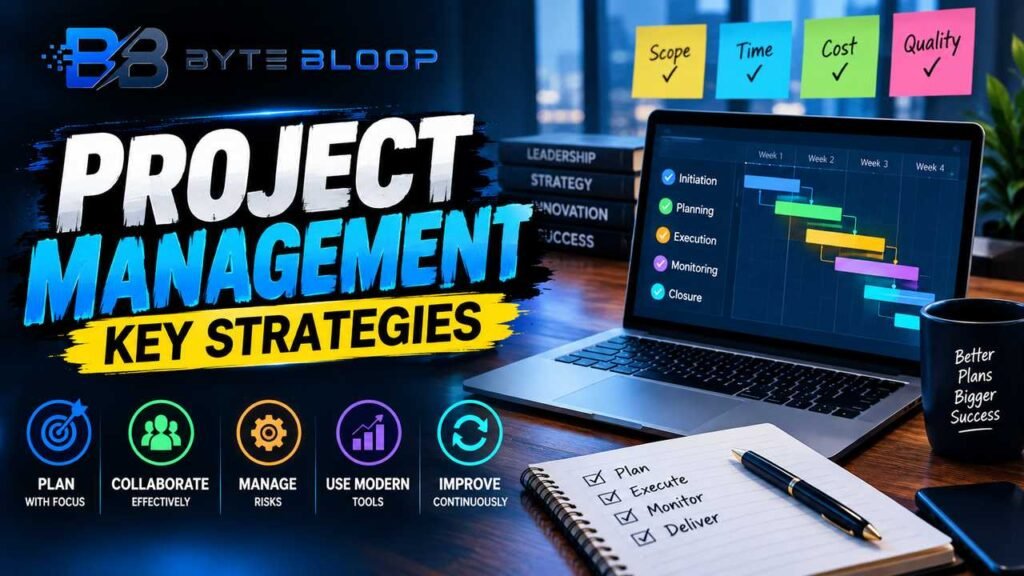
Project Management Key Strategies is a topic worth understanding well. Project management is the disciplined art of guiding a team from idea to delivery while balancing scope, time, cost, and quality. In 2026, organizations that master this discipline consistently outperform competitors, achieving higher customer satisfaction and faster time‑to‑market. The core of effective project management lies in clear objectives, stakeholder alignment, and adaptive execution. Teams that adopt a structured yet flexible approach can navigate uncertainty, respond to changing priorities, and maintain momentum.
By integrating proven strategies—such as robust planning, continuous communication, data‑driven decision making, and risk mitigation—leaders can transform projects from reactive firefighting into proactive value creation. This guide distills the most impactful tactics, supported by industry research, to help you elevate your project management practice.
1. Start with a Strong Initiation Phase
The initiation sets the project’s direction and scope. According to the Complete Guide to Project Management, defining clear objectives, stakeholder roles, and success criteria early prevents scope creep and misalignment. A concise charter that captures business value and constraints serves as the project’s North Star.
2. Leverage Data‑Driven Planning
Planning is where strategy meets execution. The Project Management Success in 2026 video highlights that teams using data analytics to forecast timelines and budgets reduce overruns by up to 30%. Break the project into manageable work packages, assign realistic durations, and incorporate contingency buffers. Use tools like Gantt charts, Kanban boards, or hybrid roadmaps to visualize dependencies and resource allocation.
This matters directly for anyone exploring project management key strategies.
3. Adopt Agile and Hybrid Methodologies
Agile’s iterative cycles foster rapid feedback, while traditional waterfall provides predictability for regulated environments. The What Is Project Management? The Complete Guide [2026] notes that hybrid models combine the best of both worlds, enabling teams to iterate on deliverables while maintaining overarching governance. Scrum ceremonies, sprint reviews, and retrospectives keep the team focused and continuously improving.
Getting project management key strategies right can make a real difference.
4. Prioritize Communication and Stakeholder Engagement
Open, frequent communication is a recurring theme in project success research. The Best Practices: Nine Elements to Success stresses that transparent status reporting, risk updates, and stakeholder check‑ins build trust and reduce resistance. Adopt a communication plan that defines who receives what information, when, and through which channel.
That is a core part of understanding project management key strategies.
5. Embed Risk Management into Every Phase
Risk isn’t a one‑off activity; it’s a continuous lens. The Project Management Software Trends Guide 2026 & Beyond shows that projects using automated risk dashboards can detect issues 40% faster than those relying on manual spreadsheets. Identify threats, assess impact, and develop mitigation actions early. Review risks at each milestone to keep the project on track.
Many readers look into project management key strategies for exactly this reason.
6. Utilize Advanced Project Management Software
Modern PM tools integrate scheduling, collaboration, and analytics into a single platform. The Project Management Software Trends Guide 2026 & Beyond outlines emerging features like AI‑driven workload balancing, real‑time resource allocation, and predictive analytics. Choosing software that aligns with your methodology—Agile, Kanban, or hybrid—maximizes ROI and empowers teams to self‑manage.
It is worth revisiting project management key strategies as things develop.
7. Foster a Culture of Continuous Improvement
After each project, conduct a thorough post‑mortem. The Advanced Strategies in Project Management article emphasizes that lessons learned should feed back into the organization’s knowledge base. Capture what worked, what didn’t, and why. Use these insights to refine processes, update templates, and train future project managers.
Project Management Key Strategies remains highly relevant here.
Key Takeaways
- Initiate with a clear charter to align stakeholders
- Use data analytics for realistic planning and risk mitigation
- Blend Agile and waterfall for flexibility and control
- Maintain transparent communication throughout the project
- Leverage AI‑powered PM tools for efficiency and insight
Frequently Asked Questions
What is the initiation phase in project management?
The initiation phase defines the project’s purpose, scope, stakeholders, and success criteria, creating a foundation for all subsequent work.
What are the key features of hybrid project management?
Hybrid management blends Agile’s iterative cycles with waterfall’s structured governance, allowing teams to iterate while maintaining overall control.
What are the best use cases for AI‑driven project management tools?
AI tools excel in resource allocation, risk prediction, and workload balancing, especially for large, complex projects with many moving parts.
What are the pros and cons of using a single PM software platform?
Pros include streamlined communication, centralized data, and reduced learning curves. Cons can be vendor lock‑in, limited customization, and potential overreliance on automation.
Conclusion
Based on the available information and industry analysis, project management key strategies that blend data‑driven planning, hybrid methodologies, continuous communication, and advanced software tools consistently deliver higher project success rates, reduced risk, and faster time‑to‑market. By embedding these practices into your organization’s culture, you can transform projects from reactive firefighting into proactive value creation.
Related Reading
- Choosing the Right Project Management Software for Your Team
Sources & References
- Project Management Success in 2026: Top Strategies for a …
- What is Project Management? The Complete Guide [2026]
- Project Management Software Trends Guide 2026 & Beyond
- What Is Project Management? A Complete 2026 Guide
- Blog | Advanced Strategies in Project Management
- The Complete Guide to Project Management: Basics …
- Best practices–the nine elements to success
- What Is Project Management? | The Workstream
Related Articles