Neural Interfaces: How It Works
Introduction (Neural Interfaces How It Works)
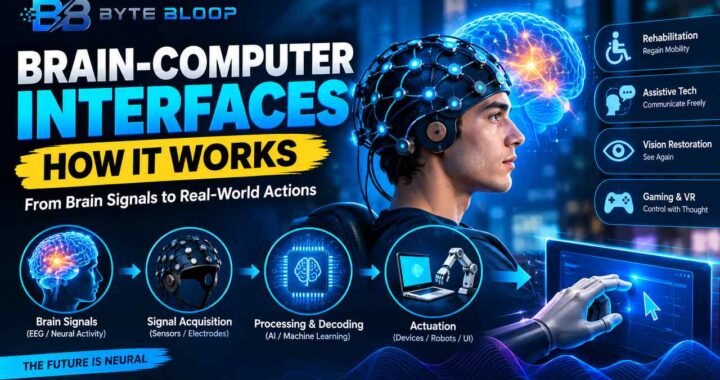
Neural Interfaces How It Works is a topic worth understanding well. Neural interfaces, often called brain‑computer interfaces (BCIs), are devices that create a direct communication channel between the brain and external hardware. They capture electrical activity produced by neurons, translate that activity into digital signals, and feed those signals into computers or prosthetic devices. The concept dates back to the 1960s, when early experiments used electrodes to record cortical waves and map basic motor intentions.
Today, advances in microelectronics, signal processing, and machine learning have turned the idea into practical tools for medical rehabilitation, gaming, and even everyday consumer gadgets. By bridging the mind and machines, neural interfaces promise to restore lost functions, enhance human capabilities, and open new avenues for human‑machine symbiosis. This guide explains the core technology, current applications, and the challenges that lie ahead.
How Neural Interfaces Capture Brain Signals
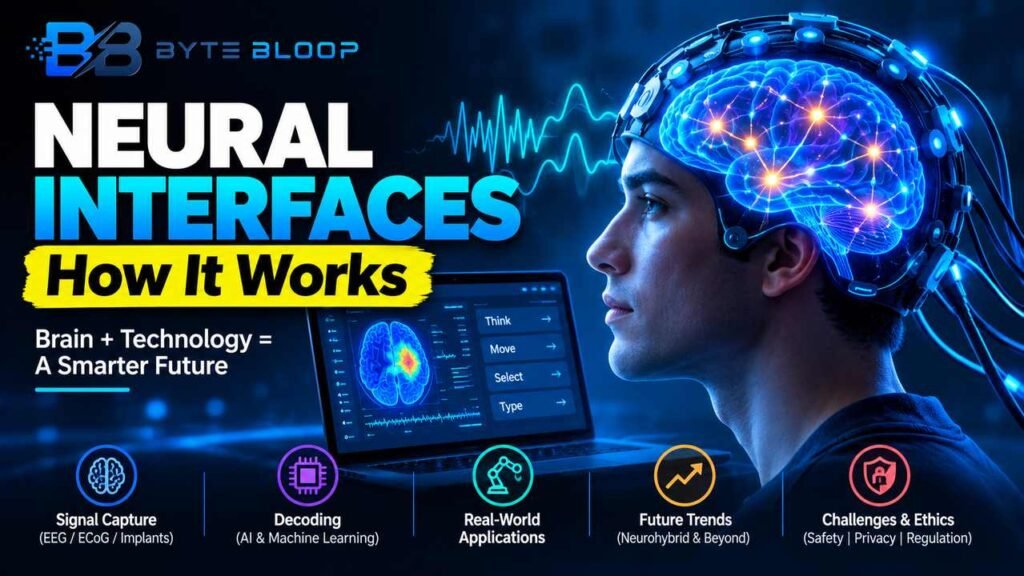
Neural interfaces rely on electrodes that can be placed on the scalp (non‑invasive), beneath the skull (invasive), or even implanted inside the brain tissue (high‑resolution invasive). Each type balances signal fidelity with safety and comfort. Non‑invasive electroencephalography (EEG) records voltage fluctuations caused by synchronous firing of cortical neurons. Invasive techniques, such as electrocorticography (ECoG) or intracortical microelectrode arrays, record from deeper structures and provide higher spatial resolution. According to the 2019 Royal Society report, the choice of interface depends on the application’s tolerance for noise, invasiveness, and longevity.
Decoding Neural Activity into Commands
Once the raw signals are captured, they must be decoded into actionable commands. Machine‑learning algorithms, especially deep neural networks, are trained on labeled data to map patterns of neural activity to specific intentions—such as moving a cursor or selecting a word. Closed‑loop BCIs, highlighted in the 2022 Frontiers in Neurorobotics article, incorporate real‑time feedback, allowing the system to adapt to changes in brain signals and improve accuracy over time. This adaptive decoding is crucial for long‑term use, as neural firing patterns can drift after implantation.
This matters directly for anyone exploring neural interfaces how it works.
Practical Applications Today
Clinical rehabilitation is the most mature use case. Patients with spinal cord injuries or stroke can use BCIs to control robotic arms or wheelchairs, regaining independence. In the realm of neuroprosthetics, implanted arrays enable amputees to move prosthetic limbs with intent, achieving more natural control than traditional myoelectric devices. Beyond medicine, BCIs are being explored for gaming, where players can manipulate virtual environments with thought alone, and for assistive communication, allowing individuals with locked‑in syndrome to compose text.
Getting neural interfaces how it works right can make a real difference.
Emerging Trends and Future Directions
Recent research, such as the 2024 PMC article by Xu, points to neurohybrid synapses—devices that combine biological neurons with electronic circuits—to create more seamless interfaces. Advances in flexible electronics and biocompatible materials promise less invasive, longer‑lasting implants. Moreover, researchers are investigating closed‑loop systems that not only read but also write neural activity, potentially enabling direct brain stimulation to modulate mood or cognition. However, scaling these technologies for everyday use will require overcoming challenges in power delivery, data bandwidth, and ethical governance.
That is a core part of understanding neural interfaces how it works.
Challenges and Ethical Considerations
Safety remains paramount. Invasive implants carry risks of infection, tissue damage, and immune response. Long‑term stability of electrodes is a technical hurdle, as the brain’s natural healing processes can encapsulate devices. Ethical questions arise around data privacy, cognitive enhancement, and the potential for misuse. As the Forbes 2025 article notes, startups merging brain and AI must navigate regulatory frameworks that lag behind rapid innovation.
Many readers look into neural interfaces how it works for exactly this reason.
Key Takeaways
- EEG and implanted electrodes capture brain activity with varying fidelity
- Machine learning decodes neural patterns into actionable commands
- Closed‑loop BCIs adapt in real time for improved accuracy
- Clinical rehab and neuroprosthetics are leading applications
- Future research aims for neurohybrid devices and brain‑writing interfaces
- Ethical and safety concerns must guide deployment
Frequently Asked Questions
What is a neural interface?
A neural interface is a device that records electrical activity from the brain and translates it into signals that can control external hardware or software.
It is worth revisiting neural interfaces how it works as things develop.
What are the key features of neural interfaces?
Key features include electrode type (non‑invasive, invasive), signal fidelity, decoding algorithms, and the ability to operate in closed‑loop mode.
Neural Interfaces How It Works remains highly relevant here.
What are the best use cases for neural interfaces?
Clinical rehabilitation, neuroprosthetics, assistive communication, and immersive gaming are among the most promising use cases.
This is a key consideration when it comes to neural interfaces how it works.
What are the pros and cons of neural interfaces?
Pros: potential to restore lost function, enhance control, and enable new human‑machine interactions. Cons: invasiveness, safety risks, data privacy concerns, and high development cost.
Conclusion
Based on the available information and industry analysis, neural interfaces represent a transformative convergence of neuroscience and engineering that can restore mobility, enable communication, and open new horizons for human‑machine collaboration. Continued advances in electrode technology, adaptive decoding, and ethical oversight will determine how widely these systems can be adopted in both clinical and consumer settings.
Related Reading
- The Rise of Brain‑Computer Interfaces in Healthcare
Sources & References
- Neural interfaces – 2019 report
- The present and future of neural interfaces
- Future of brain-computer interfaces beyond Neuralink
- The Past, Present And Future Of Brain-Computer Interfaces
- The Future of Neural Interface Technology – Springer Nature
- Neural interfaces: Bridging the brain to the world beyond …
Related Articles