Media Technology: Explained
Introduction
Media Technology Explained is a topic worth understanding well. Media technology is the engine that drives how stories are created, distributed, and consumed in the digital age. From the first radio broadcast to today’s AI‑generated news feeds, the tools that shape content have evolved at a dizzying pace. In 2026, the convergence of artificial intelligence, immersive formats, and data‑driven personalization is redefining the relationship between creators and audiences.
Media companies are no longer just publishers; they are platforms that curate experiences, orchestrate workflows, and monetize fan engagement through year‑round social content. Meanwhile, the rise of authenticity and trust demands higher quality standards and transparent production practices. Understanding these dynamics is essential for anyone working in journalism, marketing, or entertainment who wants to stay ahead of the curve. This guide breaks down the core components of media technology, explores the most influential trends, and offers practical examples of how businesses can leverage these tools to deliver compelling, personalized content.
What Makes Up Media Technology?
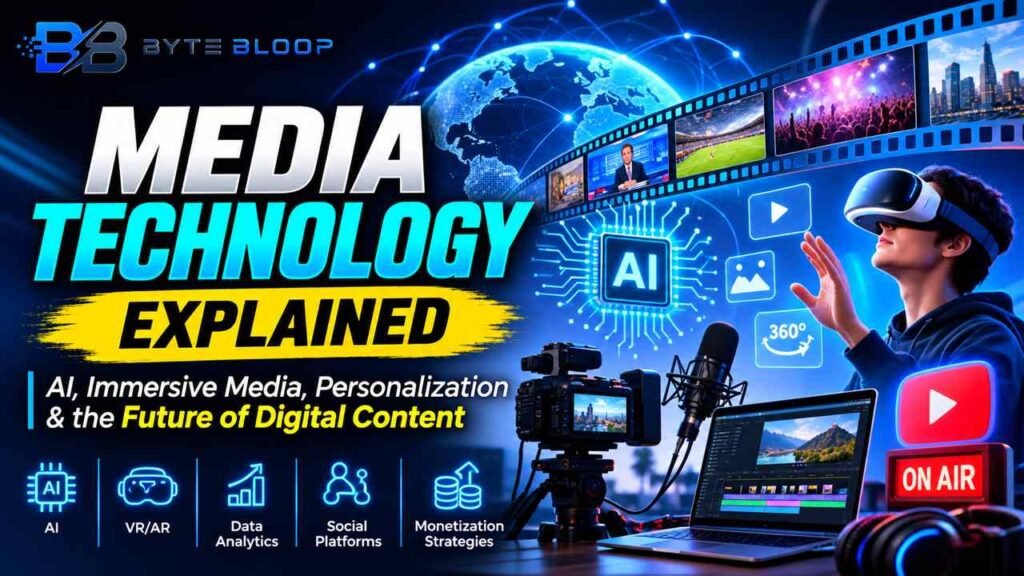
At its core, media technology encompasses the hardware, software, and platforms that enable content creation, editing, distribution, and consumption. Key elements include:
- Content Management Systems (CMS) that streamline publishing workflows.
- Artificial Intelligence (AI) for automated editing, recommendation engines, and fact‑checking.
- Immersive Media such as virtual reality (VR), augmented reality (AR), and mixed reality (MR) that deliver interactive storytelling.
- Data Analytics tools that track audience behavior and optimize monetization strategies.
- Social Platforms that serve as distribution channels and community hubs.
These components work together to create a seamless pipeline from idea to audience.
This matters directly for anyone exploring media technology explained.
AI: The New Editor and Curator
Artificial intelligence has moved beyond simple automation. According to the Reuters Institute’s 2026 report, AI now powers real‑time fact‑checking, generates draft articles, and tailors news feeds to individual preferences. This shift allows journalists to focus on investigative depth while machines handle repetitive tasks. AI also powers recommendation engines that keep users engaged for longer periods, a critical factor for ad revenue and subscription models.
Getting media technology explained right can make a real difference.
Immersive Media: Turning Stories Into Experiences
Immersive formats are no longer niche experiments. Deloitte Insights highlights that immersive media—especially VR and AR—are becoming mainstream tools for brand storytelling and educational content. By 2026, a growing number of media outlets are using 360‑degree videos and interactive narratives to deepen audience engagement. For example, sports broadcasters are offering VR replays that let fans experience a game from the player’s perspective, while museums use AR to bring exhibits to life in visitors’ smartphones.
That is a core part of understanding media technology explained.
Personalization and Data‑Driven Storytelling
Personalization is now a prerequisite for relevance. The Mahindra University blog notes that AI-driven personalization enables media companies to deliver content that aligns with individual interests, cultural context, and consumption habits. This approach boosts retention and monetization, as audiences are more likely to subscribe or spend on premium content when it feels tailored. However, it also raises privacy concerns, prompting stricter regulations and the need for transparent data practices.
Many readers look into media technology explained for exactly this reason.
Authenticity, Quality, and Trust
With misinformation on the rise, media consumers are demanding higher standards of authenticity and quality. Elixirr’s 2026 analysis stresses that media organizations must double down on credibility while expanding into new modes of delivery. This means rigorous fact‑checking, clear sourcing, and ethical AI usage. Trust becomes a competitive advantage, especially for niche outlets that rely on loyal fanbases.
It is worth revisiting media technology explained as things develop.
Monetization Strategies in a Digital‑First World
Revenue models are shifting from ad‑centric to diversified streams. Deloitte Insights reports that owners of strong fandoms can monetize through year‑round social content, exclusive merchandise, and subscription tiers that offer early access or behind‑the‑scenes content. Platforms like Patreon and Discord are becoming integral to fan engagement, allowing creators to build direct relationships with audiences and generate recurring income.
Media Technology Explained remains highly relevant here.
Future‑Ready Media Companies
According to Lorenzo Zanni’s Substack piece, media tech in 2026 is less about adding new features and more about curating user experience and orchestrating workflows. Companies that invest in modular, interoperable systems can quickly adapt to new formats and distribution channels. This agility is essential in a landscape where consumer attention spans are shrinking and platform algorithms evolve rapidly.
This is a key consideration when it comes to media technology explained.
Practical Tips for Leveraging Media Technology
1. Adopt AI‑powered CMS tools to automate routine tasks and improve content discoverability.
2. Experiment with immersive storytelling by integrating VR or AR into key content pieces to differentiate your brand.
3. Use data analytics to refine personalization while respecting privacy and building trust.
4. Explore diversified revenue models such as subscriptions, micro‑transactions, and community‑driven platforms.
5. Prioritize authenticity by implementing transparent sourcing and fact‑checking protocols.
This matters directly for anyone exploring media technology explained.
Key Takeaways
- AI is now a core editor, automating fact‑checking and content curation.
- Immersive media (VR/AR) is mainstream, driving deeper engagement.
- Personalization boosts retention but requires robust privacy safeguards.
- Diversified monetization—subscriptions, community platforms, exclusive content—outperforms ad‑only models.
- Authenticity and quality are critical differentiators in a misinformation‑heavy environment.
Frequently Asked Questions
What is media technology explained?
Media technology refers to the tools, platforms, and processes that enable the creation, editing, distribution, and consumption of digital content, ranging from AI‑powered CMS to immersive VR experiences.
Getting media technology explained right can make a real difference.
What are the key features of media technology?
Key features include AI for automation and personalization, immersive formats like VR/AR, data analytics for audience insights, and integrated social platforms for distribution and community building.
What are the best use cases for media technology?
Use cases span real‑time fact‑checking, personalized news feeds, immersive storytelling for brand campaigns, and diversified monetization through subscriptions and community platforms.
What are the pros and cons of media technology?
Pros: increased efficiency, higher engagement, diversified revenue. Cons: privacy concerns, potential for algorithmic bias, and the need for continuous investment in new skills and infrastructure.
Conclusion
Based on the available information and industry analysis, media technology provides a dynamic framework that blends AI, immersive media, and data‑driven personalization to create engaging, trustworthy, and monetizable content. By prioritizing authenticity and user experience, media organizations can navigate the evolving landscape and build resilient, future‑ready strategies.
Related Reading
- AI in Journalism: Opportunities and Challenges
- The Rise of Immersive Storytelling in Marketing
Sources & References
- Journalism, media, and technology trends and predictions …
- Key Trends Shaping the Future of Digital Media & …
- 2026 Digital Media Trends | Deloitte Insights
- Media and Technology Trends for 2026
Related Articles