
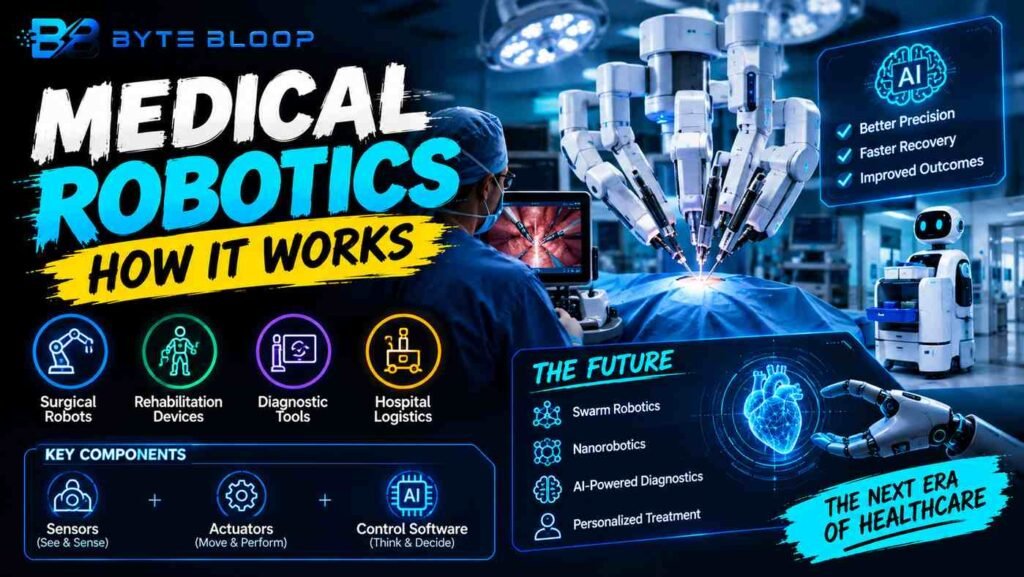
Medical Robotics: How It Works
Introduction (Medical Robotics How It Works)
Medical Robotics How It Works is a topic worth understanding well. Medical robotics is reshaping healthcare by combining advanced sensors, precise actuators, and intelligent software into machines that assist or perform clinical tasks. These systems range from surgical robots that provide surgeons with enhanced dexterity to autonomous delivery bots that streamline hospital logistics. At their core, medical robots translate human intent into mechanical motion, guided by real‑time data and predictive algorithms.
The integration of artificial intelligence, nanorobotics, and swarm robotics promises even more personalized and efficient treatments, as highlighted by recent research. While the technology is still evolving, its current applications already demonstrate measurable improvements in precision, recovery time, and workflow efficiency. Understanding how these robots operate is essential for clinicians, patients, and technology developers alike. This article breaks down the components, workflows, and future directions of medical robotics, offering a clear picture of how the field is progressing.
Core Components of a Medical Robot
Medical robots typically consist of three foundational layers: sensors, actuators, and control software. Sensors—such as force feedback devices, high‑resolution cameras, and inertial measurement units—capture the environment and the robot’s own state. Actuators, ranging from servo motors to hydraulic cylinders, convert electrical signals into precise mechanical movements. The control layer, often powered by machine learning models, interprets sensor data and translates it into motion commands. According to “Robotics: Engineering the future of intelligent machines,” the synergy of these components enables robots to perform tasks that require sub‑millimeter accuracy.
From Human Intent to Machine Action
In surgical robotics, the surgeon’s hand movements are captured by a master console. The control software scales, filters, and augments these signals before sending them to the robot’s arm. This process reduces tremor and allows the robot to execute delicate maneuvers that would be difficult for a human hand alone. A video from the “Robotic Surgery Isn’t the Future for Everyone” series explains that the entire control of the surgical procedure is mediated through this interface, ensuring that the surgeon retains ultimate authority while benefiting from robotic precision.
This matters directly for anyone exploring medical robotics how it works.
Types of Medical Robots
1. Surgical Assistants—These robots, like the da Vinci system, provide minimally invasive surgery with articulated arms and 3‑D visualization. 2. Rehabilitation Devices—Exoskeletons and robotic orthoses help patients regain mobility after injury or stroke. 3. Diagnostic Tools—Robotic endoscopes and biopsy platforms enable high‑resolution imaging and targeted sampling. 4. Hospital Logistics Bots—Automated carts and disinfection robots streamline supply chain and reduce human exposure to pathogens.
Getting medical robotics how it works right can make a real difference.
Artificial Intelligence and Autonomy
AI enhances medical robots by enabling pattern recognition, predictive analytics, and adaptive control. For instance, machine‑learning algorithms can anticipate tissue resistance during a cut, adjusting force in real time. The 2026 guide “AI and Robotics in Healthcare” notes that such AI integration is making robots more affordable and efficient for everyday clinics, reducing paperwork and freeing clinicians for higher‑value care.
That is a core part of understanding medical robotics how it works.
Challenges and Ethical Considerations
Despite their promise, medical robots face hurdles such as high upfront costs, regulatory approval, and the need for extensive training. There are also ethical questions about data privacy, accountability in case of errors, and the potential displacement of certain medical roles. Balancing automation with human oversight remains a critical focus for developers and policymakers alike.
Many readers look into medical robotics how it works for exactly this reason.
Future Outlook
Emerging trends point toward more autonomous, swarm‑based systems that can operate in parallel across a hospital. Nanorobotics may soon allow targeted drug delivery at the cellular level, while AI-driven diagnostics could triage patients before they reach the clinic. According to the “Medical Robotics: Current Applications and Future Perspectives” review, these advances will make treatments more personalized and efficient, potentially reshaping the entire healthcare delivery model.
It is worth revisiting medical robotics how it works as things develop.
Key Takeaways
- Robots combine sensors, actuators, and AI to translate human intent into precise motion.
- Surgical robots enhance dexterity, reduce tremor, and shorten recovery times.
- AI integration is making medical robots more affordable and efficient for routine clinical use.
- Ethical and regulatory challenges must be addressed to ensure safe, responsible deployment.
- Future trends include autonomous logistics bots, swarm robotics, and nanorobot drug delivery.
Frequently Asked Questions
What is medical robotics?
Medical robotics refers to the use of robotic systems—comprising sensors, actuators, and control software—to assist or perform medical tasks such as surgery, diagnostics, rehabilitation, and hospital logistics.
Medical Robotics How It Works remains highly relevant here.
What are the key components of a medical robot?
The core components are sensors for data acquisition, actuators for motion, and intelligent control software that interprets data and commands movement.
This is a key consideration when it comes to medical robotics how it works.
What are the most common applications of medical robotics today?
Surgical assistance, rehabilitation exoskeletons, diagnostic endoscopes, and autonomous logistics bots are among the most widely adopted uses.
This matters directly for anyone exploring medical robotics how it works.
What are the pros and cons of using medical robots?
Pros include increased precision, reduced recovery time, and workflow efficiency. Cons involve high costs, regulatory hurdles, and the need for specialized training.
Conclusion
Based on the available information and industry analysis, medical robotics are transforming healthcare by providing unparalleled precision, efficiency, and new treatment possibilities. As AI integration deepens and costs decline, these systems are poised to become integral to routine clinical practice, while careful attention to ethics and regulation will ensure their safe and equitable deployment.
Related Reading
- The Rise of AI in Clinical Decision Support
Sources & References
- Medical Robotics: Current Applications and Future Perspectives
- The future of robotics in surgery: 2026 Trends
- Robotic Surgery Isn’t the Future for Everyone: Doctors Raise Concerns Over Affordability
- Robotics: Engineering the future of intelligent machines
- Medical Robotics
- AI and Robotics in Healthcare: A 2026 Guide for Clinics
- Robotics in Healthcare: The Future of Robots in Medicine
- A decade retrospective of medical robotics research from …
Related Articles


