Accounting Software: Key Features
Introduction
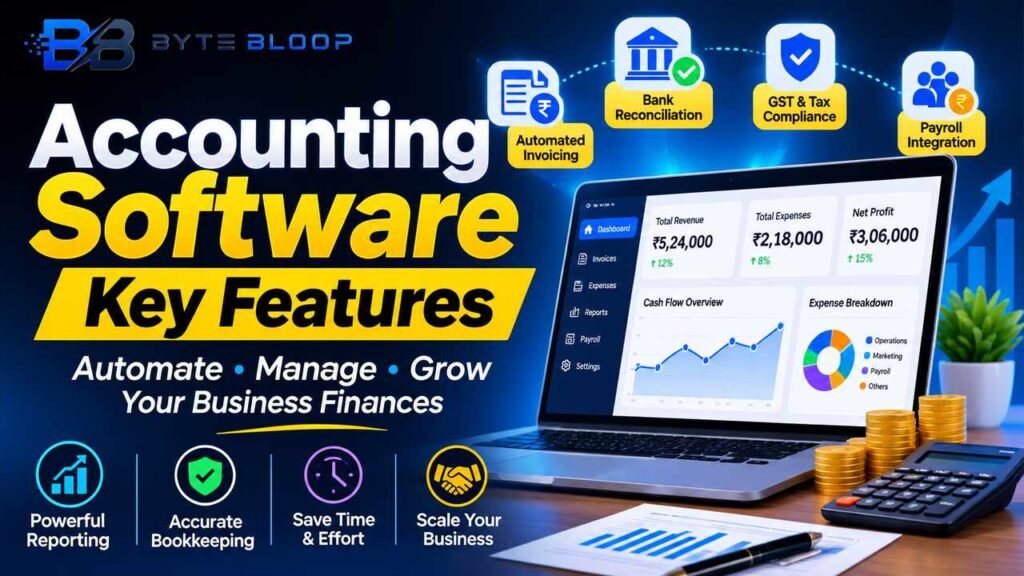
Accounting Software Key Features is a topic worth understanding well. Accounting software has evolved from simple ledgers to sophisticated cloud platforms that streamline every financial task. Today, businesses of all sizes rely on these tools to automate bookkeeping, manage invoices, and ensure regulatory compliance. The core value lies in reducing manual entry, speeding up month‑end close cycles, and providing real‑time visibility into cash flow. Key features such as automated invoicing, bank reconciliation, and GST compliance have become non‑negotiable for companies operating in markets with complex tax regimes.
By integrating payroll, expense tracking, and reporting into a single interface, modern accounting solutions also enable teams to focus on strategy rather than spreadsheets. Understanding these features helps you select software that scales with growth, protects data integrity, and aligns with industry best practices. In this guide, we break down the most important capabilities, illustrate practical use cases, and outline the pros and cons of leading solutions in 2026.
Core Functionalities Every Accounting System Should Offer
Automated Bookkeeping is the backbone of any modern platform. According to Best Accounting Software in 2026: Features, Benefits & …, the best tools automatically record transactions, reducing manual data entry and the risk of errors. This feature often includes AI‑driven categorization, which learns from past entries to improve accuracy over time.
Invoicing & Billing Automation allows businesses to generate, send, and track invoices instantly. Automated reminders and payment status updates keep cash flow predictable. The same source highlights how invoicing automation shortens the receivables cycle, freeing up resources for growth initiatives.
Bank Reconciliation is critical for maintaining accurate financial statements. Cloud platforms can pull bank feeds, match transactions, and flag discrepancies automatically. This reduces the reconciliation headache that many small businesses face during month‑end close.
This matters directly for anyone exploring accounting software key features.
GST and Tax Compliance features are essential for companies operating in jurisdictions with complex tax codes. The Top 10 Accounting Software for Indian Businesses (2026) guide lists advanced GST modules, e‑invoicing support, and automated GSTR‑2B generation as key differentiators in the Indian market. Similar compliance modules are available for VAT, sales tax, and other regional requirements.
Payroll Integration streamlines employee compensation by syncing time‑tracking, benefits, and tax deductions with the accounting ledger. This integration reduces duplicate data entry and ensures payroll reports are always up to date.
Getting accounting software key features right can make a real difference.
Reporting & Analytics provide dashboards that visualize profitability, cash flow, and key performance indicators. Real‑time reporting enables managers to make data‑driven decisions without waiting for quarterly statements.
Practical Use Cases
- Freelancers & Solopreneurs can rely on automated invoicing and expense tracking to keep finances organized without hiring a bookkeeper.
- Retail Chains benefit from multi‑entity support and inventory‑linked accounting, ensuring each outlet’s financials are accurately reported.
- Manufacturing Firms use cost‑of‑goods calculations and job‑costing modules to price products competitively.
- Non‑Profit Organizations require grant tracking and compliance reporting; modern software offers dedicated modules for these needs.
Pros and Cons of Leading 2026 Solutions
QuickBooks Online excels in user‑friendly invoicing and a vast app ecosystem but can become costly as users add advanced modules.
That is a core part of understanding accounting software key features.
Xero offers strong bank reconciliation and multi‑currency support, though its reporting depth may be limited for large enterprises.
Zoho Books provides an affordable all‑in‑one solution with robust GST features, yet its user interface can feel cluttered for new users.
Many readers look into accounting software key features for exactly this reason.
Odoo delivers an integrated ERP experience but requires technical setup for optimal performance.
Pricing Overview
Pricing structures vary from freemium tiers for basic bookkeeping to tiered subscriptions that unlock payroll, advanced reporting, and multi‑entity management. Many providers offer a 14‑day free trial, allowing businesses to test features before committing. It’s essential to compare not only base prices but also add‑on costs and support fees.
It is worth revisiting accounting software key features as things develop.
Choosing the Right Fit for Your Business
Start by mapping your core needs: Do you need robust GST compliance? Is real‑time cash flow visibility a priority? Consider the scalability of the platform—will it handle multiple entities or international transactions as your business grows? Finally, evaluate the vendor’s customer support, training resources, and community ecosystem.
Key Takeaways
- Automated bookkeeping cuts manual entry and errors
- Invoicing automation shortens receivables cycles
- Bank reconciliation reduces month‑end headaches
- GST compliance modules are essential for tax‑heavy markets
- Real‑time reporting empowers strategic decisions
- Scalable cloud platforms support growth and multi‑entity needs
Frequently Asked Questions
What is accounting software key features?
Accounting software key features include automated bookkeeping, invoicing, bank reconciliation, tax compliance, payroll integration, and reporting dashboards that together streamline financial operations.
Accounting Software Key Features remains highly relevant here.
What are the key features of accounting software?
The main features are automated transaction capture, invoicing & billing automation, bank reconciliation, GST/VAT compliance modules, payroll integration, multi‑currency support, and real‑time analytics.
What are the best use cases for accounting software?
Use cases range from freelancers managing invoices, retail chains tracking multi‑entity finances, manufacturers calculating cost of goods, to non‑profits tracking grants and compliance.
This is a key consideration when it comes to accounting software key features.
What are the pros and cons of accounting software?
Pros include reduced manual work, faster month‑end close, and improved visibility; cons can be higher costs for advanced modules, learning curves, and varying support quality.
Conclusion
Based on the available information and industry analysis, accounting software provides a comprehensive solution that automates bookkeeping, ensures compliance, and delivers real‑time financial insights, enabling businesses to focus on growth and strategic decision‑making.
Related Reading
- Choosing the Right Accounting Software for Your Small Business
Sources & References
- Best Accounting Software in 2026: Features, Benefits & …
- Cloud Accounting Software Guide (2026)
- Key Features of Accounting Software for Businesses
- Best Accounting Software Solutions for Businesses in 2026
Related Articles