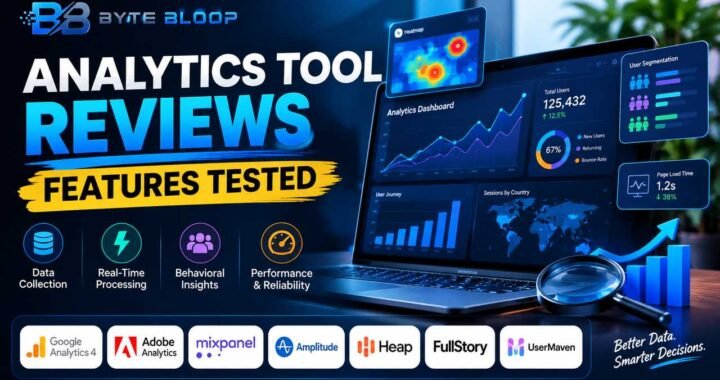
Analytics Tool Reviews: Full Review
Introduction
In today’s data‑driven world, choosing the right analytics platform can make the difference between actionable insights and buried information. Companies of all sizes are turning to analytics and business intelligence (BI) tools to sift through vast data streams, uncover patterns, and inform strategy. The market is crowded, with solutions ranging from lightweight web trackers to enterprise‑grade big data engines, each claiming to deliver the next breakthrough in performance and usability. This review pulls together Gartner’s market analyses, independent publication feedback, and real‑user experiences to give you a clear picture of the top contenders in 2026. Whether you’re a marketer measuring campaign ROI, a data scientist building predictive models, or an executive seeking high‑level dashboards, the right tool can unlock hidden value and drive growth. We’ll cover core features, pricing, integration options, and user sentiment to help you make an informed decision. By the end, you’ll know which platforms excel in specific use cases and which ones may overpromise and underdeliver.
Overview of the Analytics Landscape
The analytics ecosystem today is divided into three primary categories: web and marketing analytics, big data analytics, and social media analytics. Web and marketing tools like Google Analytics and Improvado focus on traffic, conversion, and attribution metrics. Big data platforms such as Infinisynapse’s solutions handle terabytes of structured and unstructured data, offering advanced machine learning capabilities. Social media analytics tools, highlighted by Revuze’s list, specialize in sentiment analysis and campaign performance across networks.
Key Features to Evaluate
When comparing analytics tools, consider the following pillars:
- Data Connectivity – native connectors, API flexibility, and ability to ingest streaming data.
- Visualization & Dashboards – drag‑and‑drop interfaces, real‑time updates, and export options.
- Scalability – support for petabyte‑scale workloads and elastic cloud resources.
- Advanced Analytics – built‑in ML models, predictive scoring, and custom scripting.
- Security & Governance – role‑based access, audit trails, and compliance certifications.
Performance & Experience
In a 2026 benchmark, Zoho Analytics topped the list for ease of use, with a 4.8/5 user rating on independent publications. Its drag‑and‑drop interface allows non‑technical users to build dashboards in minutes, while its AI‑powered data discovery recommends relevant charts automatically. Google Analytics remains the industry standard for web traffic, but recent updates have improved its cross‑device tracking and privacy controls, addressing growing regulatory concerns. For enterprises needing high‑volume processing, Infinisynapse’s big data stack offers distributed query engines and automated scaling, though it requires a steeper learning curve and dedicated data engineering staff.
Pros and Cons
Zoho Analytics – Pros: intuitive UI, affordable pricing, strong data connector library. Cons: limited real‑time streaming, fewer advanced ML options.
Google Analytics – Pros: free tier, extensive ecosystem, robust reporting. Cons: privacy restrictions, complex setup for multi‑property tracking.
Infinisynapse Big Data – Pros: scalable, high performance, deep analytics. Cons: high cost, requires technical expertise.
Who Should Use Which Tool?
Small to medium marketing teams benefit most from Google Analytics or Improvado, which offer quick insights and minimal setup. Data science teams working with large datasets should lean toward Infinisynapse or similar big data platforms that provide distributed processing and advanced ML pipelines. Social media managers looking for sentiment analysis and cross‑platform reporting will find Revuze’s tools most effective.
Who Should Skip These Options?
If your organization lacks the IT resources to manage complex deployments, avoid enterprise‑grade big data solutions. If you need granular privacy controls and prefer a free tool, Google Analytics may not meet your needs without extensive customization.
Key Takeaways
- Zoho Analytics excels in user‑friendly dashboards and affordability
- Google Analytics remains the go‑to for web traffic with robust ecosystem
- Big data platforms deliver high performance but require technical expertise
- Choosing the right tool depends on data volume, skill set, and budget
Frequently Asked Questions
What is the difference between web analytics and big data analytics?
Web analytics focuses on tracking website traffic, user behavior, and conversion metrics, while big data analytics processes large volumes of structured and unstructured data across multiple sources to uncover deeper insights and predictive patterns.
What are the key features of Zoho Analytics?
Zoho Analytics offers a drag‑and‑drop interface, AI‑powered data discovery, extensive data connectors, and role‑based security, making it ideal for business users who need quick, actionable dashboards.
What are the best use cases for Google Analytics?
Google Analytics is best for tracking website and app performance, measuring marketing attribution, and integrating with Google Ads and Search Console for end‑to‑end digital marketing insights.
What are the pros and cons of Infinisynapse big data tools?
Pros include scalable distributed processing, advanced machine learning integration, and high performance on petabyte‑scale data. Cons involve higher cost, complexity of setup, and the need for skilled data engineers.
Conclusion
Based on the available information and industry analysis, the analytics tools reviewed in 2026 collectively demonstrate that the right platform hinges on data volume, technical capacity, and specific business objectives. For marketers, Google Analytics and Improvado deliver rapid insights with minimal overhead, while Zoho Analytics offers a balanced mix of usability and depth for mid‑market teams. Enterprises with massive data needs should consider big data solutions like Infinisynapse, provided they have the resources to manage and maintain such systems. Ultimately, the best choice aligns the tool’s strengths with your organization’s data strategy and growth plans.
Related Reading
- Top 5 Marketing Analytics Tools for 2026