Co‑op Games: Explained
Introduction
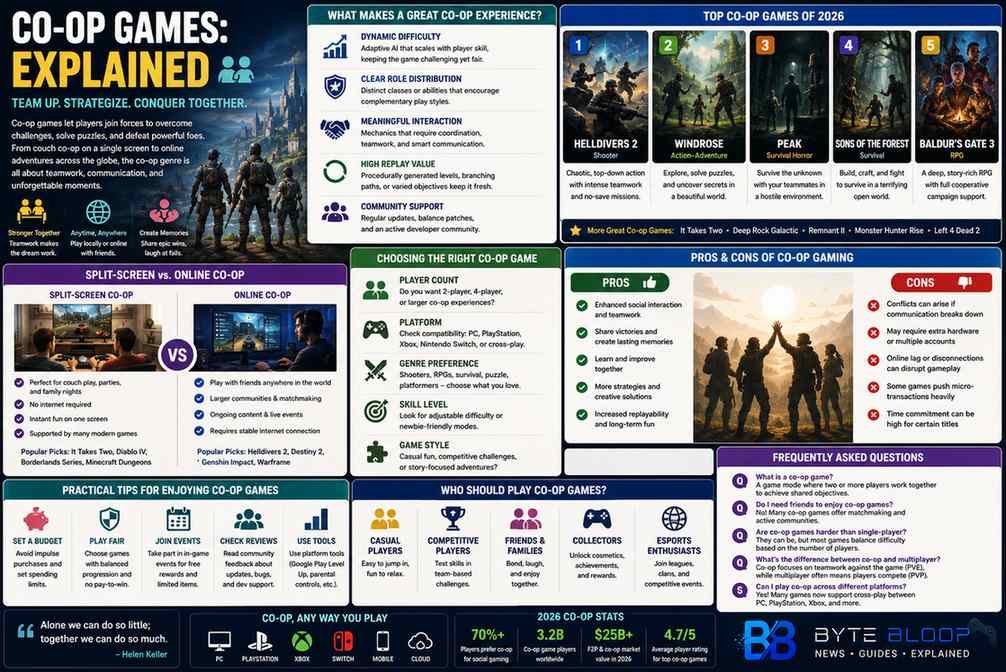
Co‑op games, short for cooperative games, let players team up to tackle challenges together, whether in split‑screen battles or online campaigns. The concept dates back to early arcade cabinets where two players would share a screen, but modern titles expand this idea into vast, interconnected worlds that reward teamwork, communication, and shared strategy. In 2026, the co‑op genre has grown to include everything from action‑packed shooters like Helldivers 2 to narrative‑rich RPGs such as Baldur’s Gate 3, each offering unique mechanics that emphasize collaboration over competition. The appeal lies in the social experience: friends can bond over shared victories, laugh at mishaps, and create memories that transcend the game itself. Moreover, developers design co‑op modes to balance difficulty, ensuring that both casual and hardcore players find a comfortable entry point. As streaming culture and online communities thrive, co‑op games have become a staple for parties, family nights, and even professional esports teams. Understanding the nuances of co‑op gameplay—whether couch, split‑screen, or online—helps players pick titles that fit their play style and hardware setup.
What Makes a Great Co‑op Experience?
Not all co‑op games are created equal. A compelling co‑op title usually features:
- Dynamic Difficulty: Adaptive AI that scales with player skill, keeping the game challenging yet fair.
- Clear Role Distribution: Distinct character classes or skill sets that encourage complementary play.
- Meaningful Interaction: Mechanics that require coordination—think synchronized attacks or shared resource management.
- Replay Value: Procedurally generated levels or branching storylines that keep the experience fresh.
- Community Support: Regular updates, balance patches, and a responsive developer community.
Top Co‑op Games of 2026
According to recent lists, the following titles stand out for their depth, polish, and player engagement.
- Helldivers 2 – A top‑down shooter that pushes teamwork to the extreme with its “no‑save” mechanic and chaotic combat.
- Windrose – An action‑adventure that blends exploration with cooperative puzzles, praised for its seamless multiplayer integration.
- PEAK – A survival horror that thrives on tension, forcing players to coordinate stealth and strategy.
- Sons of the Forest – A horror‑survival sequel that expands on its predecessor’s mechanics with richer environments and deeper crafting.
- Baldur’s Gate 3 – A modern RPG that offers a fully cooperative campaign, allowing players to co‑create narrative choices.
Split‑Screen vs. Online Co‑op
Split‑screen co‑op remains a beloved option for couch play, especially during family gatherings or parties. The 2026 list of best split‑screen games highlights titles like It Takes Two and Diablo IV, which support local multiplayer without compromising on content. Online co‑op, on the other hand, offers broader accessibility, enabling friends to connect across continents. However, it demands a stable internet connection and can introduce latency issues. Many developers now provide hybrid modes, allowing players to switch between local and online play seamlessly.
Choosing the Right Co‑op Game for Your Group
When selecting a co‑op title, consider the following:
- Player Count: Some games support 2‑player only, while others scale up to 4 or 6.
- Platform: Ensure the game runs on your console or PC, and check for cross‑play if you’re mixing systems.
- Genre Preference: Whether you favor shooters, RPGs, or puzzle games will narrow your options.
- Skill Level: Look for adjustable difficulty or cooperative guides to accommodate newcomers.
Pros and Cons of Co‑op Gaming
Pros:
- Enhanced social interaction and teamwork.
- Shared learning curves reduce frustration.
- Increased replayability through varied strategies.
Cons:
- Potential for conflict if communication breaks down.
- Requires additional hardware or accounts for some titles.
- Online lag can break immersion.
Key Takeaways
- Co‑op games blend teamwork with engaging gameplay, offering both local and online options.
- Top 2026 titles like Helldivers 2 and Baldur’s Gate 3 showcase dynamic difficulty and rich narratives.
- Choosing the right game depends on player count, platform, genre, and skill level.
- Split‑screen remains popular for couch play, while online co‑op expands accessibility but needs stable connections.
- Pros include social bonding and shared learning; cons involve potential conflict and hardware requirements.
Frequently Asked Questions
What is a co‑op game?
A co‑op game is a multiplayer title where players collaborate to achieve shared objectives rather than compete against each other.
What are the key features of a good co‑op game?
Dynamic difficulty, clear role distribution, meaningful interaction, high replay value, and active community support.
What are the best use cases for split‑screen co‑op?
Split‑screen is ideal for family nights, parties, or any situation where players share a single console and prefer local, face‑to‑face interaction.
What are the pros and cons of online co‑op?
Pros include broader player reach and flexible scheduling; cons involve reliance on internet quality and potential latency issues.
How do I choose a co‑op game for my group?
Consider player count, platform compatibility, genre preference, and the desired difficulty level to match your group’s skill.
Conclusion
Based on the available information and industry analysis, co‑op games in 2026 provide a versatile platform for social interaction, strategic collaboration, and immersive storytelling, making them a staple for both casual gatherings and competitive communities.
Related Reading
- Top 10 Split‑Screen Games for Family Nights
- How to Optimize Your PC for Online Co‑op Gaming