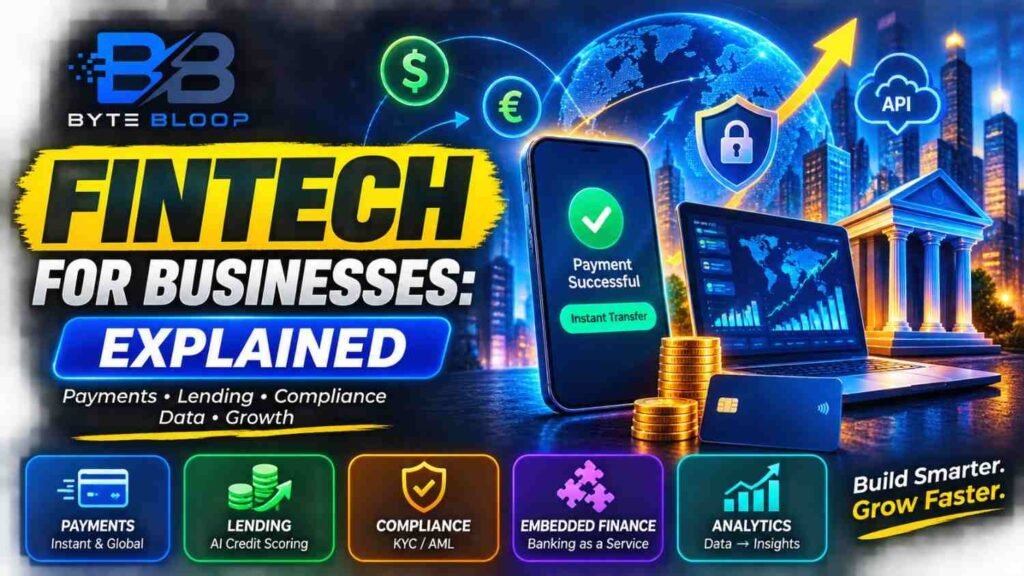
Fintech for Businesses: Explained
Introduction
Fintech, short for financial technology, has evolved from niche payment apps to a full‑spectrum ecosystem that transforms how companies manage cash, credit, and compliance. In 2026 the global fintech market is projected to exceed $460 billion, with a 16.2% CAGR that will push the value to $1.76 trillion by 2034. This growth is driven by high‑speed data processing, embedded finance, and AI‑driven underwriting, which together deliver real‑time payments, instant loan approvals, and live financial accounts. For businesses, fintech is no longer a luxury; it’s a competitive necessity that can streamline operations, reduce costs, and unlock new revenue streams. By integrating fintech solutions, companies can shift from legacy systems to scalable platforms that adapt to changing regulatory and market demands. Understanding the core components—payments, lending, compliance, and data analytics—helps firms choose the right tools for their unique needs. This guide breaks down the key fintech categories, showcases practical examples, and outlines how businesses can adopt these technologies safely and strategically.
Payments: From SWIFT to Same‑Day Settlements
Traditional cross‑border payments can take days and incur high fees. Modern fintech platforms now offer instant, low‑cost transfers using blockchain and real‑time gross settlement (RTGS) networks. For instance, a mid‑size retailer can use an embedded payment gateway to process customer orders in milliseconds, while a manufacturer can settle supplier invoices in seconds, cutting the average payment cycle from 15 days to under 24 hours. These efficiencies free up working capital and improve cash flow forecasting.
Lending: AI‑Powered Credit Decisions
Fintech lenders use machine learning to analyze alternative data—such as transaction histories, social media activity, and even IoT sensor readings—to assess credit risk in real time. Small and medium enterprises (SMEs) that previously struggled to secure bank loans can now access micro‑loans with approval times under an hour. This democratization of credit fuels growth, especially in emerging markets where traditional banking penetration is low.
Compliance and Risk: Automation Meets Regulation
Regulatory technology (RegTech) automates Know‑Your‑Customer (KYC) and Anti‑Money Laundering (AML) checks, reducing manual effort and the risk of human error. By integrating RegTech APIs, businesses can verify identities in seconds, monitor transactions for suspicious activity, and generate audit trails that satisfy regulators. This is crucial as global data privacy laws, such as the EU’s GDPR and the U.S. CCPA, impose strict compliance requirements.
Embedded Finance: Banking as a Service
Embedded finance allows non‑banking platforms to offer financial products—like credit lines, insurance, or payroll services—directly within their user experience. A ride‑share app, for example, can provide drivers with instant credit to purchase fuel, while an e‑commerce marketplace can offer sellers integrated escrow services. This integration reduces friction for customers and opens new revenue channels for the host platform.
Data Analytics: Turning Numbers into Strategy
Fintech solutions collect vast amounts of transactional data. Advanced analytics and predictive modeling transform this data into actionable insights, such as forecasting demand, optimizing inventory, and identifying cross‑sell opportunities. A manufacturing firm can use predictive maintenance analytics to schedule equipment repairs before breakdowns, saving millions in downtime.
How to Adopt Fintech Safely
1. Assess Business Needs: Map pain points—cash flow, credit access, compliance—and identify fintech solutions that address them.
2. Choose a Partner: Evaluate fintech providers based on security certifications, API flexibility, and customer support. Look for partners that offer sandbox environments for testing.
3. Plan Integration: Use APIs to connect fintech services to existing ERP or CRM systems. Ensure data flows are secure and compliant with local regulations.
4. Train Staff: Provide training on new workflows and compliance requirements to avoid operational bottlenecks.
5. Monitor and Iterate: Track key performance indicators (KPIs) such as transaction speed, cost savings, and customer satisfaction. Adjust the strategy as technology and market conditions evolve.
Key Takeaways
- Fintech cuts payment cycles from days to seconds, boosting cash flow.
- AI underwriting expands credit access for SMEs with instant approvals.
- RegTech automates KYC/AML, reducing compliance risk and cost.
- Embedded finance integrates banking services into non‑bank apps, creating new revenue streams.
- Data analytics turn transactional data into predictive insights for strategic decisions.
Frequently Asked Questions
What is fintech for businesses explained?
Fintech for businesses refers to the use of digital tools and platforms—such as real‑time payments, AI credit scoring, embedded finance, and regulatory automation—to streamline financial operations, reduce costs, and unlock new revenue opportunities.
What are the key features of fintech solutions for companies?
Key features include instant cross‑border payments, AI‑driven credit decisions, automated KYC/AML compliance, embedded banking services, and advanced data analytics for predictive insights.
What are the best use cases for fintech in SMEs?
SMEs benefit from instant loan approvals, real‑time payment processing, automated invoicing, and embedded finance that offers cash‑flow management tools directly within their sales platforms.
What are the pros and cons of adopting fintech?
Pros: faster transactions, lower costs, improved credit access, and stronger compliance. Cons: integration complexity, data security risks, and potential regulatory changes that require ongoing compliance.
Conclusion
Based on the available information and industry analysis, fintech for businesses provides a strategic advantage by accelerating payments, democratizing credit, automating compliance, and unlocking data‑driven insights. Companies that strategically integrate these technologies can reduce operational costs, improve cash flow, and create new revenue streams while staying compliant with evolving regulations.
Related Reading
- Top Fintech Trends for 2026