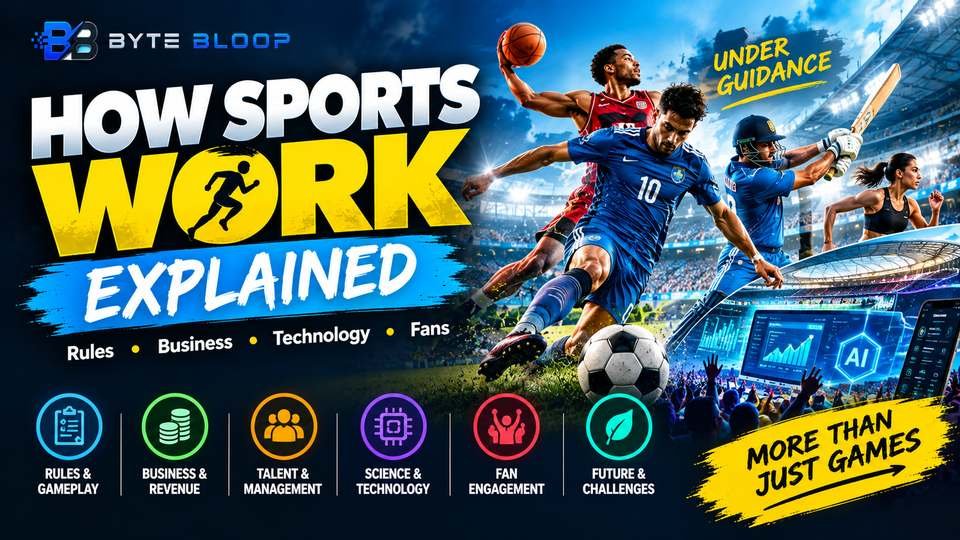
How Sports Work: Explained
Introduction (How Sports Work Explained)
How Sports Work Explained is a topic worth understanding well. Sports are more than just games; they are structured competitions governed by rules, economics, and cultural narratives that captivate billions worldwide. According to Britannica, sports are defined as physical contests pursued for the goals and challenges they entail, spanning from football and basketball to emerging e‑sports. The modern sports ecosystem blends athletic performance with sophisticated management, technology, and fan engagement.
Understanding how sports work involves dissecting three core layers: the rules and gameplay that define each sport, the business models that sustain leagues and teams, and the technological innovations that shape training, broadcasting, and betting. This guide explores these layers, offering a practical overview for enthusiasts, aspiring professionals, and anyone curious about the inner workings of the sports world. We’ll examine the evolution of sports governance, the financial engines driving global leagues, and the cutting‑edge science that pushes athletes to new limits.
By the end, you’ll have a clear picture of how sports operate from the field to the boardroom and beyond.
The Blueprint of Gameplay
Every sport starts with a set of rules that dictate how play unfolds. These rules are codified by governing bodies—such as FIFA for soccer or the NBA for basketball—ensuring consistency across competitions. Rules cover everything from player eligibility and equipment specifications to scoring systems and officiating protocols. They create a predictable framework that allows athletes to train strategically and fans to follow the narrative of a game. For instance, a soccer match is divided into two 45‑minute halves, with a 15‑minute halftime break, while a basketball game consists of four 12‑minute quarters. These structures provide rhythm and pacing, essential for both athletes’ performance and audience engagement.
Business Models: From Ticket Sales to Streaming
The revenue streams that support professional sports are diverse. Traditional income sources—ticket sales, merchandise, and sponsorships—remain foundational, yet digital platforms have reshaped the landscape. According to Deloitte’s 2026 Global Sports Industry Outlook, the industry is expanding in every direction, with technology and media rights driving significant growth. Streaming services now offer live broadcasts, on‑demand highlights, and interactive fan experiences, creating new monetization pathways. Additionally, sports betting, highlighted in a 2026 guide to online betting in New Zealand, has become a major revenue source, with platforms providing real‑time odds and data analytics for bettors worldwide.
This matters directly for anyone exploring how sports work explained.
Talent Development and Management
Behind every star athlete is a network of scouts, coaches, agents, and managers who nurture talent. Sports management careers, as outlined in Coursera’s 2026 guide, require a blend of analytical skills, communication, and knowledge of regulations. From youth academies to professional drafts, talent pipelines are meticulously designed to identify potential and develop skills. The rise of data analytics—illustrated by India’s sports boom creating 100,000+ jobs—has further refined scouting, allowing teams to evaluate performance metrics with precision. This data‑driven approach not only enhances player development but also informs strategic decisions such as game plans and roster construction.
Getting how sports work explained right can make a real difference.
Science and Technology: Pushing Human Limits
Sports science is a cornerstone of modern athletic performance. In 2026, five key trends—including advanced biometrics, AI‑powered training, and personalized nutrition—are reshaping how athletes prepare and recover. A YouTube video by Global Performance Insights highlights how wearable sensors track real‑time data, enabling coaches to adjust training loads instantly. Moreover, sports medicine has evolved to treat injuries more effectively, extending athletes’ careers. The integration of virtual reality and simulation tools also allows players to practice scenarios without physical strain, accelerating skill acquisition.
That is a core part of understanding how sports work explained.
Fan Engagement: The Heart of the Sport
Fans are the lifeblood of sports, and their engagement has shifted from passive viewership to interactive participation. Mobile apps, such as Sports 18 for the FIFA World Cup, provide real‑time scores, highlights, and social features, keeping audiences connected regardless of location. Social media platforms amplify fan voices, while fantasy leagues and betting apps create immersive experiences that deepen loyalty. These tools also generate valuable data for teams and sponsors, informing targeted marketing and personalized content delivery.
Many readers look into how sports work explained for exactly this reason.
Future Directions and Challenges
The sports industry faces several emerging challenges and opportunities. Climate change threatens outdoor venues, prompting investments in sustainable stadiums and scheduling adjustments. The rise of e‑sports introduces new questions about regulation, athlete welfare, and revenue sharing. Meanwhile, advances in artificial intelligence raise ethical considerations around data privacy and performance enhancement. Navigating these complexities requires collaboration among governing bodies, teams, sponsors, and technology partners to ensure the sport remains inclusive, safe, and financially viable.
It is worth revisiting how sports work explained as things develop.
Key Takeaways
- Sports are governed by codified rules that create predictable gameplay and fan engagement.
- Revenue streams now include digital media, streaming rights, and sports betting alongside traditional ticket sales.
- Data analytics and sports science drive talent development, performance optimization, and injury prevention.
- Fan interaction is increasingly mediated by mobile apps and social platforms, offering immersive experiences.
Frequently Asked Questions
What defines a sport?
A sport is a physical contest pursued for its goals and challenges, governed by rules set by official bodies.
How Sports Work Explained remains highly relevant here.
How do sports generate revenue?
Revenue comes from ticket sales, merchandise, sponsorships, media rights, and increasingly from digital streaming and betting.
This is a key consideration when it comes to how sports work explained.
What role does technology play in sports?
Technology enhances training, injury prevention, fan engagement, and data analytics, allowing teams to optimize performance and business decisions.
This matters directly for anyone exploring how sports work explained.
What are the main challenges facing the sports industry today?
Challenges include climate impact on venues, the rise of e‑sports, data privacy concerns, and ensuring athlete welfare in a data‑driven environment.
Getting how sports work explained right can make a real difference.
Conclusion
Based on the available information and industry analysis, the sports ecosystem thrives on a complex interplay of rules, revenue models, technology, and fan culture. By understanding these layers, stakeholders can navigate the evolving landscape, capitalize on new opportunities, and sustain the passion that drives global sports communities.
Related Reading
- The Rise of Data Analytics in Sports
Sources & References
- Your 2026 Guide to a Career in Sports Management
- 2026 Global Sports Industry Outlook
- Sports | Definition, History, Examples, & Facts
- 5 Sports Science Trends You Need To Know For 2026!
Related Articles