Interest Rates: Explained
Introduction
Interest rates are the backbone of modern finance, determining the cost of borrowing, the return on savings, and the overall health of an economy. When a bank offers a 5% annual interest rate on a savings account, it means you earn 5% of your balance each year. Conversely, a 7% loan rate translates to higher monthly payments for borrowers. These percentages are not arbitrary; they reflect market conditions, central bank policy, and risk assessments. Understanding how they work helps you make smarter choices about mortgages, credit cards, and investment portfolios. In this guide, we break down the mechanics of interest rates, explore their types, and show how they influence everyday financial decisions.
What Are Interest Rates?
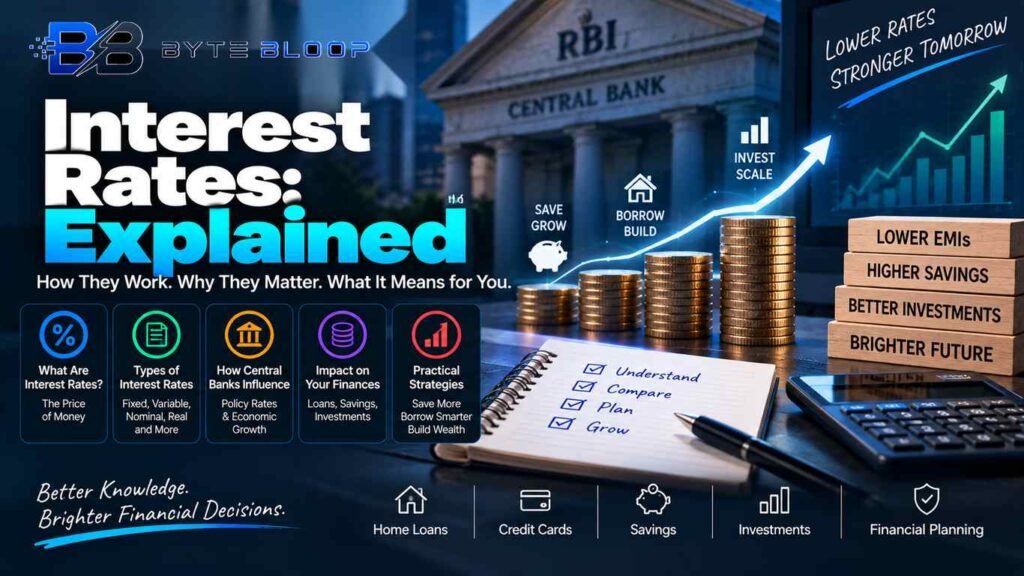
At its core, an interest rate is the price of money, expressed as a percentage of the principal. It can be seen from two perspectives: the lender’s fee for providing funds and the borrower’s cost for using them. The Federal Reserve’s policy rate, for example, sets the baseline for short‑term rates, while banks add margins based on credit risk and operational costs. The difference between the policy rate and the rates banks charge is called the spread.
Types of Interest Rates
Interest rates come in several flavors:
- Nominal vs. Real Rates – Nominal rates ignore inflation, while real rates adjust for purchasing power.
- Fixed vs. Variable Rates – Fixed rates stay constant over a loan’s life; variable rates change with market indices.
- Prime vs. Non‑Prime Rates – Prime rates apply to the most creditworthy borrowers; non‑prime rates are higher.
- Effective vs. Annual Percentage Yield (APY) – APY reflects compounding frequency, giving a true return figure.
How Central Banks Influence Rates
Central banks, like the Reserve Bank of India, set policy rates to manage inflation and economic growth. When inflation spikes, they may raise rates to cool spending; when growth stalls, they lower rates to stimulate borrowing. The 2026 RBI directions, for instance, outline guidelines for loan rates and advances, ensuring banks maintain prudent lending standards.
Impact on Everyday Finances
Interest rates shape many aspects of personal finance:
- Borrowing Costs – Higher rates mean higher mortgage and credit card payments.
- Savings Growth – Lower rates reduce the return on savings accounts and fixed deposits.
- Investment Returns – Bond yields rise with rates, while equity valuations may fall.
Practical Examples
Imagine a 30‑year mortgage at 4% versus 5%. The monthly payment difference is roughly $100, translating to over $36,000 more paid over the life of the loan. Conversely, a savings account at 1% yields $100 on a $10,000 balance annually, while a 2% rate doubles that to $200.
Strategies to Navigate Changing Rates
1. Lock in Fixed Rates when you anticipate rate hikes.
2. Consider Variable Rates if you expect rates to fall.
3. Maintain an Emergency Fund in high‑yield accounts to offset lower rates elsewhere.
4. Re‑finance Loans when rates drop to reduce payments.
Key Takeaways
- Interest rates determine borrowing costs and savings returns.
- Central banks set policy rates that ripple through the economy.
- Fixed rates protect against future hikes; variable rates can benefit from cuts.
- Understanding nominal vs. real rates helps assess true purchasing power.
- Strategic refinancing can save thousands over a loan’s life.
Frequently Asked Questions
What is an interest rate?
An interest rate is the percentage cost of borrowing money or the return earned on deposits, expressed as a yearly figure.
What are the key features of fixed and variable rates?
Fixed rates stay constant for the loan term, offering payment predictability. Variable rates adjust with market benchmarks, allowing potential savings if rates fall.
What are the best use cases for high‑yield savings accounts?
High‑yield accounts are ideal for emergency funds or short‑term goals where you want to maximize returns without locking in long‑term deposits.
What are the pros and cons of refinancing a mortgage?
Pros include lower monthly payments and reduced interest over time; cons involve closing costs and the risk of resetting the loan term, which can extend the repayment period.
Conclusion
Based on the available information and industry analysis, interest rates serve as a critical lever for both lenders and borrowers, shaping economic activity and personal financial decisions. By understanding the mechanics of fixed and variable rates, the influence of central bank policy, and strategic approaches to borrowing and saving, individuals can better navigate the changing financial landscape and optimize their long‑term wealth.
Related Reading
- How to Build an Emergency Fund in 2026
This article is for informational and educational purposes only and should not be considered financial, investment, or trading advice.
This article is for informational and educational purposes only and should not be considered financial, investment, or trading advice.