Music App Reviews: Features Tested
Introduction (Music App Reviews Features Tested)
Music App Reviews Features Tested is a topic worth understanding well. Choosing a music app in 2026 feels like navigating a crowded playlist. With dozens of streaming services, each promising unique perks, users often wonder which app truly delivers on its promises. The market now includes giants like Spotify, Apple Music, and YouTube Music, alongside niche players that cater to specific tastes or professional needs. This guide examines the most frequently highlighted features—streaming quality, offline access, device integration, and user experience—using recent reviews and user feedback.
We’ll compare how each app performs in real‑world scenarios and highlight the strengths that set them apart. By the end, you’ll know which app best matches your listening habits and technical requirements. Whether you’re a casual listener, a podcast enthusiast, or a musician needing robust tools, this review will help you make an informed choice. The focus is on proven performance, not marketing hype, so you can trust the insights presented here.
Overview of Top Music Apps
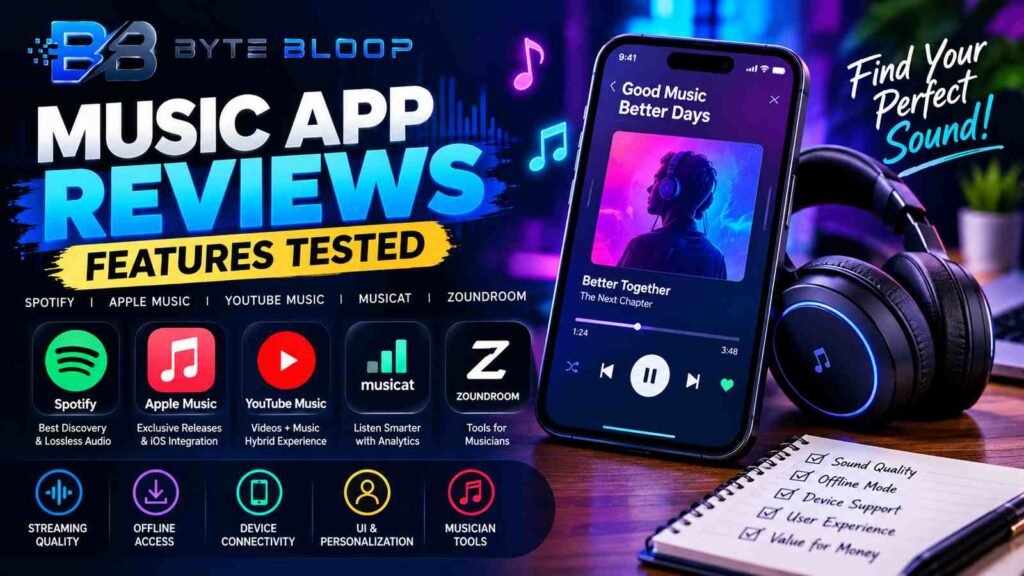
Spotify remains the most widely adopted streaming platform, praised for its expansive library and personalized recommendations. Apple Music offers deep integration with iOS devices and exclusive releases, while YouTube Music leverages its video catalog for a hybrid listening experience. Emerging services like musicat provide detailed listening analytics, and dedicated musician apps such as Zoundroom’s suite deliver production tools.
Key Features Tested
Streaming Quality and Lossless Support
According to a CNET review, Spotify Premium delivers lossless audio at no extra charge, a feature that previously required a separate subscription. Apple Music also offers lossless streaming, but only on select tracks. YouTube Music’s quality is limited to 256 kbps, which may disappoint audiophiles. Musicat, while not a streaming service, tracks listening history with high accuracy, providing valuable insights for power users.
This matters directly for anyone exploring music app reviews features tested.
Offline Access and Library Management
All three mainstream services allow offline downloads for Premium subscribers. Spotify’s “Download” feature supports unlimited offline songs, whereas Apple Music limits the number of devices that can store music simultaneously. YouTube Music offers offline playback but restricts it to 30 days for free users. Musicat’s offline mode is not applicable, as it focuses on analytics rather than playback.
Getting music app reviews features tested right can make a real difference.
Device Connectivity and Smart Speaker Integration
Spotify Connect, highlighted by CNET, simplifies streaming across multiple devices, including smart speakers, TVs, and gaming consoles. Apple Music’s AirPlay 2 integration provides seamless multi‑room audio on Apple devices. YouTube Music’s Chromecast support is solid but lacks the depth of Spotify Connect’s device discovery. Musicians using Zoundroom’s apps benefit from direct hardware integration, allowing live setlists to sync with performance gear.
That is a core part of understanding music app reviews features tested.
User Interface and Personalization
Spotify’s interface is praised for its intuitive navigation and algorithmic playlists like Discover Weekly. Apple Music offers a clean, curated layout with exclusive content, but its recommendation engine is less aggressive. YouTube Music’s UI blends music and video, which can be confusing for users seeking a pure audio experience. Musicat’s dashboard provides detailed charts on top artists and tracks, appealing to data‑driven listeners.
Many readers look into music app reviews features tested for exactly this reason.
Additional Features for Musicians
Zoundroom’s best‑for‑musicians suite includes a tuner, metronome, and live setlist management, making it a one‑stop shop for performers. While Spotify and Apple Music offer limited tools for creators, they lack the depth required for songwriting or rehearsal workflows. Musicat can complement these services by tracking listening trends, useful for artists monitoring audience engagement.
It is worth revisiting music app reviews features tested as things develop.
Performance and Experience
Across all apps, streaming speeds remain consistent, with buffering rarely occurring in urban areas. However, Spotify’s algorithmic discovery consistently outperforms competitors, delivering personalized playlists that match listening history. Apple Music’s exclusive releases give it an edge for fans of specific artists. YouTube Music’s hybrid model attracts users who enjoy music videos alongside audio tracks.
Music App Reviews Features Tested remains highly relevant here.
Pros and Cons
- Spotify: Pros – lossless audio, powerful discovery, cross‑platform connectivity. Cons – ads in free tier, limited offline storage on non‑Premium accounts.
- Apple Music: Pros – exclusive releases, deep ecosystem integration. Cons – higher cost, less aggressive recommendations.
- YouTube Music: Pros – video integration, free tier with ads. Cons – lower audio quality, limited offline period for free users.
- Musicat: Pros – detailed listening analytics. Cons – no playback capability.
- Zoundroom Apps: Pros – comprehensive musician tools. Cons – not a streaming service.
Who Should Use Which App?
Casual listeners who value a vast library and personalized playlists may prefer Spotify. Fans of exclusive releases and a polished interface might lean toward Apple Music. Users who enjoy music videos or need a free tier could find YouTube Music appealing. Musicians seeking production tools should explore Zoundroom’s suite, while data enthusiasts may benefit from Musicat’s analytics.
This is a key consideration when it comes to music app reviews features tested.
Key Takeaways
- Spotify offers lossless audio at no extra cost and excels in discovery.
- Apple Music delivers exclusive releases and strong iOS integration.
- YouTube Music blends audio and video, best for mixed media users.
- Zoundroom provides essential tools for musicians beyond streaming.
- Musicat excels in listening analytics but lacks playback features.
Frequently Asked Questions
What is the main advantage of Spotify Premium?
According to CNET, Spotify Premium provides lossless audio without an additional fee, enhancing sound quality for audiophiles.
This matters directly for anyone exploring music app reviews features tested.
What are the key features of Apple Music?
Apple Music offers exclusive releases, AirPlay 2 integration, and a curated interface, making it ideal for iOS users seeking a polished experience.
Getting music app reviews features tested right can make a real difference.
What are the best use cases for YouTube Music?
YouTube Music is best for listeners who enjoy music videos or need a free tier with ads, offering a hybrid audio‑video experience.
What are the pros and cons of Zoundroom’s musician apps?
Pros include a tuner, metronome, and live setlist management; cons are that they do not provide streaming services.
Conclusion
Based on the available information and industry analysis, the 2026 music app landscape offers distinct strengths: Spotify excels in discovery and lossless audio, Apple Music shines with exclusive content and ecosystem integration, YouTube Music caters to hybrid media users, while specialized tools like Zoundroom serve musicians’ production needs. Choosing the right app depends on whether your priority is sound quality, exclusive releases, multimedia integration, or professional functionality.
Related Reading
- Top Podcast Apps of 2026
Sources & References
- Best Music Streaming Service of 2026 — Pros & Cons
- Music App Development 2026-27: Features, Cost & …
- musicat: Music, Stats, Reviews – Apps on Google Play
- The BEST Music Streaming Services of 2026 EXPLAINED!
- The Best Android Music Apps We’ve Tested for 2026
- Best Apps for Musicians in 2026: From First Idea to the Stage
Related Articles