Project Management: Explained
Introduction
Project management is the disciplined art of turning a vision into a finished product while juggling time, budget, scope, and quality. In the fast‑moving tech landscape, the ability to steer a project from inception to launch is a core competitive advantage. A well‑executed project delivers value to stakeholders, aligns teams, and mitigates risk—essential for startups scaling a prototype and for enterprises deploying enterprise‑wide systems. Understanding the lifecycle, roles, and methodologies empowers managers to adapt to shifting priorities and stakeholder expectations. This guide breaks down the core components of project management, highlights today’s trends, and offers real‑world examples that illustrate how theory translates into practice.
At its heart, project management is about orchestrating resources to meet a defined goal within constraints. The discipline is rooted in five classic phases—initiation, planning, execution, monitoring, and closure—yet modern frameworks blend these stages into iterative cycles. From Agile sprints that deliver incremental features to Waterfall roadmaps that emphasize upfront documentation, the choice of methodology shapes how teams collaborate and respond to change. Today, hybrid models that combine the flexibility of Agile with the rigor of traditional planning are gaining traction, especially in sectors where regulatory compliance and rapid innovation coexist. The following sections unpack these concepts and show how they apply across industries.
1. Core Phases of a Project
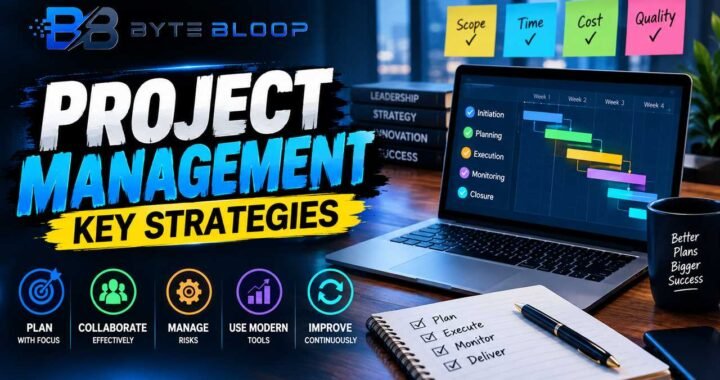
Initiation sets the direction: stakeholders define the problem, scope, and success criteria. A concise project charter often captures the vision, objectives, and high‑level constraints.
Planning translates the charter into actionable steps. Project managers develop schedules, budgets, risk registers, and communication plans. Tools like Gantt charts, Kanban boards, and resource allocation matrices help visualize dependencies and workload.
Execution is where work gets done. Teams follow the plan, deliverables are produced, and daily stand‑ups or sprint reviews keep everyone aligned.
Monitoring & Control tracks progress against the plan. Earned value analysis, burndown charts, and KPI dashboards reveal deviations early, enabling corrective actions.
Closure documents lessons learned, releases resources, and formally hands over the final product. A post‑mortem report ensures knowledge transfer and continuous improvement.
2. Key Roles and Responsibilities
The success of a project hinges on clear ownership. Common roles include:
- Project Sponsor – Provides vision, funding, and high‑level decision authority.
- Project Manager – Coordinates activities, manages risks, and reports status.
- Product Owner – Prioritizes backlog items and represents customer interests (Agile).
- Team Lead/Developer/Designer – Executes technical tasks and delivers work items.
- Stakeholder – Any individual or group impacted by the project outcome.
In distributed teams, virtual collaboration tools—Slack, Teams, Miro—become essential for maintaining transparency and fostering trust.
3. Methodologies in 2026
While the fundamentals remain unchanged, the choice of methodology can dramatically affect outcomes.
- Agile – Emphasizes iterative delivery, customer feedback, and adaptive planning. Scrum and Kanban are the most popular sub‑frameworks.
- Waterfall – Linear, sequential stages suitable for projects with fixed requirements and regulatory scrutiny.
- Hybrid – Combines Agile’s flexibility with Waterfall’s structure, often used in software, construction, and finance.
- Scaled Agile Framework (SAFe) – Extends Agile principles to enterprise‑level initiatives, coordinating multiple teams.
Emerging trends such as AI‑driven project analytics, predictive risk modeling, and ESG integration are reshaping how teams forecast outcomes and align with sustainability goals.
4. Practical Tools and Techniques
Choosing the right toolset can streamline processes:
- Project Management Software – Monday.com, Asana, and Jira offer customizable workflows and reporting.
- Resource Management – Resource Guru or Microsoft Project helps balance capacity and demand.
- Risk Management – Monte Carlo simulations and risk heat maps identify high‑impact uncertainties.
- Communication Platforms – Confluence and Notion centralize documentation, while video conferencing keeps remote teams connected.
Integrating AI chatbots for status updates or automated meeting minutes can reduce administrative overhead and free managers to focus on strategic decisions.
5. Real‑World Example: Launching a SaaS Platform
A mid‑size fintech startup plans to roll out a new payment gateway. The project starts with a charter that defines compliance requirements and user adoption targets. During planning, the team maps out a 12‑month timeline, budgets $1.2M, and assigns a risk register that flags data‑privacy concerns.
The execution phase follows an Agile cadence: two‑week sprints deliver API modules, UI components, and security patches. Daily stand‑ups and sprint reviews keep the product owner aligned with market feedback.
Monitoring uses a real‑time dashboard that tracks velocity, defect density, and user‑acquisition cost. When the defect density rises, the team triggers a corrective action plan and reallocates QA resources.
At closure, the company releases a post‑mortem highlighting that early stakeholder involvement reduced scope creep by 30%. The lessons learned feed into the next product iteration, demonstrating a continuous improvement loop.
6. Common Pitfalls and How to Avoid Them
Even seasoned managers face recurring challenges:
- Scope Creep – Mitigate by enforcing a change‑control process and maintaining a clear product backlog.
- Inadequate Communication – Use a single source of truth for documents and schedule regular stakeholder briefings.
- Resource Overcommitment – Employ realistic capacity planning and buffer time for unforeseen delays.
- Ignoring Risk Early – Conduct risk workshops at initiation and revisit the register monthly.
By embedding these safeguards, teams can maintain momentum and deliver on commitments.
Key Takeaways
- Project management turns vision into deliverable through structured phases
- Hybrid methodologies blend flexibility with control for complex projects
- AI and data analytics are reshaping risk assessment and forecasting
- Clear role definition and communication tools are critical for distributed teams
- Continuous improvement via post‑mortem drives future success
Frequently Asked Questions
What is the purpose of a project charter?
A project charter formally authorizes the project, outlines objectives, scope, stakeholders, and high‑level constraints, and serves as a reference point for decisions.
What are the key features of Agile methodology?
Agile focuses on iterative delivery, customer collaboration, adaptive planning, and continuous improvement, typically using sprints, daily stand‑ups, and backlog grooming.
What are the best use cases for a hybrid project approach?
Hybrid models work well when a project needs regulatory compliance or fixed deliverables but also benefits from iterative feedback, such as software releases in regulated industries.
What are the pros and cons of using AI in project management?
Pros include predictive risk modeling, automated status updates, and data‑driven decision making. Cons can be overreliance on automation, data privacy concerns, and the need for skilled analysts to interpret AI outputs.
Conclusion
Based on the available information and industry analysis, project management remains a foundational discipline that blends structured planning with adaptive execution. By mastering core phases, aligning roles, and leveraging modern tools—including AI‑enhanced analytics—organizations can navigate complexity, reduce risk, and deliver value faster. Continuous learning and process refinement, as demonstrated in real‑world examples, ensure that project teams stay resilient in the face of evolving market demands.
Related Reading
- Top 5 Project Management Tools for 2026