RPG Games: Explained
Introduction
Role‑playing games, or RPGs, have evolved from tabletop dice‑rolling sessions to sprawling digital epics that dominate the gaming landscape. At their core, RPGs let players inhabit a character, make narrative choices, and influence a living world through skill progression and combat. The genre’s appeal lies in its blend of storytelling, strategy, and personal agency, allowing gamers to craft unique journeys that mirror their own playstyle. From the turn‑based depth of classic JRPGs to the real‑time action of modern titles, RPGs offer diverse experiences that cater to both casual and hardcore audiences. Understanding the mechanics, sub‑genres, and cultural impact of RPGs can help you pick the right game and fully appreciate the genre’s rich history. This guide breaks down the essential elements of RPGs, highlights popular titles in 2026, and provides practical tips for beginners and seasoned players alike.
What Makes an RPG?
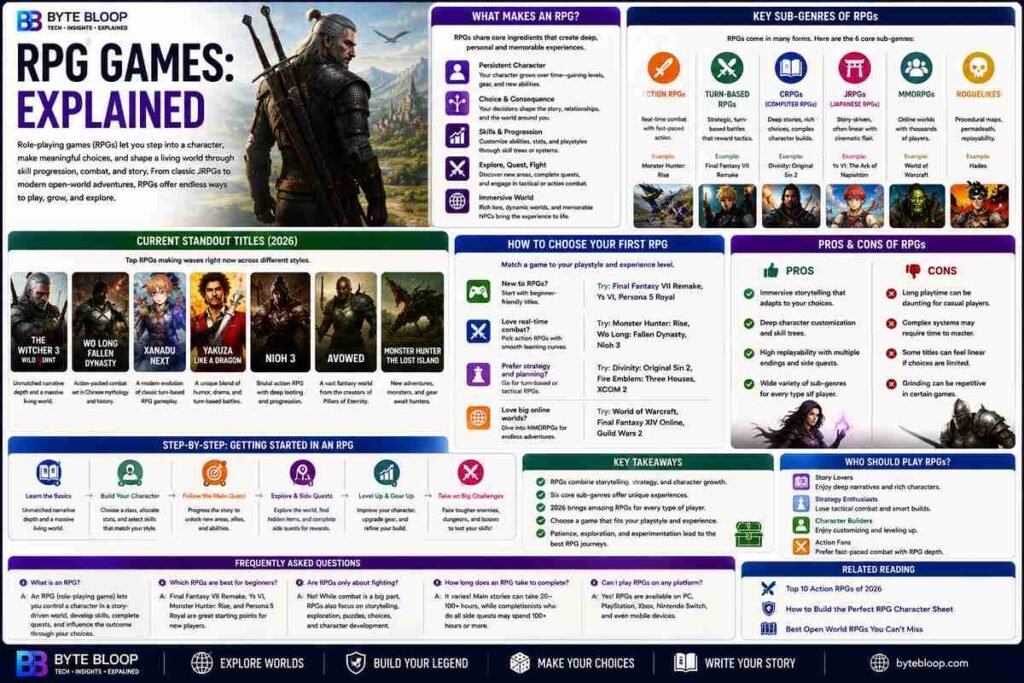
RPGs share several core features: a persistent character that grows over time, a narrative that responds to player decisions, and a system of skills or abilities that define combat and interaction. Players typically explore a world, complete quests, and engage in battles that use either turn‑based or real‑time mechanics. The genre’s flexibility allows developers to blend elements from other styles—such as action, strategy, or simulation—to create hybrid experiences.
Key Sub‑Genres
Masterclass identifies six primary RPG types:
- Action RPGs – Fast‑paced combat with real‑time controls (e.g., Monster Hunter: Rise).
- Turn‑Based RPGs – Strategic battles where players take turns (e.g., Final Fantasy VII Remake).
- CRPGs (Computer RPGs) – Deep storylines with intricate character sheets (e.g., Divinity: Original Sin 2).
- JRPGs (Japanese RPGs) – Linear narratives with cinematic cutscenes (e.g., Ys VI: The Ark of Napishtim).
- MMORPGs – Persistent online worlds with large communities (e.g., World of Warcraft).
- Roguelikes – Procedurally generated maps and permadeath (e.g., Hades).
Current Standout Titles (2026)
PC gamers have a wealth of options. Witcher 3: Wild Hunt remains a benchmark for narrative depth, while Wo Long: Fallen Dynasty blends action with Chinese mythology. Xanadu Next offers a modern twist on classic turn‑based combat, and Yakuza: Like a Dragon showcases the genre’s versatility with its blend of humor and serious storytelling. For those seeking fresh experiences, Nioh 3, Avowed, and Monster Hunter: The Lost Island deliver compelling worlds and robust progression systems.
How to Choose Your First RPG
Beginners should start with titles that balance accessibility and depth. Final Fantasy VII Remake and Ys VI provide intuitive interfaces and rich lore. If you prefer real‑time combat, Monster Hunter: Rise offers a satisfying learning curve. For turn‑based fans, Divinity: Original Sin 2 and Fire Emblem: Three Houses deliver strategic depth without overwhelming newcomers.
Pros and Cons of RPGs
Pros:
- Immersive storytelling that adapts to player choices.
- Deep character customization and skill trees.
- Replayability through multiple endings and side quests.
Cons:
- Long playtime can be daunting for casual players.
- Complex systems may require time to master.
- Some titles rely heavily on narrative, which can feel linear if choices are limited.
Who Should Play RPGs?
RPGs appeal to a broad audience. Story lovers enjoy the narrative depth; strategy enthusiasts appreciate tactical combat; and players who enjoy character development find satisfaction in progression systems. Even those who prefer action can find a hybrid title that blends fast combat with rich lore.
Key Takeaways
- RPGs blend narrative, strategy, and character growth for deep immersion
- Six core sub‑genres offer varied gameplay styles
- 2026’s top titles span action, turn‑based, and hybrid experiences
- Beginners benefit from titles with intuitive interfaces and strong story foundations
- RPGs deliver high replayability but can demand significant time investment
Frequently Asked Questions
What is an RPG and why are they popular?
RPGs let players inhabit a character, make choices that shape the story, and develop skills over time. Their blend of narrative depth, strategy, and personal agency keeps players engaged for long periods.
What are the key features that define an RPG?
Persistent character progression, choice‑driven narrative, skill or ability systems, and a world that reacts to player actions. These elements create a dynamic experience that evolves with each decision.
Which RPGs are best for beginners in 2026?
Titles like Final Fantasy VII Remake, Ys VI, and Monster Hunter: Rise offer intuitive controls, supportive tutorials, and compelling stories that ease new players into the genre.
What are the pros and cons of playing RPGs?
Pros include immersive storytelling, deep customization, and replayability. Cons can be long playtimes, complex systems that require learning, and sometimes linear narratives if choices feel limited.
Conclusion
Based on the available information and industry analysis, RPGs provide a uniquely immersive experience that blends storytelling, strategy, and character progression. In 2026, the genre continues to thrive with titles that cater to both newcomers and veterans, offering diverse gameplay styles and rich narratives that keep players returning to explore new worlds and stories.
Related Reading
- Top 10 Action RPGs of 2026
- How to Build the Perfect RPG Character Sheet