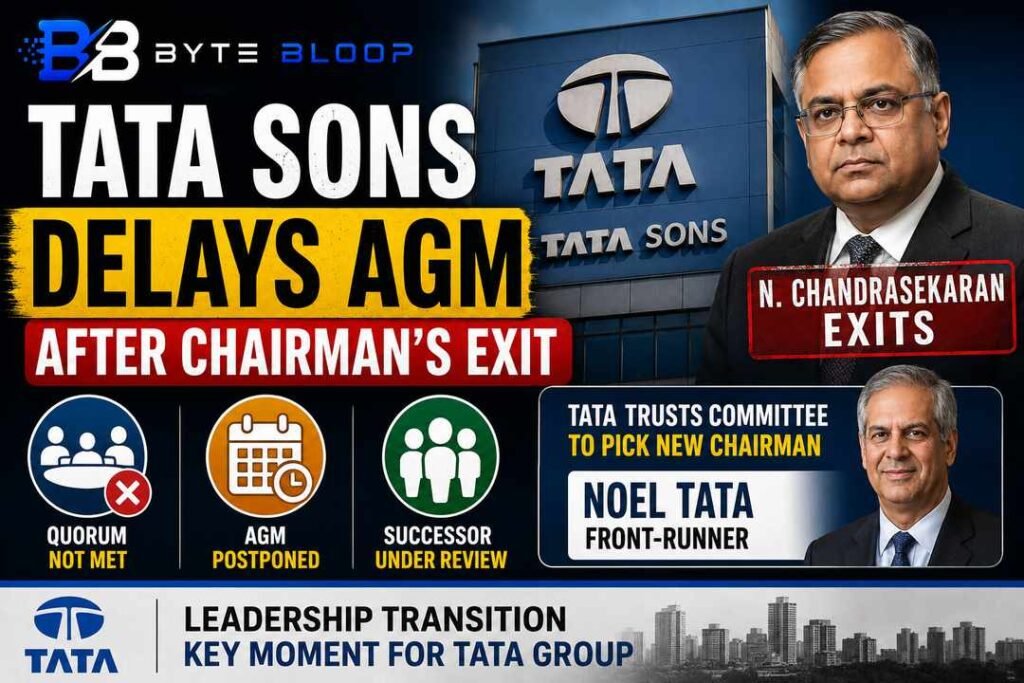
Tata Sons Delays Annual General Meeting After Chairman’s Exit
Introduction
In a surprising turn of events, Tata Sons, the holding company of the Tata Group, announced that its scheduled Annual General Meeting (AGM) will be postponed. The decision comes after the company failed to achieve the required quorum of shareholders, a situation that unfolded just days after Tata Trusts, the dominant shareholder, set up a high‑profile committee to recommend a successor to the departing chairman, Natarajan Chandrasekaran.
The postponement has sent ripples through India’s corporate landscape, raising questions about governance, shareholder dynamics, and the future leadership of one of the country’s most iconic conglomerates. This article delves into the background, the immediate implications, and what the next steps might look like for Tata Sons and its vast network of businesses.
Background & Historical Context
Tata Trusts, which controls roughly 66 % of Tata Sons, has long been the engine behind the group’s strategic direction. In early February, the Trust announced the formation of a three‑member committee tasked with identifying and recommending a new chairman after Chandrasekaran’s announced exit. The committee includes senior trustees and external experts, underscoring the importance of a transparent and merit‑based selection process.
Historically, Tata Sons has maintained a stable leadership pipeline, with previous chairmen often emerging from within the Trust’s senior ranks. The most recent contender gaining traction is Noel Tata, the current chairman of Tata Trusts and a senior executive with extensive experience across the group’s diverse businesses. His candidacy reflects a blend of continuity and fresh perspective that many stakeholders view as essential for navigating the next phase of growth.
Key Details & Impact Analysis
The AGM, originally slated for early March, was called off after the company reported that only a fraction of the required 50 % voting share held by shareholders had been present. Under Indian corporate law, a meeting cannot proceed without meeting this quorum threshold. Tata Sons cited logistical challenges and the recent leadership vacuum as contributing factors to the low attendance.
From an impact standpoint, the delay could have several short‑term and long‑term consequences. In the short term, investors may experience heightened uncertainty, potentially affecting the stock performance of Tata Group companies. Moreover, the postponement stalls critical agenda items such as the approval of the new chairman’s appointment, remuneration policies, and strategic initiatives slated for discussion at the AGM.
Long‑term, the episode highlights the delicate balance of power between Tata Trusts and minority shareholders. While the Trust’s majority stake gives it decisive influence, the need for a quorum underscores the importance of broader shareholder engagement. Analysts suggest that the episode may prompt Tata Sons to revisit its communication strategies, ensuring that minority shareholders feel more included in governance decisions.
Frequently Asked Questions (FAQs)
Why was the quorum not met for Tata Sons’ AGM?
The quorum requirement in India mandates that shareholders holding at least 50 % of voting rights be present, either physically or via proxy. Tata Sons reported that the combined attendance of major shareholders fell short of this threshold, leading to the meeting’s cancellation. Factors such as the recent leadership transition, scheduling conflicts, and limited proxy participation contributed to the shortfall.
Who are the main candidates to replace N. Chandrasekaran as chairman?
The committee formed by Tata Trusts is evaluating several senior executives, but the most prominently discussed name is Noel Tata. As chairman of Tata Trusts and a veteran of the group’s operations, Noel Tata brings both continuity and a deep understanding of the conglomerate’s diversified portfolio. Other internal candidates may also be considered, but no official shortlist has been released.
What does the AGM postponement mean for Tata Group investors?
In the immediate term, the delay introduces a degree of market uncertainty, which could affect share prices of Tata subsidiaries. However, the postponement also provides the company with additional time to secure a quorum, finalize the chairman selection process, and ensure that key agenda items receive proper scrutiny. Investors are advised to monitor official communications from Tata Sons for the rescheduled AGM date and any interim updates.
Conclusion
The postponement of Tata Sons’ annual general meeting underscores the complex interplay between governance requirements and leadership transitions within one of India’s most influential business families. While the immediate focus remains on achieving a quorum and appointing a new chairman—likely Noel Tata—the episode serves as a reminder of the importance of transparent communication with all shareholders. As Tata Trusts finalizes its recommendation, the broader market will be watching closely, anticipating how the next chapter of Tata Group’s storied legacy will unfold.
Source: NDTV
