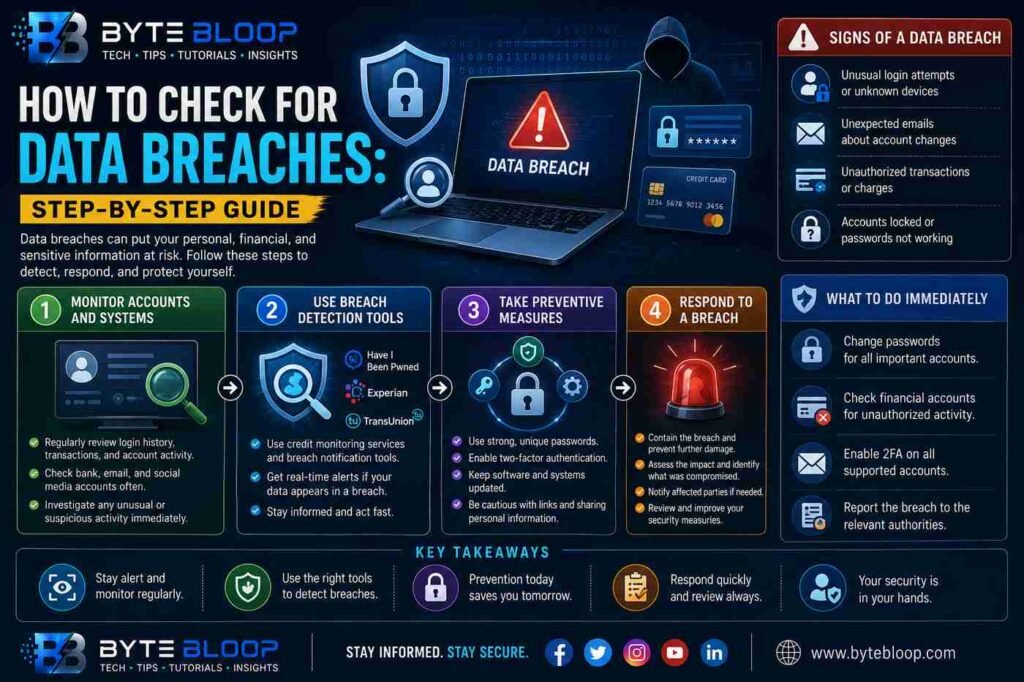
How to Check for Data Breaches: Step-by-Step Guide
Introduction
Data breaches have become a common occurrence in today’s digital age, with millions of people affected every year. A data breach occurs when sensitive or confidential information is accessed, stolen, or compromised without authorization. This can include personal data, financial information, or other sensitive details. Checking for data breaches is crucial to protect oneself from potential harm, such as identity theft or financial loss. The process involves several steps, including monitoring accounts, using breach detection tools, and taking preventive measures. According to the Federal Trade Commission, closely monitoring all entry and exit points, especially those involved in the breach, is essential. Analyzing backup or preserved data and reviewing logs to determine who had access can also help.
The importance of checking for data breaches cannot be overstated. With the rise of online transactions and digital storage, the risk of data breaches has increased significantly. A single breach can have severe consequences, including financial loss, damage to reputation, and legal liabilities. Therefore, it is essential to take proactive measures to detect and prevent data breaches. This can be achieved by implementing robust security measures, such as encryption, firewalls, and access controls. Regularly updating software and systems can also help to prevent breaches. In the event of a breach, a well-planned response strategy is critical to minimize the damage.
Step 1: Monitor Accounts and Systems
Monitoring accounts and systems is the first step in checking for data breaches. This involves regularly reviewing account activity, such as login history, transaction records, and system logs. Any suspicious activity, such as unusual login locations or unexpected transactions, should be investigated immediately. Using breach detection tools, such as credit monitoring services or data breach notification services, can also help to identify potential breaches.
Step 2: Use Breach Detection Tools
Breach detection tools are specialized software or services designed to detect and alert users to potential data breaches. These tools can monitor accounts, systems, and networks for suspicious activity and provide real-time alerts in the event of a breach. Some popular breach detection tools include credit monitoring services, such as Experian or TransUnion, and data breach notification services, such as Have I Been Pwned.
Step 3: Take Preventive Measures
Taking preventive measures is critical to protecting oneself from data breaches. This includes implementing robust security measures, such as encryption, firewalls, and access controls. Regularly updating software and systems can also help to prevent breaches. Additionally, using strong passwords, enabling two-factor authentication, and being cautious when clicking on links or providing personal information online can help to prevent breaches.
Step 4: Respond to a Breach
In the event of a breach, a well-planned response strategy is critical to minimize the damage. This includes containing the breach, assessing the damage, notifying affected parties, and reviewing and revising security measures. According to the Office of the Victorian Information Commissioner, a breach response consists of four steps: contain, assess, notify, and review. It is essential to take steps to first confirm that a data breach has occurred and then take immediate action to contain the breach and prevent further damage.
Key Takeaways
- Monitor accounts and systems regularly for suspicious activity
- Use breach detection tools to identify potential breaches
- Take preventive measures, such as implementing robust security measures and regularly updating software and systems
- Respond quickly and effectively in the event of a breach
- Review and revise security measures to prevent future breaches
Frequently Asked Questions
What is a data breach?
A data breach occurs when sensitive or confidential information is accessed, stolen, or compromised without authorization.
How can I check for data breaches?
You can check for data breaches by monitoring accounts and systems, using breach detection tools, and taking preventive measures.
What are the consequences of a data breach?
The consequences of a data breach can include financial loss, damage to reputation, and legal liabilities.
How can I prevent data breaches?
You can prevent data breaches by implementing robust security measures, regularly updating software and systems, and being cautious when clicking on links or providing personal information online.
What should I do in the event of a breach?
In the event of a breach, you should contain the breach, assess the damage, notify affected parties, and review and revise security measures.
Conclusion
Based on the available information and industry analysis, checking for data breaches is a critical step in protecting oneself from potential harm, such as identity theft or financial loss. By following the steps outlined in this guide, individuals and organizations can take proactive measures to detect and prevent data breaches.
Related Reading
- Data Breach Response Plan
- Cybersecurity Best Practices