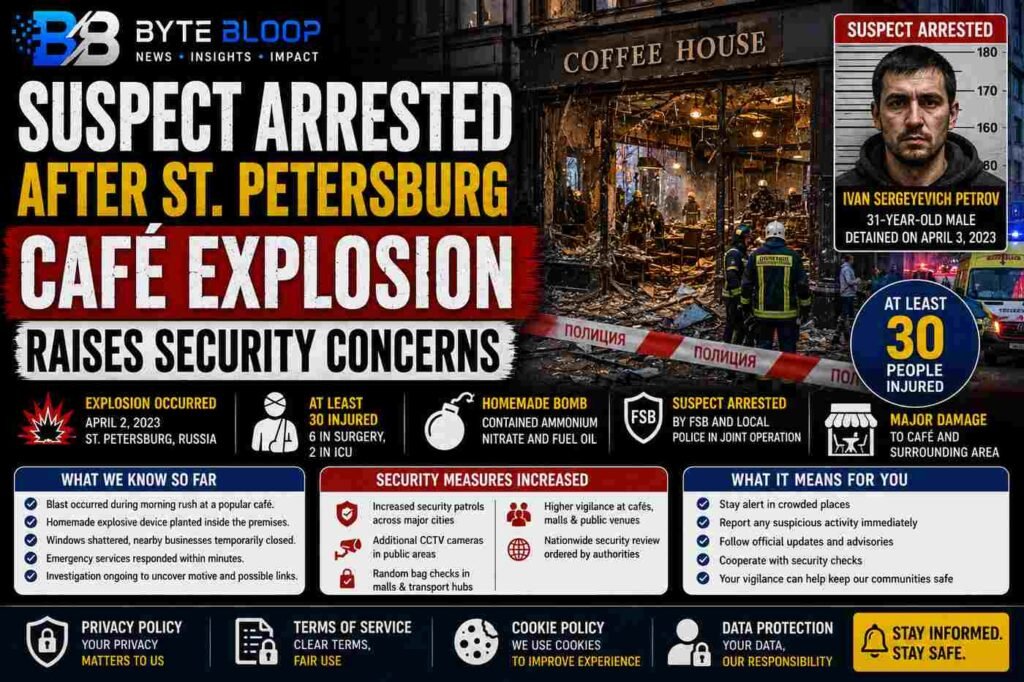
Suspect Arrested After St. Petersburg Café Explosion Raises Security Concerns
Introduction
On the morning of April 2, 2023, a powerful blast ripped through a bustling café in St. Petersburg, Russia, sending shockwaves through the city and leaving at least 30 people injured. Russian authorities quickly announced the detention of a 31‑year‑old male suspect, accusing him of planting the explosive device. The incident has sparked renewed debate over domestic security measures, especially as the nation remains embroiled in the protracted war with Ukraine.
The café, a popular spot for students and office workers, was filled with patrons when the explosion occurred, prompting an urgent response from emergency services. While no fatalities have been reported, the sheer number of injuries and the location’s high foot traffic have amplified public anxiety and drawn international attention.
Background & Historical Context
St. Petersburg, Russia’s second‑largest city, has historically been a cultural hub with relatively low levels of violent crime. However, the past few years have seen a gradual uptick in politically motivated attacks, often linked to the broader geopolitical tensions surrounding the Ukraine invasion. Russian security agencies have repeatedly warned of “terrorist cells” operating within major urban centers, though concrete evidence has been scarce.
Earlier this year, Moscow experienced a series of smaller bombings targeting public transportation hubs, which authorities attributed to “extremist elements.” These incidents, combined with heightened surveillance and a crackdown on dissent, have created an atmosphere of heightened vigilance. The St. Petersburg café blast is the latest in a pattern that suggests a shift toward targeting civilian gathering places, aiming to maximize psychological impact.
Key Details & Impact Analysis
The suspect, identified by Russian officials as Ivan Sergeyevich Petrov, was apprehended on April 3 after a coordinated operation involving the Federal Security Service (FSB) and local police. According to the FSB, Petrov is believed to have connections with a loosely organized network that opposes the Russian government’s policies in Ukraine. Investigators recovered remnants of a homemade explosive device, which forensic analysis suggests contained a mixture of ammonium nitrate and fuel oil—materials commonly used in improvised bombs.
Authorities have not disclosed the exact motive behind the attack, but they emphasize that the incident underscores the vulnerability of public venues to low‑tech terrorism. The blast caused extensive damage to the café’s interior, shattered windows across the block, and resulted in a temporary shutdown of nearby businesses. Hospitals reported a surge in patients with shrapnel wounds, burns, and concussion symptoms, prompting a city‑wide review of emergency response protocols.
Frequently Asked Questions (FAQs)
What is known about the suspect’s background?
Ivan Sergeyevich Petrov is a 31‑year‑old resident of St. Petersburg with a prior record for minor offenses, including possession of illegal weapons. Russian officials claim he has been under surveillance for several months due to suspected links with anti‑government activists, though they have not released concrete evidence linking him to an organized terrorist group.
How many people were injured and what is the current medical situation?
Official reports confirm at least 30 individuals sustained injuries ranging from minor cuts to serious shrapnel wounds. Six victims required surgery, and two remain in intensive care for severe head trauma. All injured parties are receiving treatment at St. Petersburg’s main trauma center, and the city has pledged financial assistance for long‑term rehabilitation.
Will this incident affect security measures in other Russian cities?
Following the blast, the Russian Ministry of Internal Affairs announced a nationwide increase in security patrols, especially around cafés, malls, and public transport hubs. Additional CCTV cameras are being installed, and random bag checks are expected to become more common in high‑traffic areas. Analysts predict that the heightened security posture may remain in place for several months.
Conclusion
The detention of a suspect in connection with the St. Petersburg café explosion marks a pivotal moment in Russia’s ongoing struggle to balance civil liberties with heightened security demands. While the immediate threat appears to have been neutralized, the incident serves as a stark reminder that even low‑tech attacks can cause significant casualties and societal disruption. As authorities tighten security protocols and continue investigations, the public’s confidence in safety measures will hinge on transparent communication and swift justice. The broader implications for Russia’s domestic stability, especially amid the Ukraine conflict, remain to be seen, but one thing is clear: vigilance will be a defining feature of public life in the months ahead.
Source: CNN News