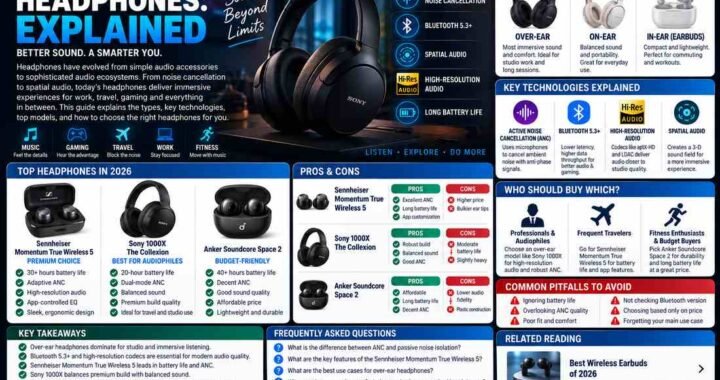
iPads: Explained
Introduction
Apple’s iPad has evolved from a simple media player into a versatile productivity hub that powers students, creatives, and professionals alike. In 2026 the lineup expands to four distinct categories—iPad, iPad Air, iPad Mini, and iPad Pro—each catering to different budgets and use cases. The company’s recent price hikes, driven by AI‑component shortages, mean that buyers must weigh feature sets against cost more carefully than ever. Yet the core strengths—Apple’s tight hardware‑software integration, the robust App Store ecosystem, and the ever‑improving M‑series chips—remain unchanged. Whether you’re looking for a low‑cost entry point or a high‑performance workstation, understanding the nuances of each model will save you time and money. This guide breaks down the lineup, highlights key features, and offers practical buying advice so you can choose the iPad that fits your lifestyle and workflow.
Overview of the 2026 iPad Lineup
Apple’s 2026 iPads are grouped into four tiers:
- iPad (11th Gen) – The budget model with a 10.9‑inch Retina display, A15 Bionic chip, and 64‑GB storage.
- iPad Air (5th Gen) – A mid‑range device featuring a 10.9‑inch Liquid Retina display, M2 chip, and 256‑GB base storage.
- iPad Mini (6th Gen) – A compact 8.3‑inch tablet powered by the M2 chip, ideal for on‑the‑go use.
- iPad Pro (12.9‑inch & 11‑inch) – The flagship with Liquid Retina XDR, M3 chip options, ProMotion 120 Hz, and up to 2 TB storage.
Key Features Across the Lineup
All 2026 iPads share several core attributes: a 12‑hour battery life, USB‑C charging, and support for the second‑generation Apple Pencil. However, differences emerge in display technology, processing power, and accessory compatibility.
- Display – The Pro models boast XDR panels with 1,000 nits peak brightness, while the Air and Mini use standard Liquid Retina. The base iPad offers a solid 500 nits.
- Chip – The Air and Mini use the M2, giving them a performance boost over the A15 in the base iPad. The Pro’s optional M3 chip delivers up to 30 % faster CPU and GPU for demanding tasks.
- Camera – The Pro includes a 12‑MP rear camera and 12‑MP Ultra‑Wide front camera, whereas the other models have 8‑MP sensors.
- Storage – Base models start at 64 GB, but the Pro can be configured with 2 TB, making it suitable for large media libraries.
Performance and Experience
Benchmarks show the M3‑powered Pro handling 4K video editing and 3D rendering with ease, while the M2 Air remains smooth for multitasking and light creative work. The A15 iPad, though older, still delivers competent performance for web browsing, streaming, and standard productivity apps. Battery endurance is consistent across models, with the Pro’s larger battery compensating for its higher power draw.
Pros and Cons
- iPad (11th Gen)
- Pros: Affordable, lightweight, decent performance.
- Cons: Lower‑end chip, limited storage options, no ProMotion.
- iPad Air (5th Gen)
- Pros: Balanced price‑performance, M2 chip, excellent display.
- Cons: Slightly heavier, no XDR panel.
- iPad Mini (6th Gen)
- Pros: Ultra‑compact, M2 chip, great for travel.
- Cons: Smaller screen limits multitasking, higher price per inch.
- iPad Pro
- Pros: Top‑tier performance, XDR display, ProMotion, extensive accessory support.
- Cons: Highest price, heavier, overkill for casual users.
Who Should Buy Which iPad?
If you’re a student or casual user, the base iPad offers great value. Designers and content creators who need color accuracy and power should lean toward the Air or Pro. Travelers who prioritize portability might prefer the Mini. Professionals requiring the best performance for video editing or 3D work should opt for the Pro.
FAQs
For quick answers to common questions, see the FAQ section below.
Key Takeaways
- The 2026 iPad lineup spans four tiers: iPad, Air, Mini, and Pro.
- All models support the second‑generation Apple Pencil and USB‑C charging.
- The Pro models feature XDR displays and optional M3 chips for peak performance.
- Price hikes of ~$100 reflect AI‑component shortages, making budget choices more critical.
- Choosing the right iPad depends on display size, performance needs, and budget.
Frequently Asked Questions
What is the price difference between the iPad models in 2026?
Apple increased all iPad prices by at least $100 in 2026. The base iPad starts around $450, the Air around $750, the Mini around $800, and the Pro ranges from $1,200 to $1,800 depending on configuration.
What are the key features of the iPad Pro in 2026?
The iPad Pro offers a Liquid Retina XDR display, ProMotion 120 Hz, optional M3 chip, up to 2 TB storage, a 12‑MP rear camera, and full compatibility with the Apple Pencil 2 and Magic Keyboard.
What are the best use cases for the iPad Mini?
The Mini excels in on‑the‑go note‑taking, reading, and light creative tasks thanks to its 8.3‑inch screen and M2 chip. It’s ideal for commuters, students, and anyone needing a highly portable device.
What are the pros and cons of buying the base iPad?
Pros include affordability, lightweight design, and solid performance for everyday tasks. Cons are the older A15 chip, limited storage options, and lack of ProMotion or XDR display.
Conclusion
Based on the available information and industry analysis, the 2026 iPad lineup offers a clear segmentation that caters to diverse user needs—from budget‑conscious consumers to power users. Apple’s commitment to high‑quality displays, powerful M‑series chips, and a cohesive ecosystem ensures that each model delivers strong value, even amid price increases driven by AI component shortages. By aligning your workflow and budget with the right tier, you can maximize productivity and enjoyment while avoiding unnecessary expense.
Related Reading
- Choosing the Right Tablet: iPad vs. Android